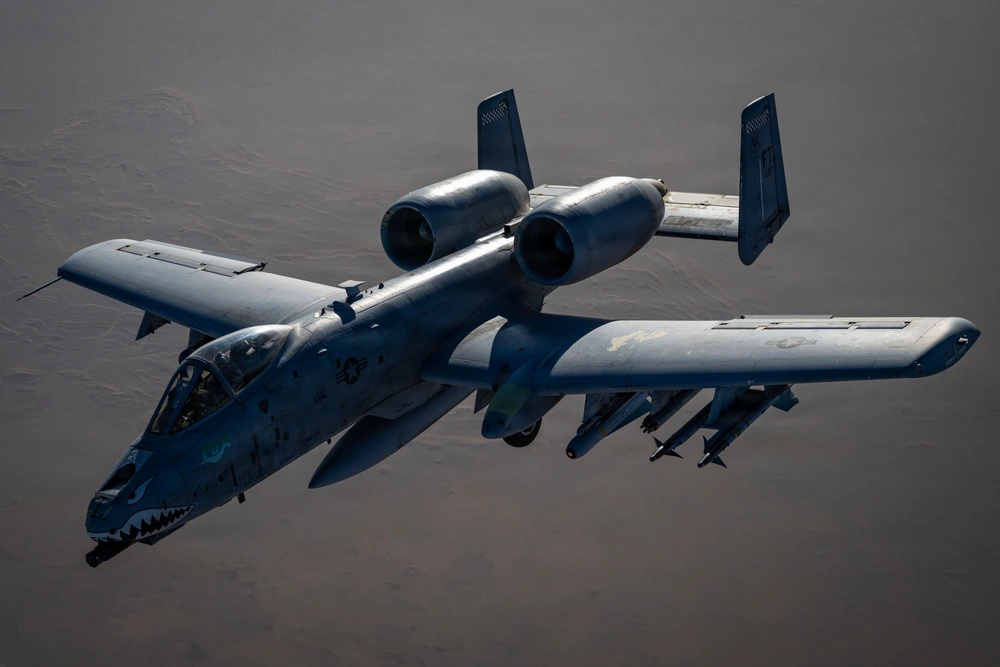
Reports indicate that the Air Force is moving 18 A-10 Thunderbolt II close air support aircraft to the Middle East.
The deployment comes at a crucial point for Operation Epic Fury as the White House considers a ground operation.
The aircraft will join the approximately 12 A-10s already conducting missions in the Middle East in support of the strikes against Iran.
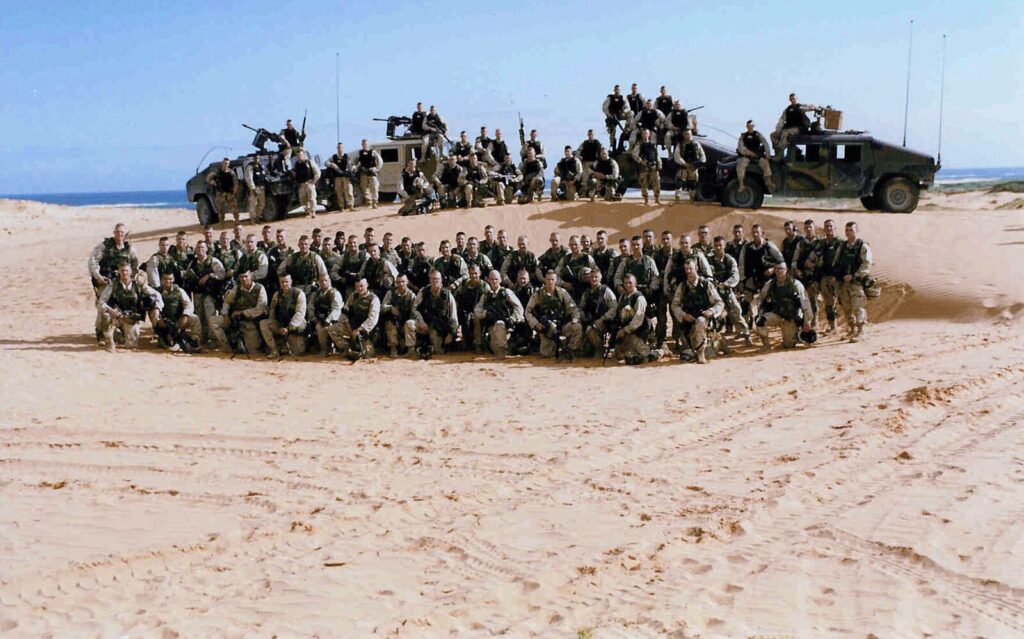
The deployment aligns with a ground troop buildup. The U.S. Central Command (CENTCOM) has been gathering troops in its area of operations. The 31st Marine Expeditionary Unit (MEU) arrived in the Middle East with 2,500 Marines and the organic assets to conduct ground operations independently. The 11th MEU is also steaming to the region from the Indo-Pacific. Reports also indicate that the Army’s 82nd Airborne Division is arriving in the region.
The A-10 fleet in the Middle East has been conducting a variety of missions, including attacks against Iranian fast-attack watercraft that attempt to harass maritime traffic in the Persian Gulf and Strait of Hormuz.
“The A-10 Warthog is now in the fight across the southern flank and is hunting and killing fast attack watercraft in the Straits of Hormuz,” Chairman of the Joint Chiefs of Staff, Air Force Gen. Dan Caine said during a joint press briefing with Secretary of Defense Pete Hegseth recently.
The A-10 packs quite a punch. The close air support aircraft is designed and built around its GAU-8/A 30 mm rotary cannon. The GAU-8/A – which was built to make the A-10 a tank killer – can fire 3,900 rounds a minute and has an effective range of 4,000 feet. It fires depleted uranium armor-piercing incendiary rounds and high explosive rounds.
In addition, the aircraft can carry up to 16,000 lbs of munitions, including AGM-65 Maverick missiles, AIM-9M Sidewinder missiles, LAU-131 seven-round rocket pods, Hydra 70 2.75″ rockets/APKWS, and 500 lbs and 2,000 lbs Joint Direct Attack Munitions (JDAMs).
The aircraft’s armament, slow speed, and good loiter time over target make it the ideal close air support aircraft.
Although the Air Force has repeatedly tried to retire the aircraft, Congress has successfully blocked such efforts, maintaining that the A-10 still has value on the modern battlefield.
However, a potential use of the A-10 in support of a ground operation in Iran comes with risk.
Video footage has also shown the close air support aircraft doing gun runs over Iranian urban centers. Although the U.S. has achieved air superiority over the majority of the battlespace, such close attack missions are still dangerous due to the presence of shoulder-fired anti-aircraft missiles. Indeed, only last week, an F/A-18 Super Hornet was nearly shot down by such an Iranian missile and escaped through the sheer skill of the pilot. For a slow aircraft, such as the A-10, the risk is even higher.
In the event of a ground operation against Iran, the A-10 will provide important capabilities to the ground force. However, the aircraft’s dedicated mission and characteristics increase the danger of casualties.
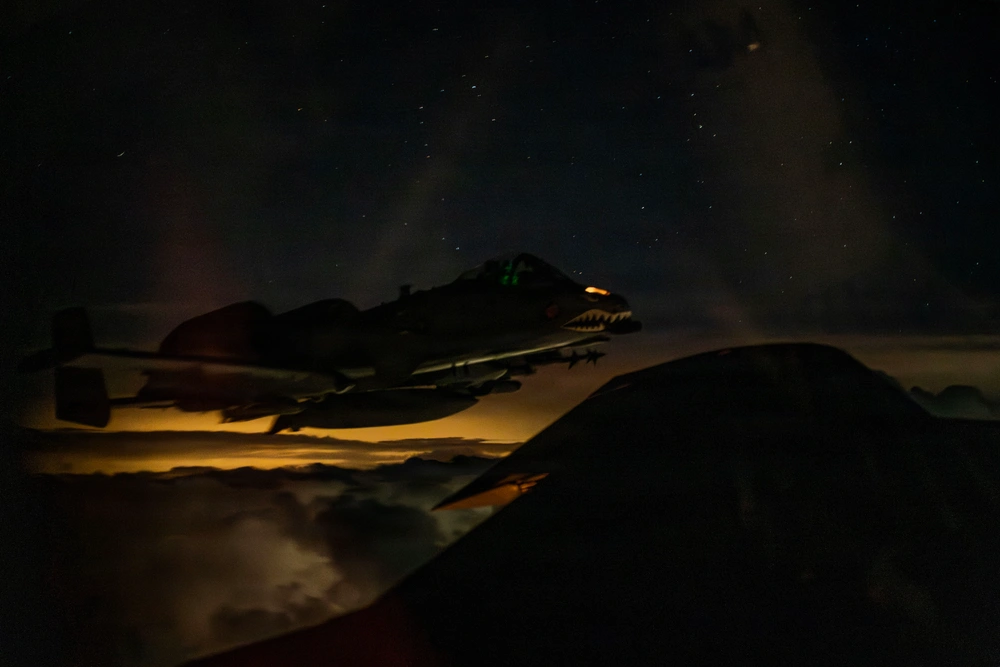
Feature Image: A U.S. Air Force A-10 Thunderbolt II aircraft flies over the U.S. Central Command area of responsibility during Operation Epic Fury, March 9, 2026. (CENTCOM)
Read more from Sandboxx News
- Airborne adventures with a Green Beret Combat Diver Team
- NATO members reach defense spending goals, but Trump calls America’s membership into question
- US air superiority against Iran won’t protect shipping through the Strait of Hormuz
- What actually happens when fighter pilots take off their masks?
- The real dangers of military AI systems aren’t the ones depicted in sci-fi