The Air Force has decided to more than double the number of new F-15EXs it plans to buy; now, its target is to field 267 new Eagle IIs in the next few years.
The F-15EX is an incredible platform and a mixed fleet of modern 4th- and 5th-generation aircraft is both practical and the only way the United States could afford to build a fighter fleet the size that needs it to be.
The Air Force first decided to buy the F-15EX – also known as the Eagle II – six years ago. This was a good decision, as Sandboxx News highlighted at the time, despite the jet not being stealth – as not every mission requires a pricey stealth fighter.
The Air Force decided to buy just 129 new F-15EXs at the time. However, that number seemed inadequate because these jets were meant to replace aging F-15Cs and Ds, but even the Air Force’s youngest F-15Es were already over two decades old by that point.
Nevertheless, the F-15EX is way more than just a new F-15.
First, the Eagle II was designed using more than a half century’s worth of flight data, allowing Boeing to very intentionally reinforce the airframe. As a result, this new Eagle may be limited to 9 G maneuvers in standard flight, but it can pull 12 Gs in emergencies.
The F-15EX’s design has been so refined, in fact, that these jets are rated for an operational lifespan of over 20,000 flight hours. For comparison, most modern fighters in production today are rated for just 6,000 to 8,000 hours. That means a single F-15EX offers roughly three times the operational lifespan of many of today’s 4th- and 5th-generation jets.
To take advantage of all that toughness, the Eagle II was equipped with a pair of new F110-GE-129 afterburning turbofan engines that pump out 11,460 pounds more thrust under afterburner than the F-15. In fact, on Boeing test pilot even landed himself in some hot water when he claimed the Eagle II was now so powerful that it could reach speeds as high as Mach 3 when flying clean, without any fuel tanks or weapons.
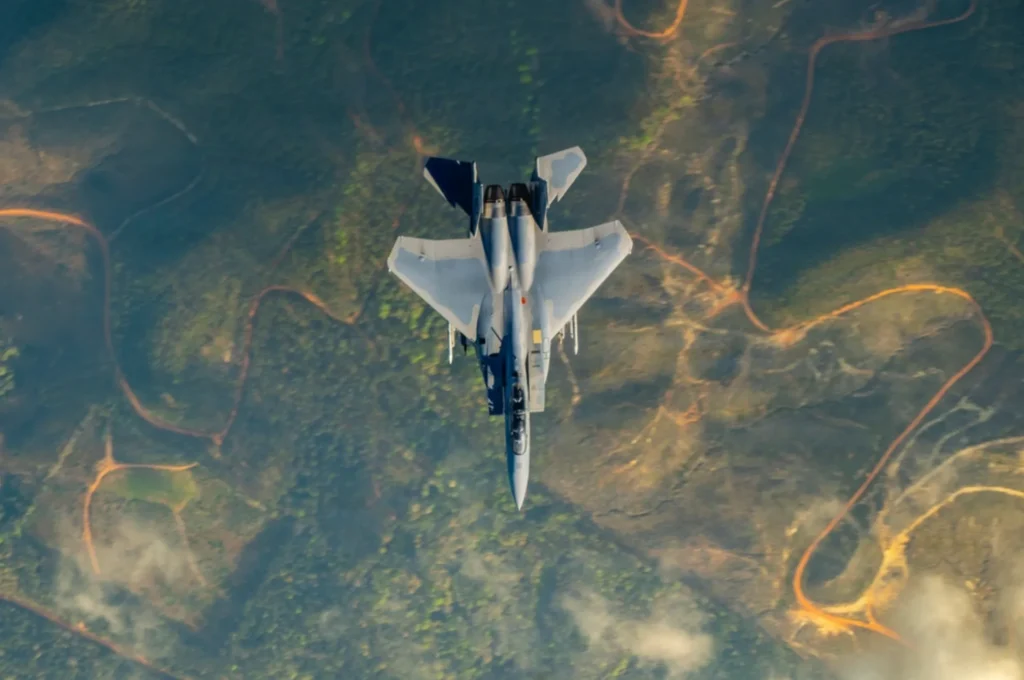
Boeing later walked that claim back, but based on the Air Force’s habit of understating the capabilities of its aircraft, it still seems likely that the Eagle II is indeed faster than its stated Mach 2.5 limit when flying naked, (i.e. without any external munitions or fuel tanks).
Getting all that power under control also took some doing: in the F-15EX the F-15’s hydro-mechanical control system is replaced with an advanced new fly-by-wire system that, in conjunction with the newly reinforced airframe, allows pilots to repeatedly push the Eagle II harder than any Eagle that came before.
In fact, Boeing’s experimental test pilot, Jason “Mongoose” Dotter himself was shocked at how the F-15EX’s combination of low-wing loading, powerful engines, fly-by-wire controls, and massive control surfaces allow the Eagle to perform aerobatic maneuvers that usually require thrust vector control, or specialized jet nozzles that can move independently of the airframe.
Additionally, the F-15EX’s mission computer is even more powerful than the computer found in the F-35 up until the recent Tech Refresh 3.
The Eagle II also has a new purpose-built electronic warfare suite that’s so capable at preventing targeting that the Government Accountability Office found that it was even suitable for offensive counter air operations against stealth fighters.
The Air Force might have been looking for a new Eagle to replace older F-15 variants, but what it got, instead, was a combat monster.
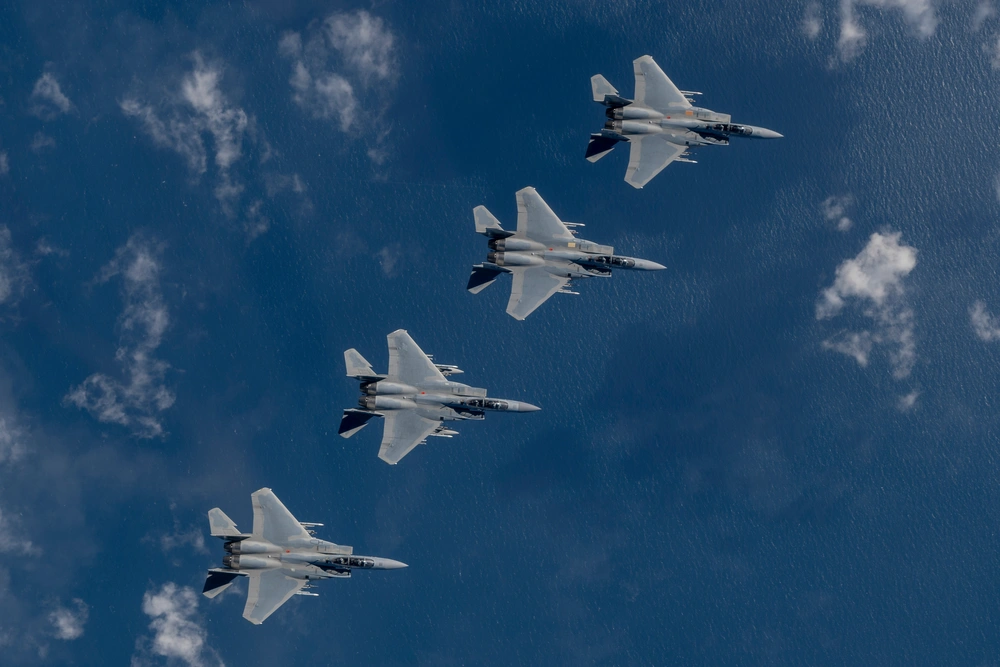
Feature Image: A formation of four U.S. Air Force F-15EX Eagle II fighter jets, assigned to Eglin Air Force Base, Florida, fly over the Gulf of America, November 21, 2025. U.S. Air Force photo by Staff Sgt. Blake Wiles)
Read more from Sandboxx News
- Army updates its sniper course to add drone camouflage
- Navy will award production contract for F/A-XX program this year
- Incredible mortar-assembly challenges with the Green Berets
- Space Force’s 15-year vision calls for more personnel and simulators to prepare for the future
- Not all drones are created equal: The five different groups of drones and how to counter them