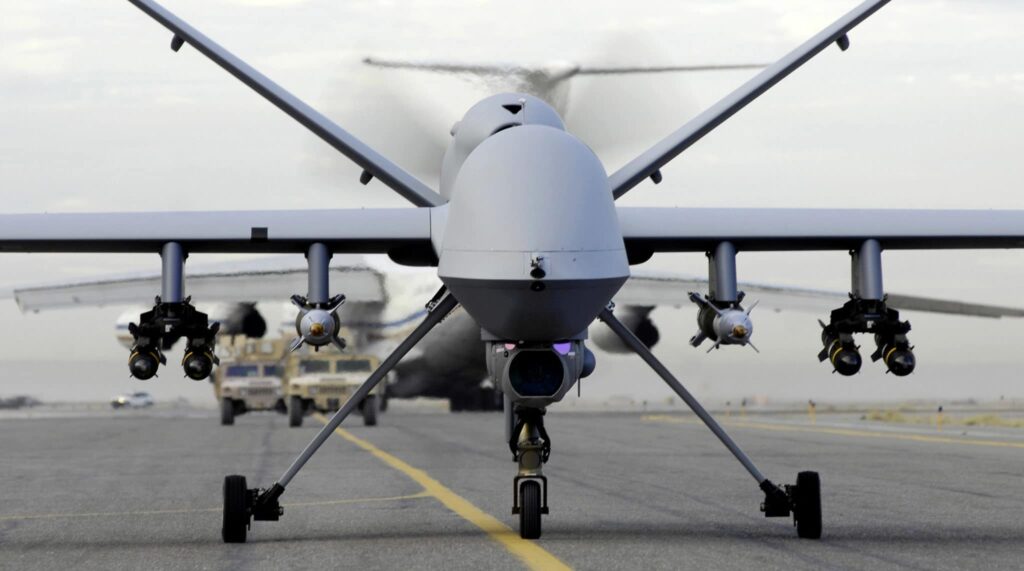
Drones have had a huge impact on the battlefield in recent years. But not all drones are created equal: there are drones in service today that could fit in the palm of your hand, and others that dwarf fighters like the F-16.
Distinguishing between different classes of drones, or Unmanned Aerial Systems, is absolutely vital to defending against their attacks, because your approach to defense has to be informed by the attacking drone’s capabilities. In other words, it takes a different kind of weapon to neutralize an FPV drone flying at 200 feet than it does a Shahed-style kamikaze drone at 13,000 feet.
According to the U.S. military’s definition, there are five groups of drone systems from the smallest and least capable to the largest and most capable.
Group 1 drones have a maximum take-off weight of under 20 pounds. They operate at altitudes of under 1,200 feet and fly no faster than 100 knots (or around 115 miles per hour).
These are the FPV drones that have had such a massive impact on the battlefields of Ukraine, but they’re also extremely limited in payload and range, with most of them limited to well under 20 miles.
There are many new counter-drone systems aimed at taking these drones down, but among the most promising might be the Leonidas high-powered microwave weapon that can take down entire swarms of Group 1 or 2 drones at a time. Back in August 2025, a Leonidas system took down an entire swarm of 49 FPV drones in less than a second. This microwave weapon isn’t a jammer but rather works almost like a directed-energy electromagnetic pulse, meaning it even works against fiber-optic drones controlled by wire.
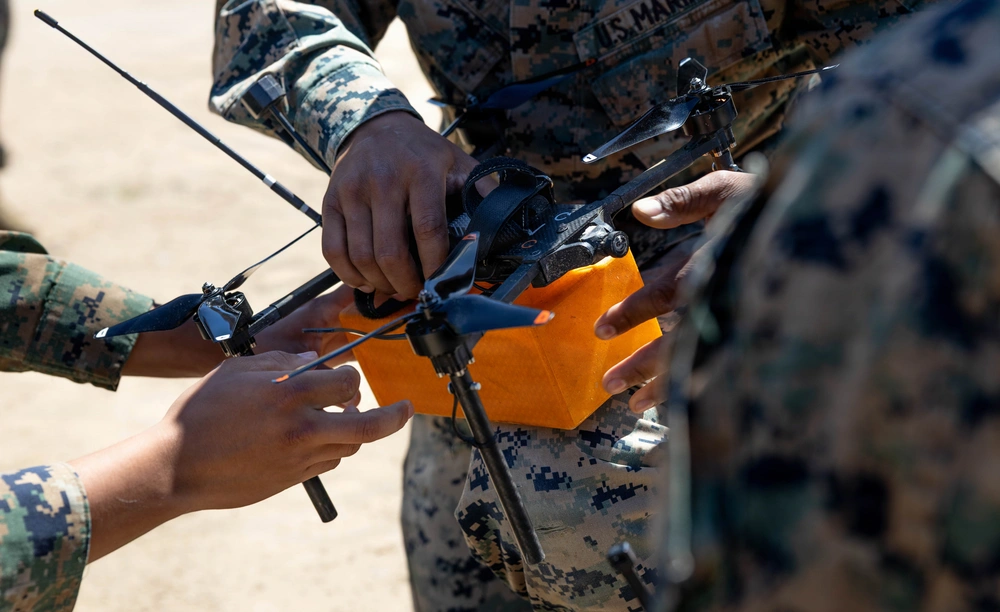
Group 2 drones have a maximum takeoff weight of between 21 and 55 pounds, fly below 3,500 feet and slower than 250 knots, or about 287 miles per hour.
These drones are a bit bigger and more capable than their Group 1 counterparts, but can often be engaged with the same defenses. While directed energy weapons, or lasers, are used to shoot them down, another novel solution is Northrop Grumman’s M-ACE target acquisition system coupled with a 30mm Bushmaster chain gun loaded full of proximity airburst ammunition.
The M-ACE can be loaded onto all sorts of vehicles, and in effect, turn the 30mm Bushmaster into a radar-guided anti-air cannon that can hit a small drone in mid-air from three miles out.
Related: New frontiers in anti-drone munitions were on display at SHOT Show 2026
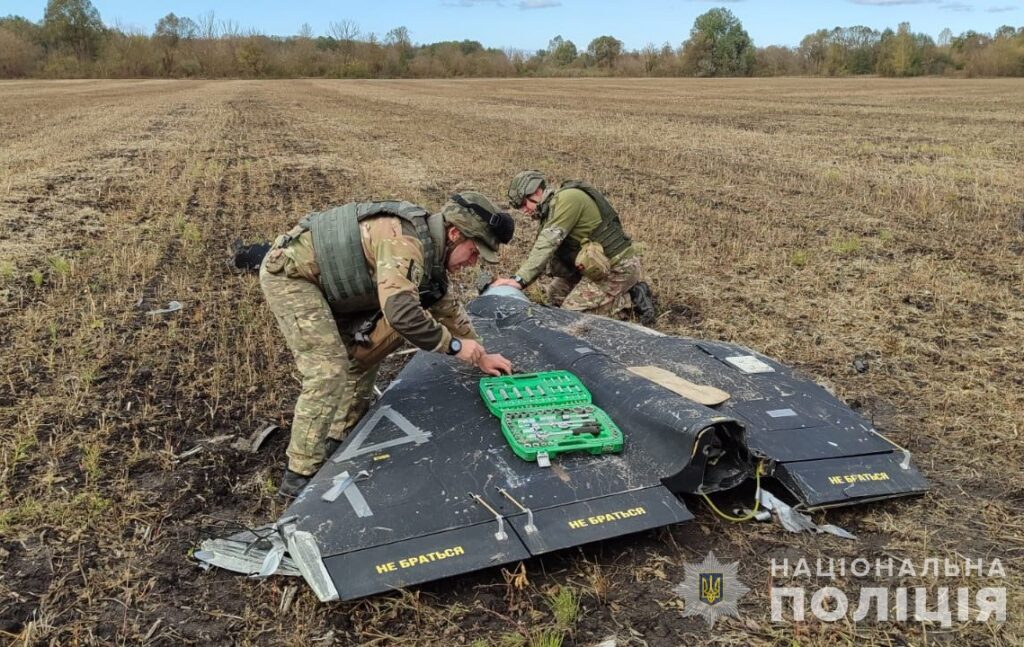
Group 3 and 4 drones have a great deal of overlap, and broadly speaking, this is where drones get a lot more capable.
Both groups of drones weight between 56 and 1,320 pounds and fly below 18,000 feet. Group 3 drones fly slower than 250 knots, Group 4 drones can fly even faster. The famous Shahed-136 kamikaze, or one-way-attack, drone falls into Group 3.
One of the coolest new weapons fielded to counter these drones is the AGR-20 FALCO air-to-air missile, also known as the Advanced Precision Kill Weapon System II. This very crafty interceptor is nothing more than an old-fashioned 70mm rocket with a new guidance section screwed in between the engine and warhead. Its guidance system turns it into small and inexpensive laser or infrared-guided air-to-air missiles that cost less than the Shahed drone it brings down. American F-15Es and F-16s have already been spotted flying with a whopping 42 of these missiles carried in seven-shot rocket pods.
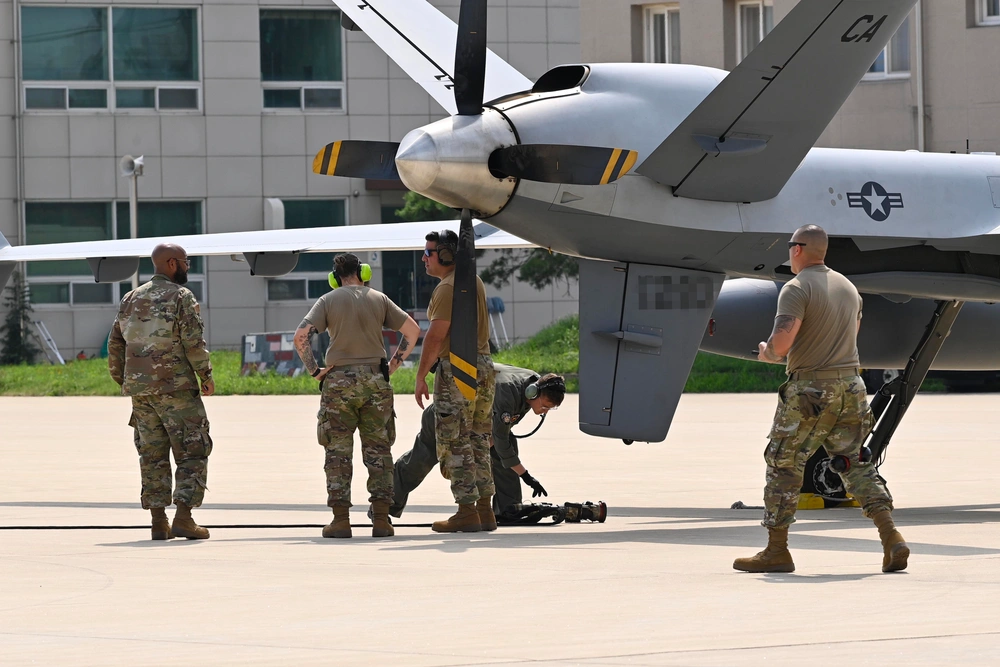
And finally, Group 5 drones are fully fledged tactical aircraft with weights that start at 1,320 pounds and only go up from there. They can fly at any altitude and airspeed. The MQ-9 Reaper or the Air Force’s highly classified RQ-180 with its huge 130-foot wingspan are Group 5 drones.
Because of the size and capability of these drones, you engage them with surface-to-air missiles just like you would any other combat aircraft.
Air defense is only possible in layers, with different systems designed to take out different kinds of threats, all working in unison to effectively defend an area. Drones haven’t changed that, they’ve just created the need for some new additional layers.
And the list of counter-drone systems in development and in the field is getting longer by the day.
Feature Image: An Air Force MQ-9A Reaper taxis in preparation for a mission in support of Operation Enduring Freedom. The MQ-9As primary mission is a hunter-killer against emerging targets to achieve joint force commander objectives. (U.S. Air Force photo)
Read more from Sandboxx News
- How a Green Beret achieved immortality during one of the fiercest battles of the Vietnam War
- Why the Air Force uses a different air-to-air refueling method than other branches
- The USS Gerald R. Ford is breaking all the rules but strains begin to show
- Navy successfully tests JDAM version that turns the famous weapon into a long-range missile
- JPMorganChase positions itself as a prime financial player in America’s defense rebuild