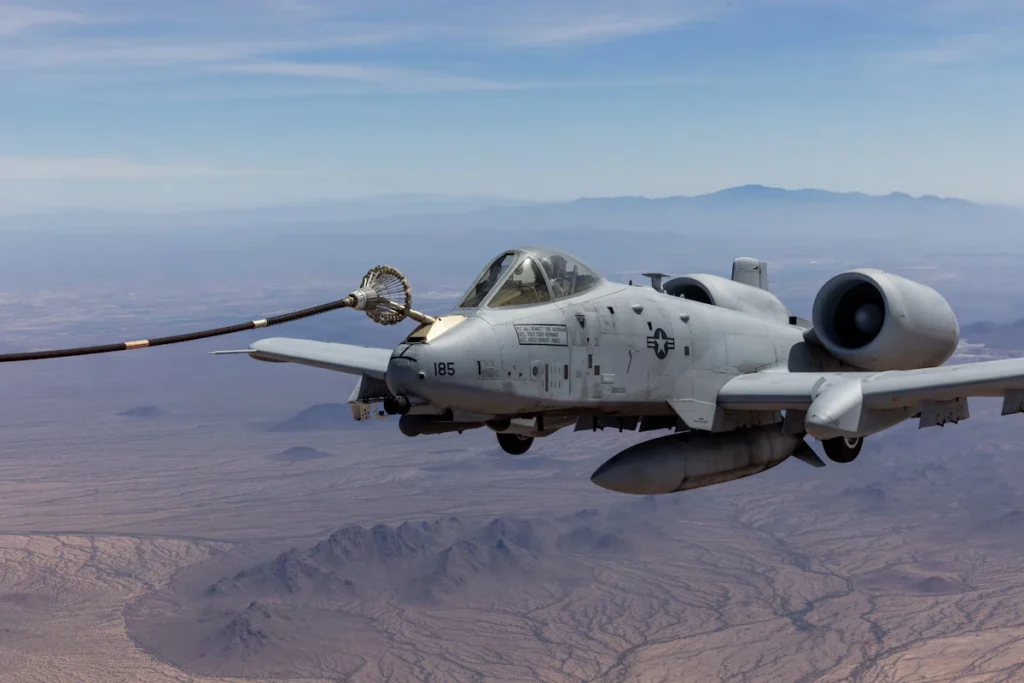
To solve a unique problem, the legendary A-10 close air support jet, famously known as the Warthog, is getting a new probe and droge adapter to allow it to refuel from more aircraft.
Aircraft operated by the Air Force, like the Warthog, use a completely different refueling apparatus than aircraft from the Navy and Marine Corps. The Air Force uses what’s called a “BOOM” system, while the Navy and Marines use the probe and drogue method.
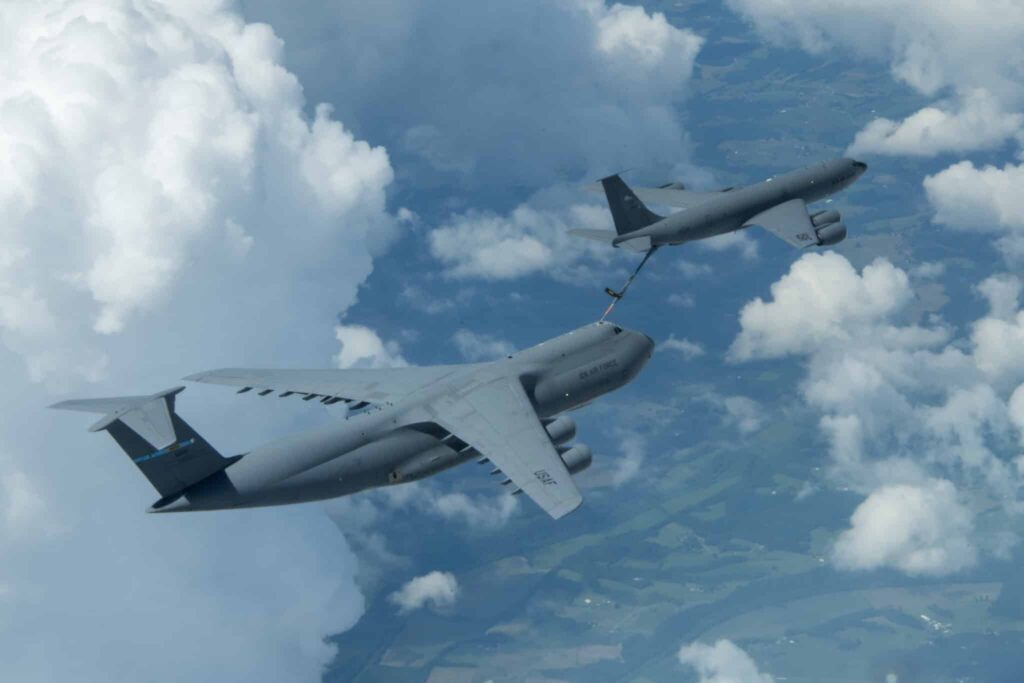
The Air Force’s boom refueling system uses a rigid, telescoping tube that comes out of the refueling aircraft and is guided into a receptacle on the receiving aircraft by a boom operator inside the tanker.
This process requires a lot of precision and you can only refuel one aircraft at a time. On the other hand, it allows for high fuel throughput – as much as 1,000 gallons transferred per minute.
The high throughput is especially important for the Air Force because the service is not only refueling fighter jets but also heavy payload strategic bombers like the B-52, which can hold almost 48,000 gallons of jet fuel internally.
In contrast, the Navy and Marine Corps probe and drogue method sees the refueling tanker hang a flexible hose with a basket at the end called a “drogue.” The receiving aircraft’s pilot then steers their aircraft, and the fuel probe sticking out of it, into that drogue to refuel.
This approach is generally considered to be a lot easier to learn and a lot more forgiving for pilots. It can also allow for multiple aircraft to refuel from one tanker at the same time, as we saw with search and rescue helicopters over Iran just last week. Yet, it also comes with a much lower fuel transfer rate of only 200 to 400 gallons per minute.
To simplify, the Air Force’s BOOM approach means the tanker inserts its probe into the receiving aircraft, while the Navy and Marine Corps’ approach see the receiving aircraft insert its probe into the tanker.
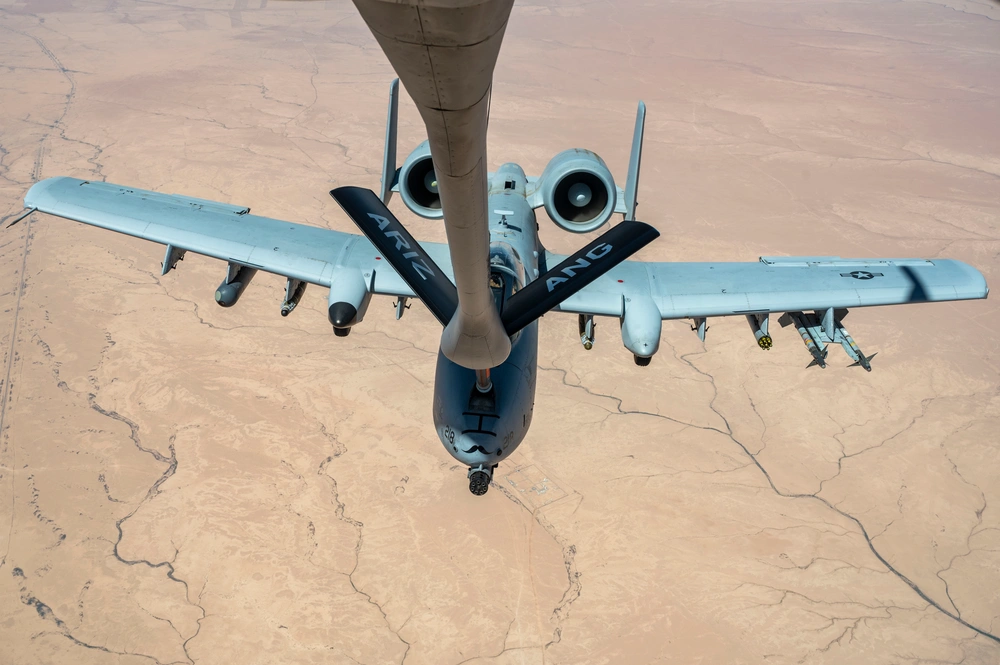
While the U.S. has a long list of aircraft capable of serving in the role of de-facto tanker, its primary refueling aircraft until recently were KC-10s and KC-135s.
But the KC-10 was retired in 2024 and the Air Force is now transitioning to the new KC-46, and that means needing to certify the grizzled A-10 for an entirely new refueling aircraft, which can be a somewhat pricey and time-consuming process. As a result, A-10s operating today can only refuel from KC-135s.
So, the Air National Guard Air Force Reserve Command Test Center set about creating a solution: an adapter that converts the A-10’s fuel-receiving receptacle for use with probe and drogue systems.
This adapter can be fitted on Warthogs in the field and allows them to receive fuel from Navy and Marine Corps tankers, like the HC-130 the Warthog refueled from in testing.
This field-deployable capability is especially useful for combat search and rescue operations like those we saw play out over Iran last week.
It’s not unusual for refueling-capable C-130 variants to participate in combat search and rescue operations, meaning A-10s could now refuel directly from them, whereas without the adapter, the A-10 would need to leave the combat environment to reach a KC-135, which is not very survivable over the battlefield.
America’s A-10s may be in the twilight of their careers, but they’re continuing to prove that you can indeed teach an old hog new tricks.
Feature Image: An A-10 Thunderbolt II refuels from a C-130 using a probe and drogue system for the first time in the aircraft’s history, April 2, 2026. The Probe Refueling Adapter converts the A-10 from its standard boom refueling configuration, allowing the aircraft to refuel from drogue-equipped tankers and expanding operational refueling options. The capability was developed in response to a combatant command requirement to increase air refueling availability in theater. (Air Force photo by Senior Master Sgt. Charles Givens)
Read more from Sandboxx News
- Iran’s cheap method of striking US aircraft despite American air superiority
- Air Force wants $1 billion to begin fielding AI-piloted drone fighters next year
- Northrop Grumman’s Talon fighter drone has a good chance of joining Air Force’s CCA program
- Anthropic tries to curtail the looming cybersecurity threat of its Mythos AI
- How a teenager with a Cessna helped topple the Soviet Union