The U.S. Army continues to invest in drones by expanding procurement options in its innovative “Amazon-style” drone marketplace.
In March, the Army established an unmanned aerial system marketplace, a digital one-stop shop that allows different Army units to rapidly choose and procure unmanned aerial systems that meet their unique mission needs. The drones available in the marketplace have already been vetted and approved.
Army units have spent more than $750 million in less than six months to buy drones through the marketplace.
Now, the Army added Group 3 unmanned aerial systems, payloads, components, and software in its marketplace, greatly increasing the options available to Army units. Drones belonging to Group 1 and Group 2 were already available in the marketplace.
“Agility is at the core of the UAS Marketplace architecture.” Rodney Davis, Capability Program Executive, Aviation, said in an Army press release. “Our team is constantly making iterative, tailored, and functional updates. These new listings enable our Soldiers to meet the demands of an ever-evolving battlefield.”
The Army worked closely with Amazon Web Services to develop and expand the drone marketplace. The idea has been working greatly as units can move quickly and buy systems tailored to their needs without a lot of red tape.
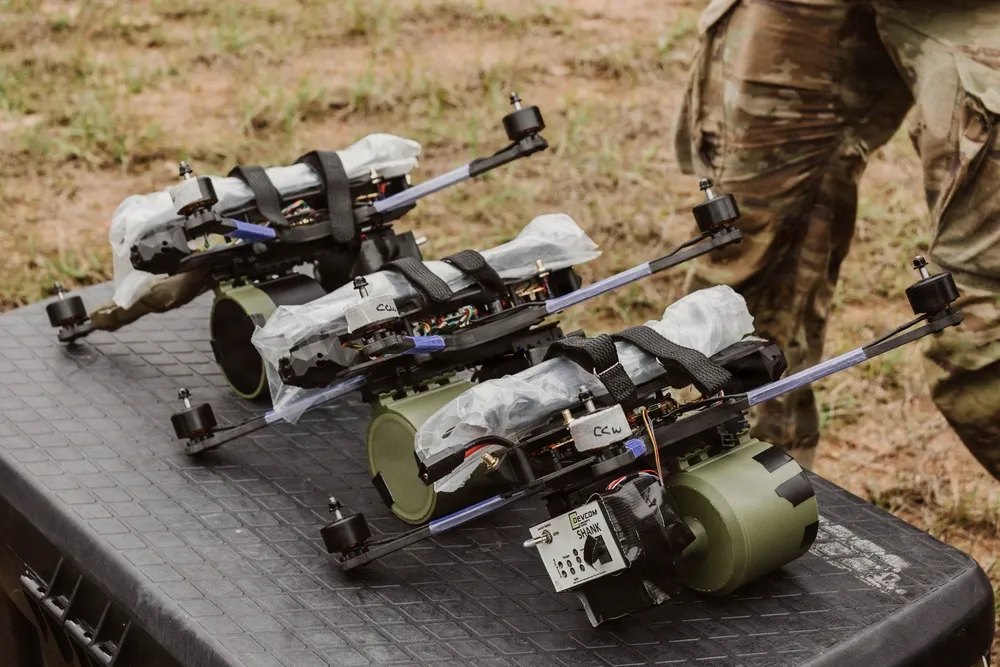
“The UAS Marketplace was designed to meet users’ unique mission needs and give them the power of choice,” Army Colonel Danielle Medaglia, UAS Project Manager, stated. “As capability offerings on the UAS Marketplace expand, we are ensuring our formations have the decisive technological edge they need to dominate in any environment.”
Unmanned aerial systems, colloquially known as drones, have become an integral part of military operations.
Military forces are using drones for a variety of tasks, including strike, resupply, artillery support, intelligence, surveillance, and reconnaissance (ISR), psychological operations, and even medical evacuation. However, a drone fleet’s strike capabilities, tactical or strategic, is probably the platform’s most important contribution to the modern battlefield.
Indeed, Ukrainian drone operators recently showcased the deadly nature of one-way attack, or kamikaze, drones, during an exercise with U.S. Army troops in Europe. The Ukrainians “destroyed” an American armored brigade before the U.S. troops had an opportunity to react.
Drone groups
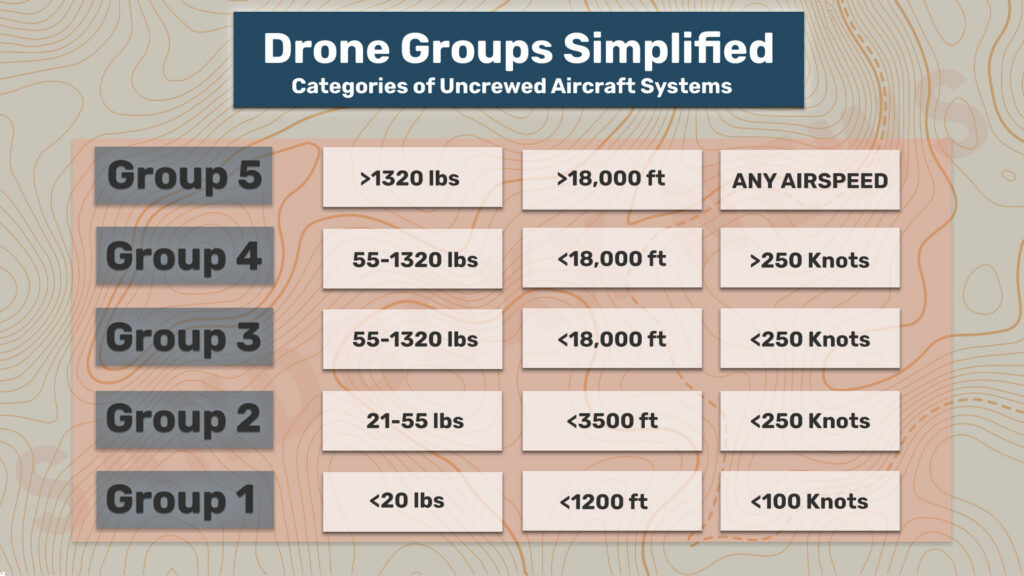
The U.S. military categorizes unmanned aerial systems in five groups based on specific characteristics, such as speed, operational ceiling, and maximum gross takeoff weight.
Unmanned aerial systems in Group 1 weigh between zero and 20 lbs, have an operating ceiling of 1,200 feet, and can reach maximum speeds of approximately 115 miles per hour, or 185 kilometers per hour.
Drones in Group 2 weigh up to 55 lbs, can operate at a maximum of 3,500 feet, and can reach speeds of up to 287 miles per hour, or 461 kilometers per hour.
Unmanned aerial systems in Group 3 – the latest to be included in the Army’s marketplace – weigh up to 1,320 lbs, have an operating ceiling of 18,000 feet, and can reach speeds of up to 287 miles per hour, or 461 kilometers per hour.
The Army’s increased investment in drone acquisition and operations is a step in the right direction to ensure the force is ready to operate on the modern battlefield.
The nature of combat changes fast. And if one is prepared for the last war, one is sure to suffer in the next.
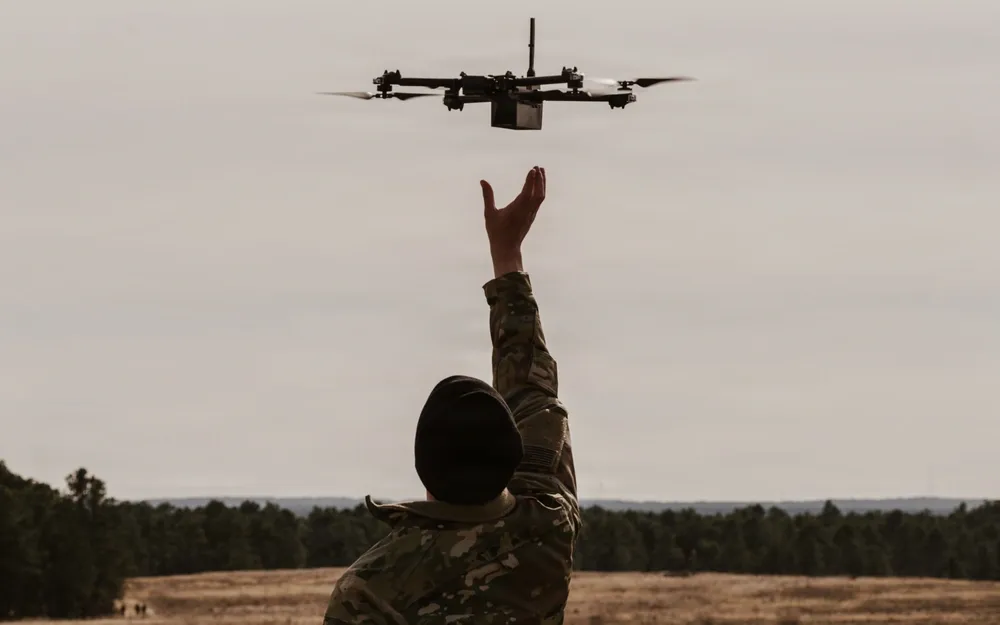
Feature Image: A Paratrooper assigned to Fox Company 1-82 Attack Battalion, 82nd Airborne Division Combat Aviation Brigade, releases a drone with support from Gainey Company during a Command Post Exercise at Fort Bragg, N.C., Jan. 29, 2026. The integration of drones into military operations provide real-time situational awareness, strategic reach, and operational flexibility, reshaping the dynamics of modern combat and defense strategies. (U.S. Army photo by Spc. Nicole Miller)
Read more from Sandboxx News
- Which American fighter jet has the best thrust-to-weight ratio?
- Germany to soon receive its first F-35 stealth fighter
- Trump orders Ford-class aircraft carriers back to steam catapults – but nobody has built one in 20 years.
- The Navy SEALs’ two original and little-known missions are still needed today
- US military wants to expand production of one of its most effective air defense weapons