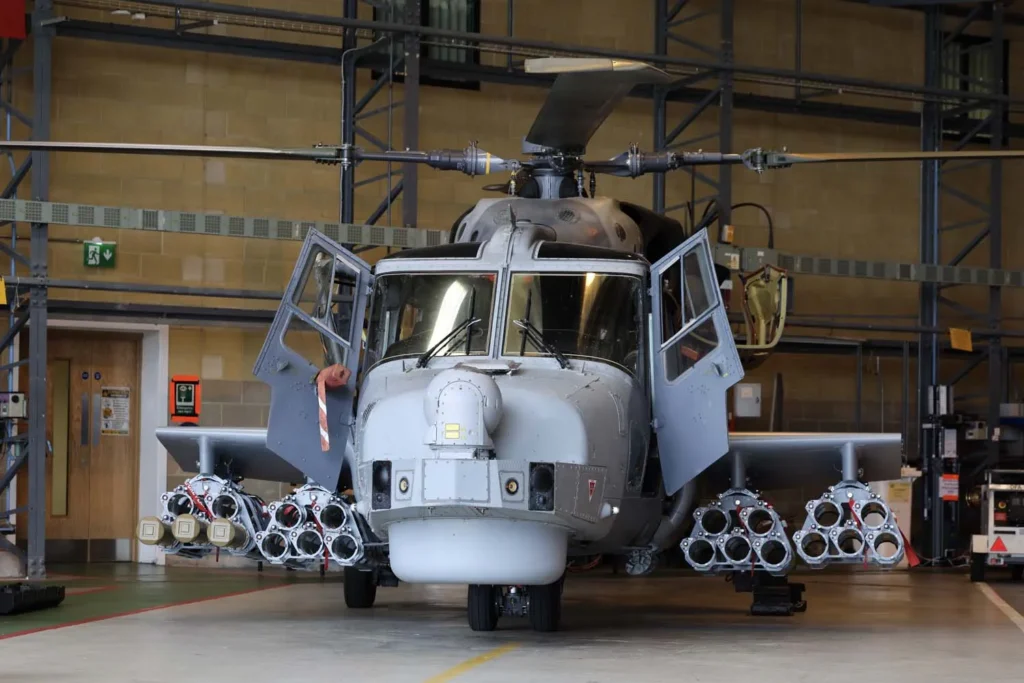
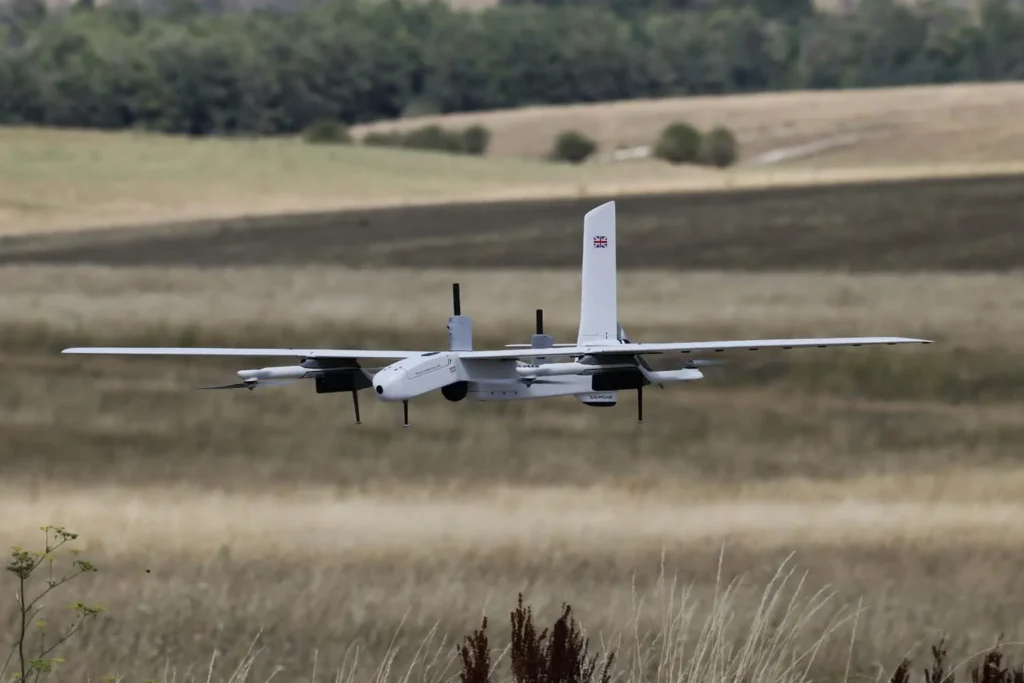
The Royal Navy successfully paired a manned Wildcat strike helicopter with swarms of drones, showcasing the viability of joint manned and unmanned operations over long distances.
Led by the Royal Navy’s Maritime Aviation Strike Operational Advantage Group, the week-long Project Dragon Rider covered more than 200 miles of southern England and tested how drones interact with manned aerial assets.
“During that trial, for the first time drones shared live data with Wildcat crews allowing the latter to target a moving vehicle before taking it to the fjords of Norway on Exercise Tamber Shield,” the Royal Navy announced.
(Exercise Tamber Shield is an annual, British-Norwegian exercise that aims to increase air and maritime operational capabilities between the two countries.)
The Royal Navy used a specially-modified AW159 Wildcat maritime strike helicopter to show that it is possible for unmanned systems to work seamlessly with traditional air and sea assets at long distances.
“The trial proved that this low-cost system is ready for the Royal Navy to use right now,” Lieutenant Commander Rhydian Edwards, one of the leading voices behind the drive to integrate drones with the Wildcat force, said in a service press release.
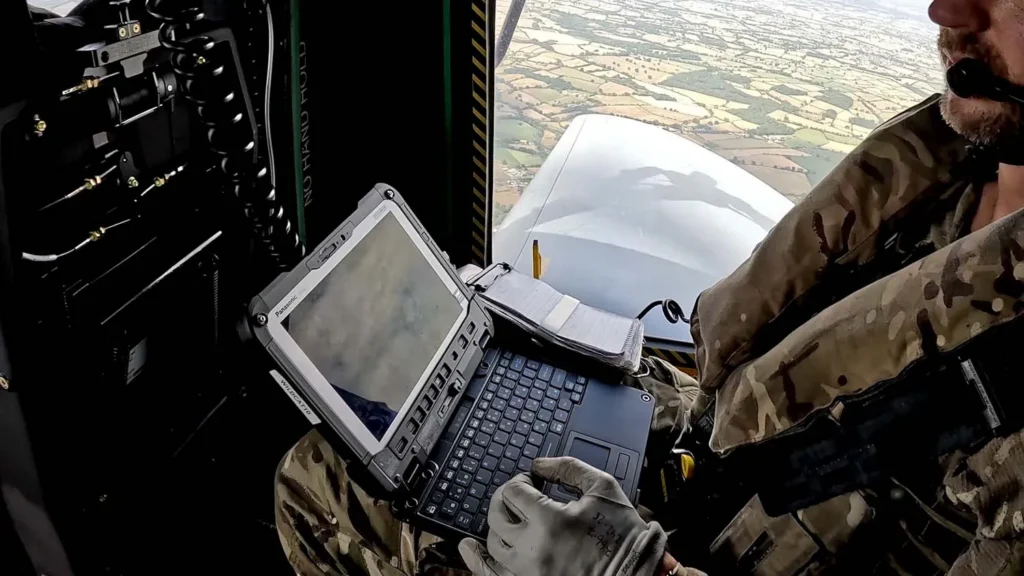
During the trial, the Wildcat was relaying data from multiple drones flying over southern England to operators in a central hub.
A key part of the successful experiments was the Mobile Ad-hoc Network (MANET), a new highly secure, easy-to-use mesh communications system straight out of the battlefields of Ukraine.
One of the major considerations when it comes to unmanned systems is how to defeat adversary countermeasures. One of the two ways to stop a drone is to jam its signal, thus cutting the link with its operator (the other way is to shoot it down). This is where MANET comes into play.
MANET’s technology can outsmart enemy jammers and force the drones to find alternate routes by using any transmitter on the network to ensure commands reach them if an adversary jammer knocks out any of the relays that transmit signals to the drone.
“This successful test is a major step forward in keeping human crews safer by letting drones handle dangerous tasks further ahead of the main military force, whilst also greatly increasing the number of units we can field at the same time,” Edwards added.
Aerial, maritime, and ground drones are becoming increasingly viable for military purposes. Unmanned technology steadily picked up pace in the 2010s but truly took off during the war in Ukraine.
The Royal Navy conducted the trials alongside several small- and medium-sized British, American, and Norwegian companies that are working at the leading edge of unmanned systems and network-enabled technologies.
Related: British warships will carry DragonFire laser to shoot down drones
Although the presence of British and American firms was no surprise, the participation of Norwegian companies raised a few eyebrows.
The United Kingdom has developed a strong defense relationship with Norway in recent years. Last year, London and Oslo signed a bilateral defense agreement. As part of this pact, the two countries share military technology and projects. Moreover, the Royal Norwegian Navy will procure five Type 26 frigates from the U.K. worth nearly $13.5 billion.
The next step in the process of pairing the manned and unmanned platforms is to incorporate satellite communications into the system that will enable commanders to securely control the swarms of drones. The goal is to create such a powerful and secure link that commanders anywhere in the world, even back in the U.K., will be able to control the drones.
Drones represent an important part of current and future warfare. The more a military force invests in drone technology, the more likely it is that it is going to be prepared for the challenges of the future.
Feature Image: The British Wildcat helicopter that was fitted with additional sensors to participate in the trials. (Royal Navy)
Read more from Sandboxx News
- Delta Force’s quest for armor-protected mobility platforms
- Navy reclassifies upcoming Virginia-class submarines pointing to the vessels’ future role
- Navy’s C-2 Greyhound, a Cold War warrior, was retired after 60 years of service
- Air Force reveals the B-2 can carry a lot more ordnance than previously stated
- Government subpoenas journalist over sensitive Navy SEAL-North Korea operation