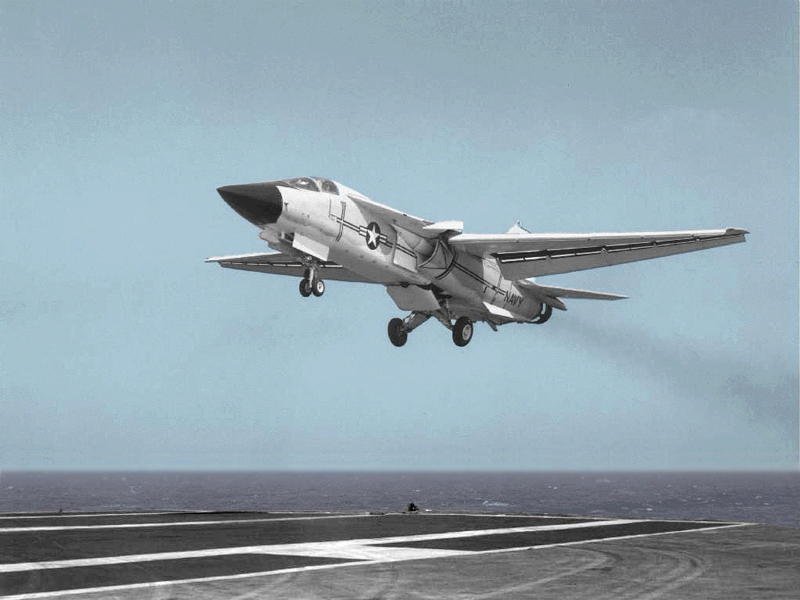
Vice Admiral Thomas Connolly famously said the F-111B Navy variant lacked “enough thrust in all Christendom to make a Navy fighter out of that airplane.” Congress terminated funding for the F-111B in May 1968.
The F-14 Tomcat was created after the U.S. Navy rejected the F-111B variant of the F-111 Aardvark – designed during the 1960s under Defense Secretary Robert McNamara’s Tactical Fighter Experimental (TFX) program. The F-14 Tomcat carried over the Hughes AN/AWG-9 radar and the AIM-54 Phoenix long-range missile combination from the failed F-111B.
How the F-14 Tomcat joined the US Navy
The F-14 Tomcat has suddenly returned to the headlines almost two decades after retiring from U.S. Navy service.
Recently, the Senate unanimously passed the “Maverick Act of 2026,” legislation designed to preserve the final surviving U.S.-owned F-14s and potentially allow one to fly again in commemorative demonstrations.
The bill comes amid growing speculation that Iran’s remaining Tomcat fleet may finally have been destroyed after years of attrition, sabotage concerns, and regional conflict.
The sudden renewed attention on the F-14 is also a reminder that one of America’s most famous carrier fighters only existed because the Navy rejected another aircraft first: the General Dynamics-Grumman F-111B.
The F-111B was supposed to become the Navy’s next long-range fleet defense interceptor during the 1960s as part of Defense Secretary Robert McNamara’s controversial Tactical Fighter Experimental, or TFX, program.
The idea behind TFX was simple in theory but enormously difficult to achieve in practice.
It would force the Air Force and Navy to use largely the same aircraft platform to reduce procurement and development costs – in theory. The Air Force version eventually entered service as the F-111 Aardvark strike aircraft. The Navy version did not survive.
The Navy wanted a fleet defender, not a strike bomber
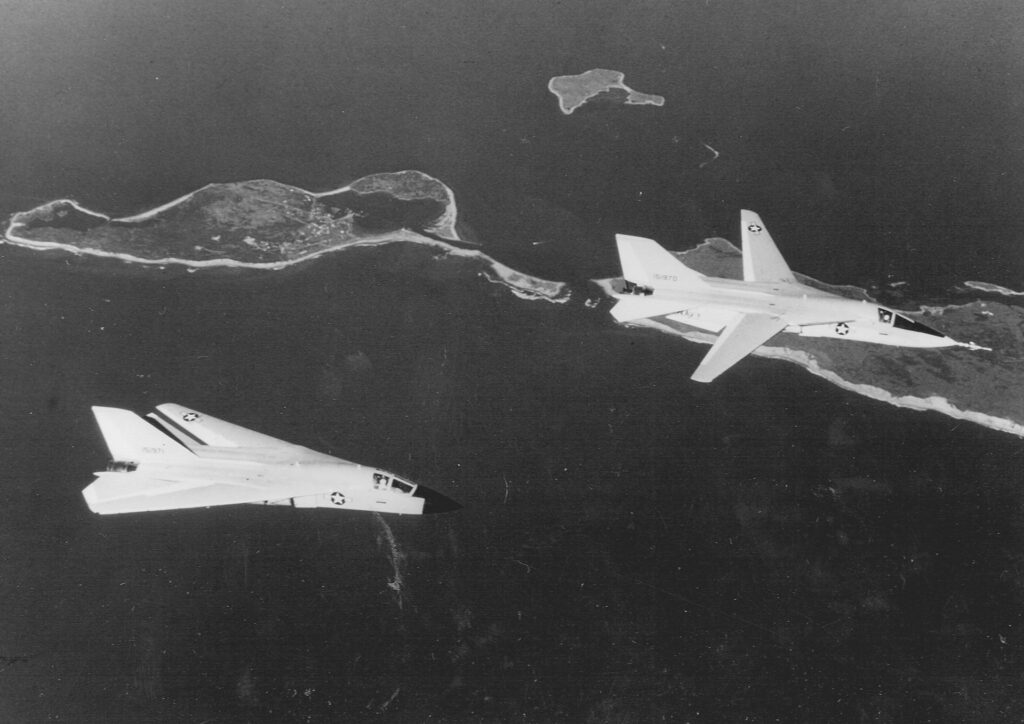
Originally, the Navy’s requirement focused on defending carrier strike groups against Soviet bombers carrying long-range anti-ship missiles.
American planners feared that large formations of Soviet Tu-16 and Tu-22 bombers could launch cruise missile attacks against carrier groups from hundreds of miles away.
To counter that threat, the Navy wanted an interceptor with an extremely long range, a powerful radar system, and missiles capable of destroying enemy aircraft before they could launch their own weapons.
The F-111B attempted to meet those requirements by combining variable-sweep wings, twin afterburning turbofan engines, the Hughes AN/AWG-9 radar system, and the AIM-54 Phoenix long-range missile.
The aircraft could, in theory, engage targets at enormous distances while loitering far from the carrier group. The problem was that the aircraft was also extremely large, extremely heavy, and increasingly unsuited for carrier operations.
But the Navy quickly became concerned that the compromises required to satisfy both Air Force and Navy requirements had produced an aircraft optimized for neither mission. The Air Force primarily wanted a low-level strike aircraft capable of penetrating Soviet air defenses. The Navy needed a maneuverable fleet defense fighter capable of carrier launches and recoveries under difficult sea conditions.
Those requirements increasingly diverged as development progressed – a problem seen across modern programs designed to suit the requirements not just of two separate services, but countries, too.
The aircraft also suffered serious technical issues during testing. Compressor stalls plagued the Pratt & Whitney TF30 engines, visibility over the nose complicated carrier handling, and pilots increasingly complained about the aircraft’s overall suitability for naval aviation. The F-111B’s growing weight became particularly controversial because carrier suitability margins were already extremely tight.
Vietnam changed the Navy’s thinking

The experience in Vietnam further undermined confidence in the F-111 B’s overall concept. During the early 1960s, many defense planners believed future air combat would occur almost entirely beyond visual range using advanced missiles and radar systems.
Maneuverability was increasingly viewed as less important than sensors and missile reach.
The F-111B reflected that thinking. But real combat over Vietnam showed that dogfighting still mattered. U.S. aircraft, including the F-4 Phantom II, struggled against smaller and more maneuverable MiG fighters during close-range engagements.
The Navy began reassessing whether it wanted a very large interceptor optimized almost entirely around long-range missile combat.
One of the most damaging moments for the F-111B came when Vice Admiral Thomas Connolly personally flew the aircraft and later testified before Congress that it lacked the performance needed for carrier service.
Connolly’s criticism became famous inside naval aviation circles because it directly contradicted political pressure to keep the joint-service program alive. In May 1968, Congress terminated funding for the F-111B, effectively ending the Navy’s participation in the TFX concept.
“Mr. Chairman, there isn’t enough thrust in all Christendom to make a Navy fighter out of that airplane,” Connolly famously said.
The cancellation of the project did not kill the Navy’s fleet defense requirement, though.
Instead, it opened the door for the Naval Fighter Experimental program, better known as VFX. Grumman, which was already heavily involved in the F-11B program, quickly adapted lessons learned from the failed aircraft into an entirely new design.
Related: More than missing guns: Why America lost dogfights over Vietnam
The F-14 kept the good parts and rejected the bad ones
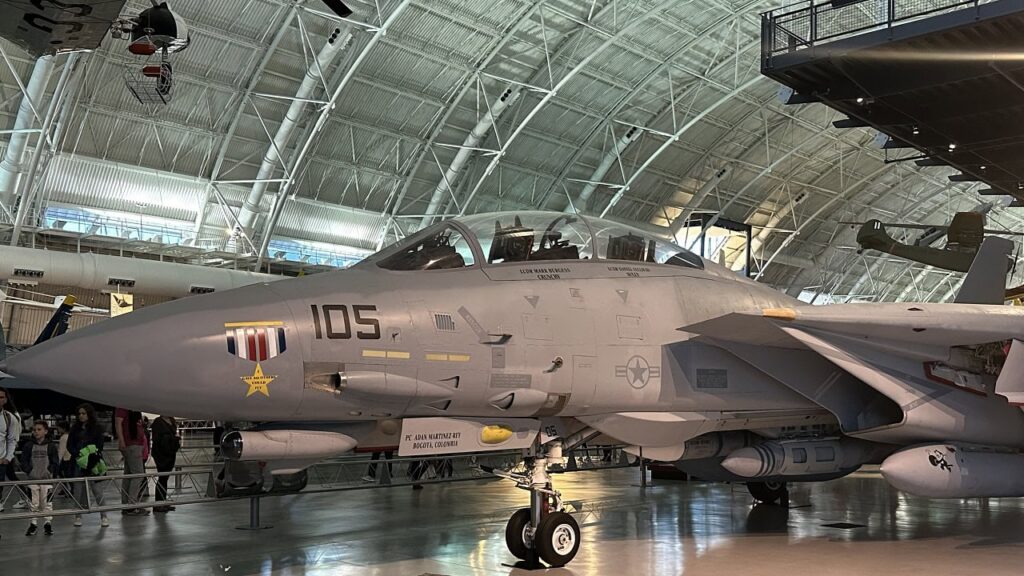
The resulting aircraft became the F-14 Tomcat. While often remembered today for Top Gun, the aircraft was fundamentally designed around the same Soviet bomber-interception mission that originally drove the F-111B requirement.
Many of the most important systems were carried over directly from the failed aircraft, including the AWG-9 radar and the AIM-54 Phoenix missile combination.
But Grumman redesigned the aircraft as a whole into something far more suitable for carrier aviation.
The Tomcat used a tandem cockpit instead of side-by-side seating, incorporated a lighter airframe, improved visibility, better maneuverability, and retained the variable-sweep wing concept that had proven aerodynamically useful during F-111 development.
Grumman officially won the VFX competition in January 1969. The F-14 first flew on December 21, 1970, reached operational capability in 1973, and entered fleet service shortly afterward. 712 Tomcats were eventually built.
Editor’s Note: This article by Jack Buckby was originally published by 19FortyFive.com.
Feature Image: A General Dynamics F-111B (BuNo 151974) approaching the aircraft carrier USS Coral Sea (CVA-43) in July 1968. It was the only F-111B to perform carrier operations after completing arrestor proving tests at the Naval Air Test Center Patuxent River, Maryland (USA), in February 1968. It crash-landed at NAS Point Mugu, California, on 11 October 1968 and was subsequently scrapped. (U.S. Navy photo)
Read more from Sandboxx News
- America’s LUCAS kamikaze drones will get a lot scarier thanks to Hivemind AI
- A Green Beret remembers his favorite foreign weapons
- OA-1K Skyraider II aircraft revealed its impressive capabilities during SOF Week
- Coast Guard will stand up its own Special Missions Command to better counter maritime threats
- Training and preparing for Delta Force Selection and Assessment