The LUCAS drone, the U.S. military’s copy of Iran’s Shahed 136 attack drone, will now become more dangerous than the original, thanks to Shield AI’s “Hivemind” artificial intelligence.
The Pentagon has awarded the company a new contract to integrate its Hivemind autonomy software into these low-cost kamikaze drones.
Hivemind will give LUCAS drones, or Low-Cost Uncrewed Combat Attack Systems, the ability to coordinate with one another to perform evasive maneuvers, distribute and re-prioritize targets, and conduct swarming attacks – all without any human intervention.
This represents a fundamental shift in how the LUCAS drones can be employed in combat.
Shield AI calls this approach “collaborative autonomy,” and it’s a cornerstone of several ongoing efforts ranging from low-cost drone swarms to high-end collaborative combat aircraft, or drone fighters, in testing today.
So far, LUCAS attack drones have been operated very similarly to Iran’s Shahed-136 and Russia’s copy, the Geran-2: they are effectively launched with pre-established target coordinates and close with them like any other guided weapon would.
But now the drones will be able to cooperate and adapt to changing conditions in real time, in coordination with one another and with other assets on the battlefield, based on directives provided by human operators.
Hivemind will give the LUCAS drones “the autonomy layer that enables teams of drones to sense, decide, and act at scale,” Brandon Tseng, Shield AI’s founder, said.
As Sandboxx News has covered in the past, the LUCAS were reverse-engineered from recovered Shahed-136s by Arizona-based firm SpektreWorks. The initial goal was to create a target surrogate meant to emulate the basic shape and performance of Shahed-style drones for American troops to practice shooting down.
Related: US embraces ‘Shanzhai’ with copycat Iranian drone
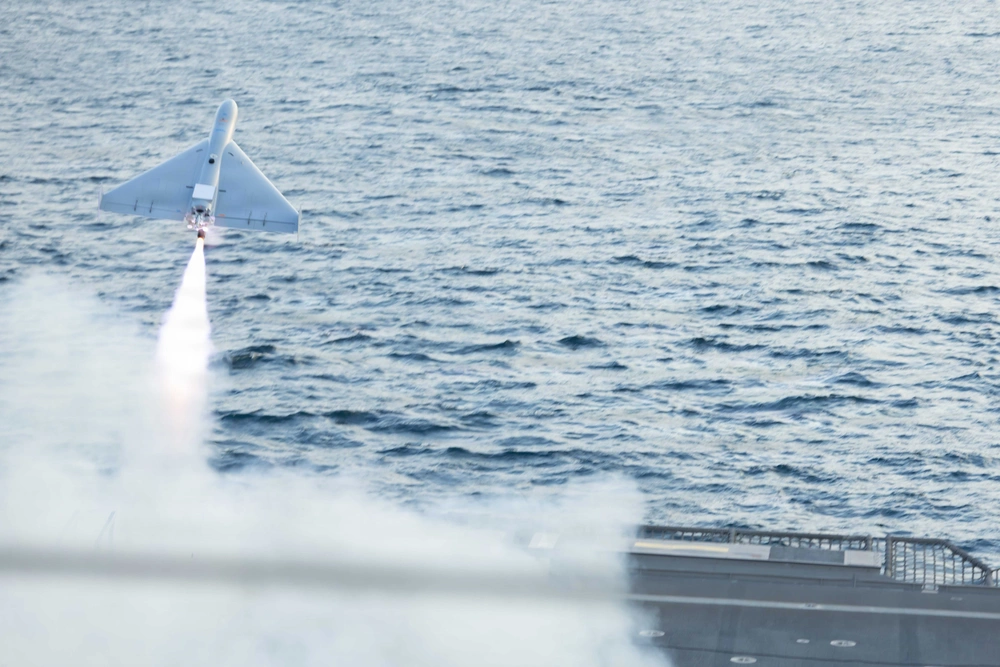
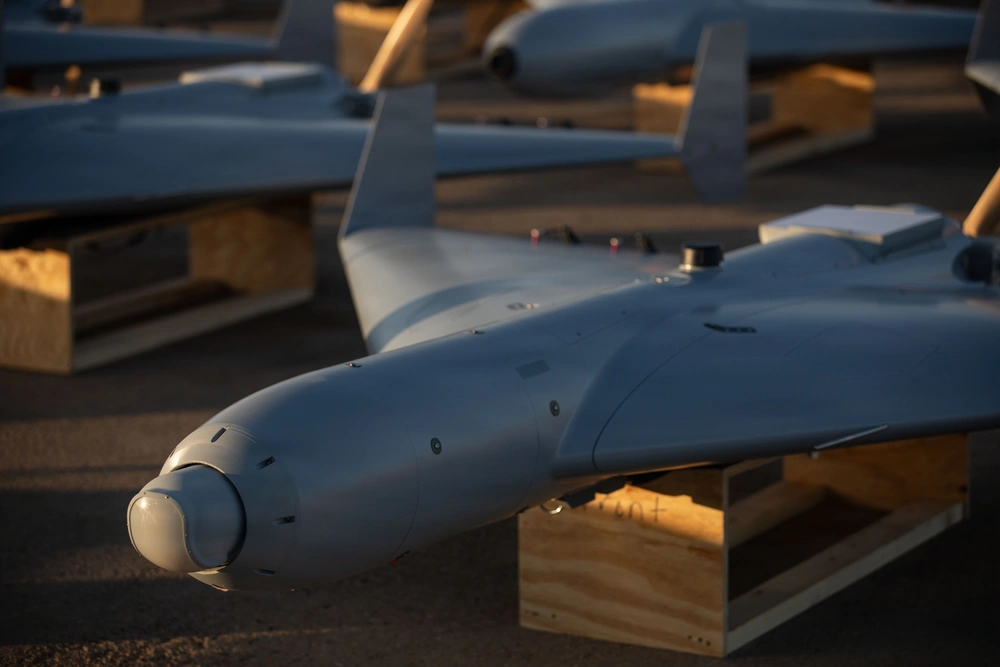
Yet, once completed, these 10-foot-long drones with an eight-foot wingspan, the ability to carry 40-pound payloads, and a reported range of some 500 miles, made for a very enticing weapon system instead. What followed was a rapid 12-month development and testing process that culminated in the first LUCAS drones being used in combat against, ironically enough, Iran, earlier this year.
Despite all of the media attention and hyperbole surrounding these kamikaze drones in recent years, they aren’t really new technology. What makes them special isn’t their capability set, but rather, their low cost.
At $35,000 a piece, these drones come at a similar price point to Iran’s original, which can range in cost from $20,000 to as much as $80,000 a piece, depending on the variant.
And just like the Shahed, LUCAS drones present a complicated problem for opponents to address.
For example, S-300, S-400, and HQ-9 air defense systems, which are operated by Iran, Russia, and China, launch interceptors like the 48N6 that cost around $1.3 million each. Although the LUCAS are easy pickings for those kinds of systems, the cost-exchange ratio makes defending against them a serious financial burden.
And now that they will be combined with sophisticated AI capabilities delivered via off-board autonomy suites like Hivemind, they will become an ever bigger obstacle to adversaries’ air-defense systems.
Feature Image: U.S. CENTRAL COMMAND AREA OF RESPONSIBILITY (Nov. 23, 2025) Low-cost Unmanned Combat Attack System (LUCAS) drones are positioned on the tarmac at a base in the U.S. Central Command operating area, Nov. 23. (U.S. Central Command Public Affairs)
Read more from Sandboxx News
- A Green Beret remembers his favorite foreign weapons
- OA-1K Skyraider II aircraft revealed its impressive capabilities during SOF Week
- Coast Guard will stand up its own Special Missions Command to better counter maritime threats
- Training and preparing for Delta Force Selection and Assessment
- Air Force underestimates aircraft maintenance delays, government watchdog finds