The use of low-cost, near-consumer-grade small drones in warfare dates back more than a decade, but only recently has it gained traction with conventional military forces. The war in Ukraine has seen the extensive use of drones and, at this point, the technology can’t be ignored. Why use a $500,000 missile when a $500 drone can have the same effect?
The Marine Corps has tackled cheap drones with gusto, forming training units and developing new tactics.
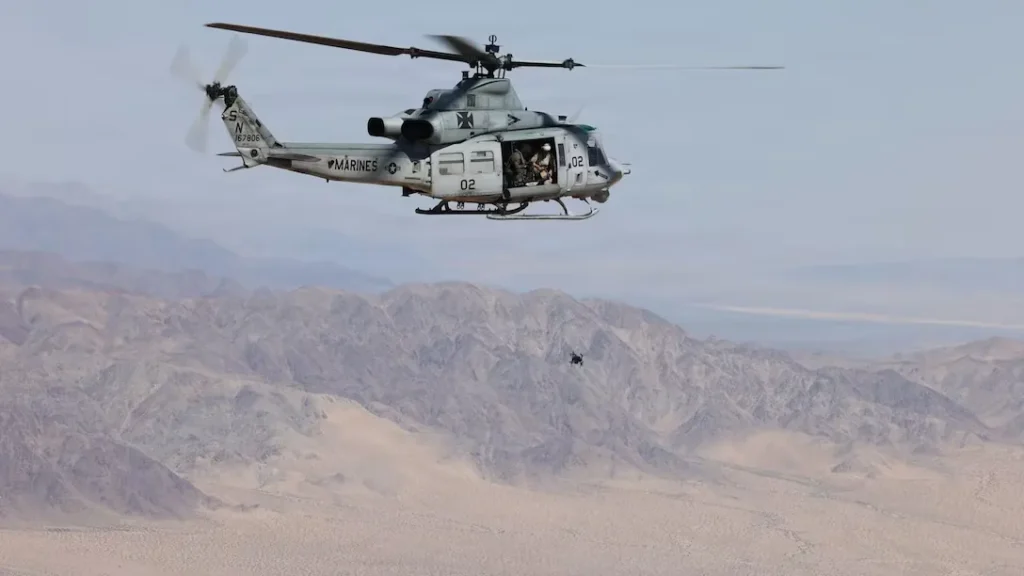
Lately, the branch has started turning its H-1 helicopters into motherships for first-person view (FPV) drones. The goal is to allow helicopters to provide close air support while maintaining a stand-off range against modern air defense systems.
The H-1 mothership
Elements of the 3rd Marine Aircraft Wing and 3rd Light Armored Reconnaissance Battalion paired together at Marine Corps Air Station Miramar, California, in late May, to combine drones with helicopters to increase the lethality of both via a manned-unmanned teaming, or MUM-T.
“The primary objective was to test the feasibility of a non-kinetic drop and deployment of a first-person view drone from a moving helicopter, which we were able to do today,” said Capt. Quinton Thornbury, a UH-1Y Venom pilot with Marine Light Attack Helicopter Squadron 169.
The scenario was simple: the ground forces from 3rd LAR launched a Neros Archer FPV drone – the most common drone used by the infantry – and tested the ability to hand off the drone’s control to an FPV drone operator hovering in a UH-1Y Venom several miles away.
The proof concept was a success and the hand-off to the drone pilot in the helicopter went seamlessly. The result validated the possibility of using helicopters as mobile motherships for small unmanned aircraft.
Welcome to MUM-T
The benefits to this MUM-T teaming are numerous: the drones will effectively extend the survivability, flexibility, and capability of a helicopter.
First, a UAV pilot inside a helicopter can use the drones for target or threat detection, as a drone makes it easy to scan for enemy forces, air defense systems, and armored vehicles, and even map the terrain and identify landing zones.
Alternatively, if the drone is armed with an explosive charge, the pilot can use it to attack the enemy without putting the vulnerable helicopter inside the enemy’s effective range, effectively providing close air support to ground forces.
These drones are essentially guided munitions that only cost a few hundred dollars.
Related: Not all drones are created equal: The five different groups of drones and how to counter them
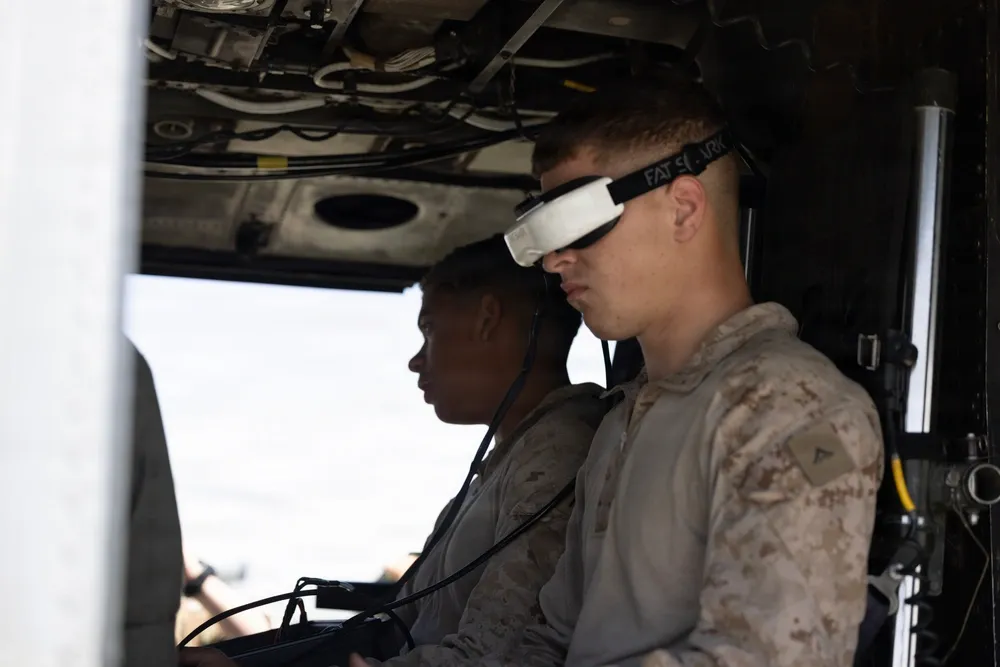
Imagine a Marine force receiving mortar fire from an enemy, and attempting to locate the mortar team. They can launch their own drone to locate the enemy, but maybe they only know the general direction of fire, or the fights are so intense they can’t spare a rifle.
Instead, this proof of concept demonstrates that the Marines could launch the drone towards a friendly helicopter, which could then take over drone control and exploit its, the helicopter’s, airborne advantage and optical systems. The UH-1 can employ its advanced targeting systems to find enemy forces hidden around cover and deploy the drone to take them out.
Beyond combat scenarios, the teaming will also be valuable for search-and-rescue or MedEvac mission, as the helicopter’s ability to search is greatly increased by adding one or multiple drones to the mix.
Pairing cheap, disposable, unmanned vehicles with manned aircraft isn’t new. However, the trial in Miramar was of the first times that the U.S. military has combined affordable unmanned aircraft with helicopters.
MUM-T capabilities are evolving rapidly and we can’t afford to ignore them. The future might not be unmanned or manned, but, instead, a combination of both.
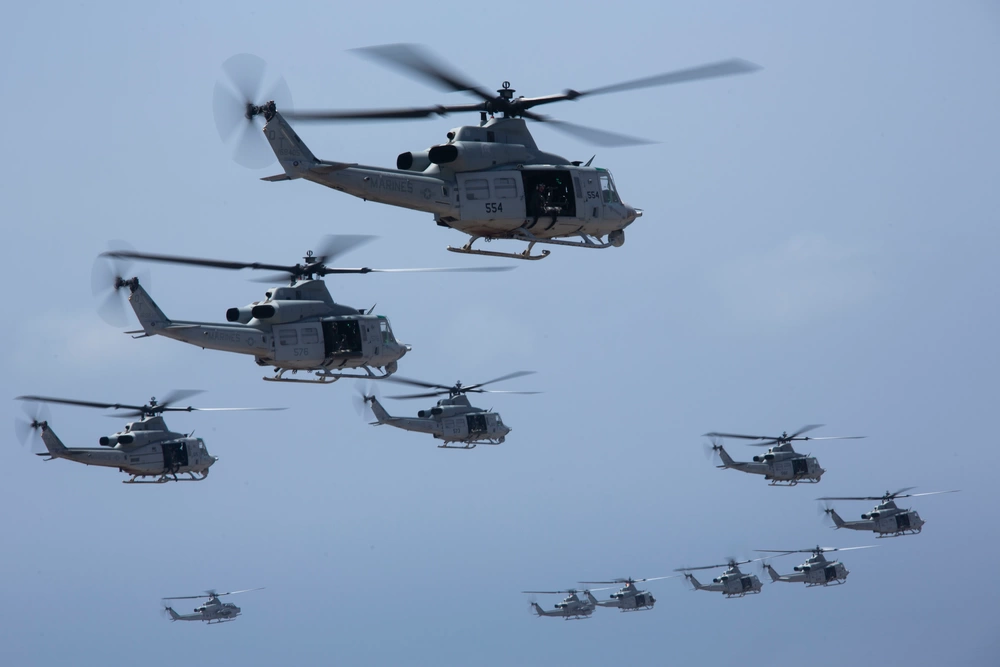
Feature Image: U.S. Marines along with the UH-1Y Venom and AH-1Z Viper aircraft platform with Marine Light Attack Helicopter Training Squadron (HMLAT) 303, Marine Aircraft Group 39, 3rd Marine Aircraft Wing conduct a mass flight at Marine Corps Base Camp Pendleton, California, April 28, 2022. (U.S. Marine Corps photo by Sgt. Daniel Childs)
Read more from Sandboxx News
- Navy SEALs deploy to Trinidad and Tobago to help counter drug trafficking into the U.S.
- Does “The Punisher: One Last Kill” do the iconic character justice?
- Air Force wants to replace the MQ-9 Reaper with drone swarms
- Could America have taken over the world after WWII?
- Trump says U.S. will give Ukraine permission to manufacture Patriot missiles