The Navy and Army are inching closer to adding hypersonic weapon capability to their arsenals, but continue to deal with testing challenges and delays.
The Government Accountability Office’s annual weapons assessment found that, across the board, long-anticipated hypersonic missiles programs from the Air Force, Navy and Army aren’t seeing the development in technological maturation that they should – a broader problem for U.S. military weapons systems.
Hypersonic weapons, which can travel at speeds greater than Mach 5 and maneuver in ways conventional missiles cannot, could represent a critical long-range offensive capability against the United States’ most capable adversaries. But first, the Pentagon has to get the weapons out of development and into the field.
Despite past delays, the Navy, according to officials, still expects to conduct a flight test of its Conventional Prompt Strike (CPS) hypersonic weapon from the deck of a stealthy Zumwalt-class destroyer in 2027. This will represent a critical developmental milestone for both the missile program and the embattled ship class, which has long lacked a clear mission.
Officials told GAO that some aspects of integrating CPS onto the ship have taken place, despite a delay of about nine months “due to unforeseen testing and production challenges.” Installation of the weapons system on the first ship, DDG-1000, is supposed to be finished by the end of this year, with installation on the second ship to follow.
Both the Army and Navy are using versions of the CPS missile – which cost an eye-watering $41 million apiece – for their hypersonic weapons programs, linking the programs closely together. However, production delays due to problems on the line appear to be slowing everything down.
The GAO report, which was released on July 2, said the Army’s Long Range Hypersonic Weapon program “identified issues with missing, inconsistent, and unclear work standards for missile production,” which delayed delivery of its second missile battery by at least six months. For the Navy’s CPS program, quality issues on the missile production line created problems, investigators said.

“One of the major risks CPS program officials identified for fielding the system on Zumwalt class destroyers is missile availability for testing. The risk is driven by long-standing missile production challenges,” GAO officials wrote.
“Some of the problems discovered during earlier flight tests required the program and contractor to review and refine missile production processes. The problems also created a production bottleneck as the Army and Navy reported putting a hold on missile production until the weapon system was successfully tested,” the officials added.
The Army, which had pushed the fielding timeline for its Long Range Hypersonic Weapon system back from 2023 to this year, continues to face delays even as fielding processes are underway, with the first battery of the LRHW, known as Dark Eagle, activated at Joint Base Lewis-McChord, WA, last December. But that activation did not include the long-awaited first eight missiles that will make the system lethal.
“Program officials stated that the Army will not field its first LRHW battery – including missiles – until at least the second quarter of fiscal year 2026. This is over two years later than its initial goal and nine months later than our last assessment,” GAO investigators stated in the report.
The service awarded a $2.7 billion production contract at the end of March; a successful end-to-end flight test had taken place in June 2024. But the Army hasn’t released any new updates on the completion of the missile fielding process for Dark Eagle since this spring, despite a reported request by U.S. Central Command that the weapon be fast-tracked to the Middle East for use in the conflict with Iran.
Army officials also told GAO that fielding the service’s second Dark Eagle battery was also delayed until at least the start of 2027 due to missile delivery delays.
Related: Navy plans to mount hypersonic missiles on Zumwalt stealthy mega-destroyers
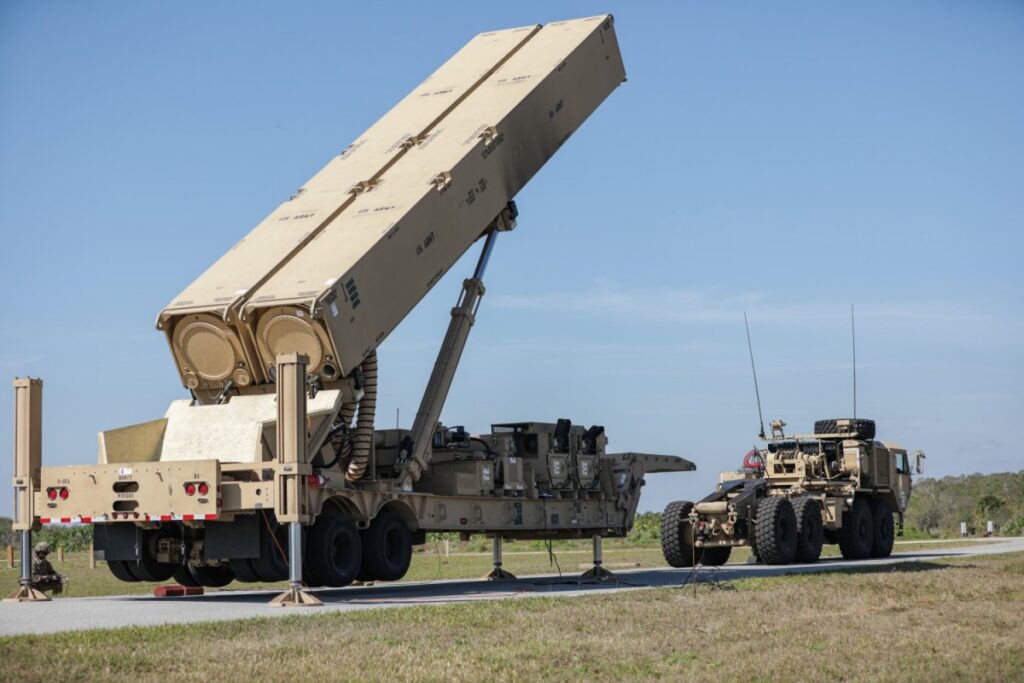
A flight test for the second battery’s slightly modified missiles had yet to take place as of the start of this year, which suggests the timeline could slip further. And, officials said, the third planned battery may face delays as CPS missile design processes are still underway and contracting about six months behind schedule. But the Army maintains it can keep to the set timeline.
“The Army stated that it will field the third LRHW battery on time using the missile configuration that is current at the time of fielding. In addition, the Army and the Navy will continue to test updated missile designs and field them as available,” investigators said in the report.
“After our review, the Army and Navy conducted a flight test in March 2026, and the Army stated that it coordinated with the Navy’s CPS program to resolve design issues for the third battery.”
The Air Force, is developing its Hypersonic Attack Cruise Missile – to be carried by an F-15 Eagle fighter jet – separately from the interlinked Army and Navy programs. Nonetheless, the service is facing its own fielding problems.
The missile’s first flight test was set to be conducted in early 2026 – an event the service has not yet confirmed that it took place. Now, investigators warn “there is effectively zero margin left in the schedule” for failures or delays.
“If a significant flight test failure occurs, it is likely that the program will not be able to complete all five tests within the five-year rapid prototyping timeframe,” they wrote.
The Air Force wants to field HACM in fiscal year 2027, but must complete the first three of five flight tests in order to confidently pursue fielding. The service has had to adopt “risky strategies” to stay on schedule, such as completing parts validation and design processes at the same time, GAO said.
That approach “could require the redesign of key parts if they fail validation testing,” officials said.
Feature Image: A Conventional Prompt Strike missile launches from a naval vessel. (Lockheed Martin)
Read more from Sandboxx News
- Federal’s Peak Alloy high-pressure ammo will be a game-changer for the Army
- What do we know about the Air Force’s goal to field the world’s longest-range, air-to-air missile
- This elite U.S. special operations unit required an oath of secrecy to join
- What happens when a Delta operator collects too much equipment?
- Air Force reveals that the B-2 Spirit can also hunt ships – and it’s very good at it