Editor’s Note: This article by Chris Panella was originally published by Business Insider.
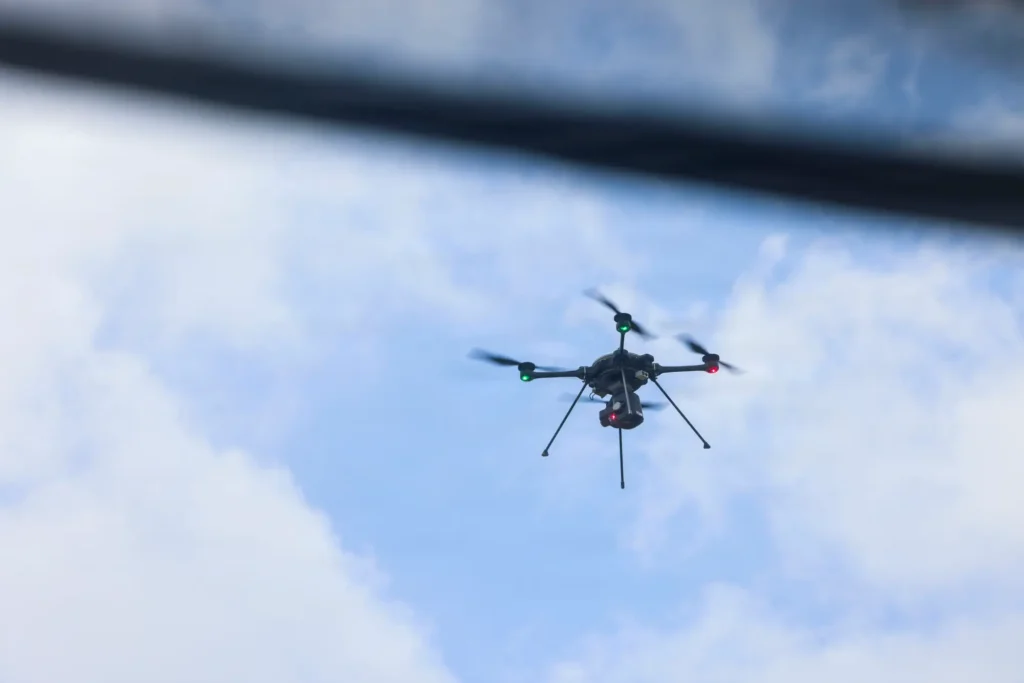
The Department of Defense is investing millions of dollars in new laser weapons that can shoot down enemy drones and cruise missiles.
Laser weapons are experimental, and the U.S. has spent years developing the concept for land, air, and sea. Officials believe lasers could add to defensive arsenals and help reduce the strain on traditional interceptors as a lower-cost-per-shot option.
On Thursday, DoD announced agreements in support of its Joint Laser Weapon Systems program with nLIGHT Defense, a high-power laser developer, and Lockheed Martin Aculight, the prime’s laser weapon division. The initial DoD award value is $86 million with a total program maximum of $847 million.
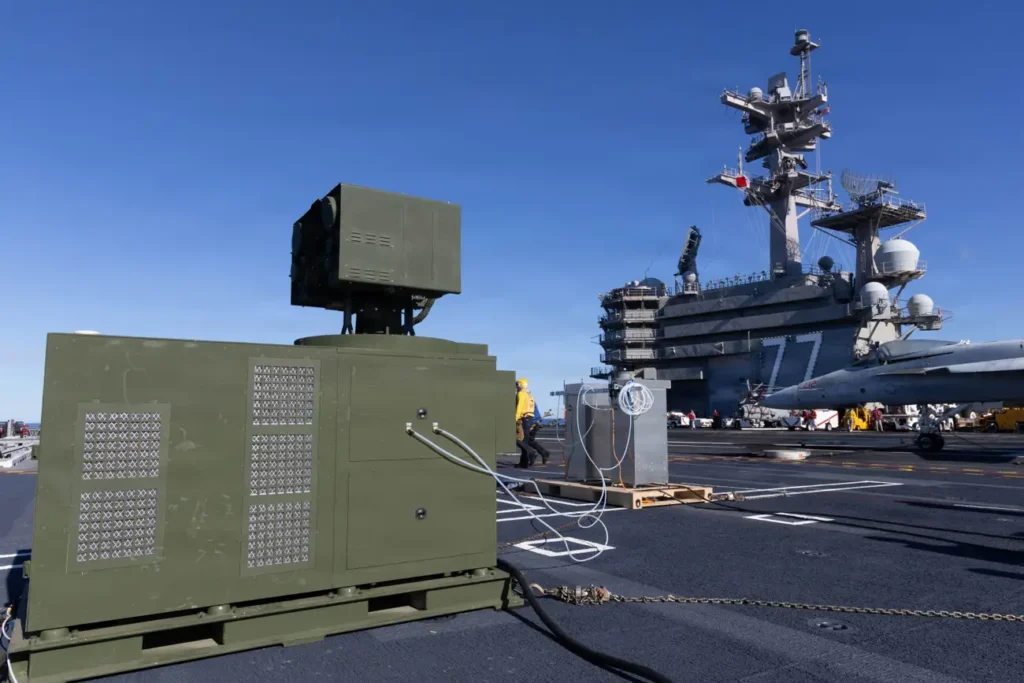
“By developing containerized high-energy laser weapons, the Department aims to provide combatant commanders with scalable, cost-effective intercept solutions for asymmetric and high-tier adversary threats,” the Pentagon said in a press release.
Due to “urgent operational demands,” the initial laser weapon prototypes will have approximately 150 kilowatts of power, but DoD expects to boost that to a range of 300 to 500kW, which is the anticipated power needed to counter cruise missiles.
The announcement said that a separate “laser source” will develop a 500kW solution as part of the Office of the Under Secretary of Defense for Research and Engineering’s High Energy Laser Scaling Initiative (HELSI).
“We must actively defend the homeland against emerging threats,” Emil Michael, under secretary of defense for research and engineering, said, per the release. “We are partnering with industry to rapidly deliver deep magazine directed energy capabilities to the Joint Force that can be seamlessly deployed across multiple domains.”
DoD has long looked to lasers as cheaper, more sustainable air defense options, especially for hitting inexpensive targets like drones rather than expending high-value missiles or interceptors.
The defense department said “these prototype systems offer critical operational advantages over traditional kinetic systems, including speed-of-light engagement, exceptionally deep magazines and significantly lower cost-per-intercept, attributes essential for countering high-volume UAS [Uncrewed Aerial Systems] swarms and advanced cruise missile threats.”
Related: Marines turn H-1 helicopters into drone motherships
With sufficient electricity, laser weaponry could fire repeatedly at a much lower cost than missiles. But bigger targets require more power, and the weapons generate intense heat, making strong power and cooling systems essential.
The Navy has looked at battery packs that could supply lasers with extra power, while the Army has tested lasers mounted on Stryker vehicles to shoot down drones and incoming rockets. The services are also working on other types of directed-energy weapons; however, many of these systems are still experimental, and some programs have been cut or canceled because they proved too difficult or costly to make practical.
Last month, DoD held a demonstration of several laser and directed energy weapons for Secretary of Defense Pete Hegseth, Laser Wars reported. It’s the first publicly known instance of a defense secretary observing a live-fire event for these weapons.
Feature Image: U.S. Marines assigned to 3rd Littoral Combat Team, 3rd Marine Littoral Regiment, 3rd Marine Division, train with a R80D sky-raider drone before a live-fire range at Fort Magsaysay, Nueva Ecija, Philippines, June 2, 2026. (U.S. Marine Corps photo by Sgt. Iyer Ramakrishna)
Read more from Business Insider
- Ukraine is showing the West that wars may turn on who can innovate, adapt, and act the fastest, not who has the best weapons
- Trump reverses course on a 20% fee on Strait of Hormuz cargo after pushback
- Russia said Ukrainians used balloons, trailers, and drones to sneak AI attack quadcopters deep into its country
- Ukraine launched a first-of-its-kind robotic amphibious assault, deploying a gun-toting robot from a drone boat
- Ukraine’s war robot usage jumped 122% in 6 months as the frontline ‘kill zone’ for human troops grows