The Air Force is now amid a massive $11 billion upgrade and overhaul of its F-22 Raptor fleet, with the goal of keeping these jets in the fight until enough of the new F-47 have been built to replace them in the air superiority mission.
Yet, even with so few Raptors in combat-ready condition, these air-to-air focused jets will probably last longer than America’s willingness to stomach the rising cost of their operations – and for the Air Force, that’s a good thing.
With F-22 production formally shuttered in 2011 after just 187 aircraft had been delivered, the jet was doomed to a shortened service life, because it would be impossible to get replacement jets for any that would crash, get shot down in combat, or wear out.
There are around 178 Raptors still flying, but 32 of them are older Block 20 jets without full combat systems, meaning today, there are fewer than 150 combat-capable F-22s, and there will never be any more.
Each of these F-22s was designed and built for a grueling 8,000 flight-hour service life, which is not as short as it might sound. The F-22 is rated to withstand maneuvers that exert more than 9Gs on the airframe regularly, and it can exceed that in emergencies.
However, Raptor upgrade programs that started in 2021 have reportedly extended the lifespans of these jets by between 7,000 and 8,000 hours, doubling the figure. America’s Raptor fleet reached a combined 500,000 flight hours in June 2024, which, divided among a fleet of around 185 aircraft, would equate to each jet having around 2,700 flight hours. Of course, the earliest Raptors have a lot more than that, while the youngest have a bit less. Broadly speaking, the vast majority of the Raptor fleet remains under the 4,000-hour mid-life mark, even before those structural upgrades extended their lifespans.
Most American fighter aircraft see around 200 flight hours accumulated per year, and those numbers jump during wartime.
By this metric, at 200 hours per year, America’s Raptor fleet could continue flying for decades to come. Unfortunately, flight hours aren’t the only factor to consider.
Aircraft get more expensive to maintain as they age, and the Raptor fleet is no exception: The cost per flight hour for the Raptor has doubled since 2008, going from $44,000 per hour to more than $85,000 – twice the cost of flying an F-35. And while operating costs are likely to slightly drop after the ongoing Raptor overhaul that’s integrating a wide suite of new combat capabilities and engine improvements, there will come a time when the cost of keeping the Raptor fleet flying will exceed the value it provides to the force.
Nevertheless, that’s not going to happen until Boeing’s F-47 has been built in sufficient numbers to step in for outgoing F-22s. Therefore, the Raptor continue to serve into the late 2030s and probably into the 2040s.
Once the Raptor fleet finally retired from service, it’s probable that it will go into “Type 1000 Flyable Storage,” just like the F-117 Nighthawk when it retired in 2008 – which means that the military will keep the remaining Raptors in near-flying condition, just in case they are needed.
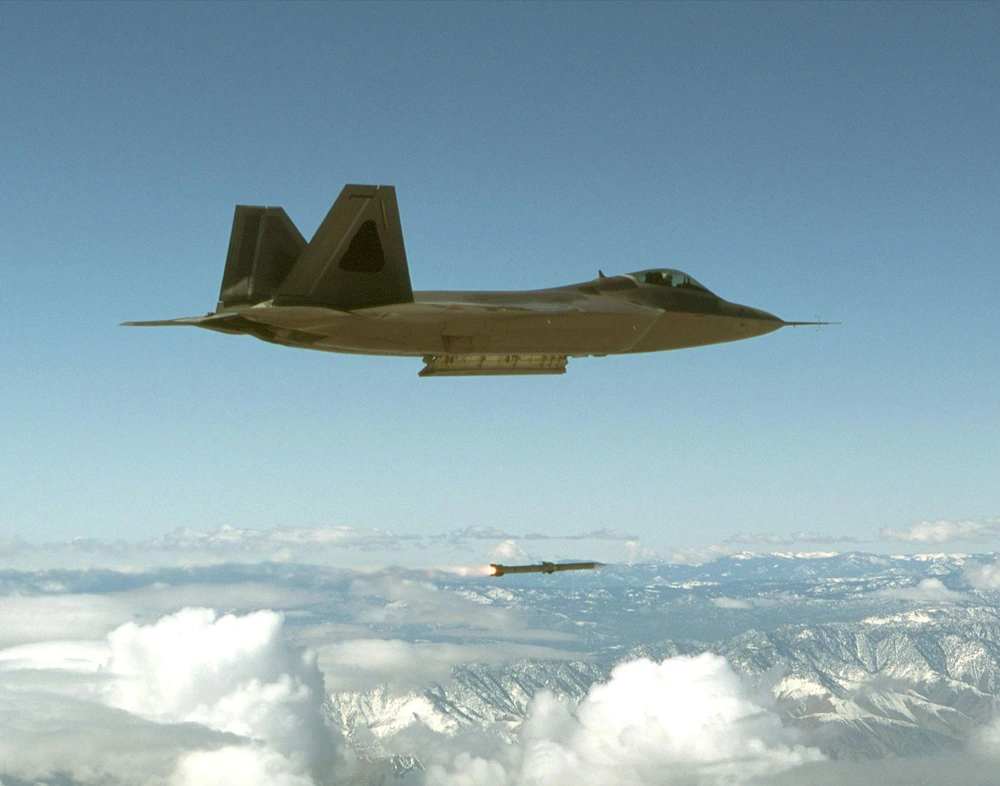
Feature Image: An F-22 Raptor releases an AIM-120 Advanced Medium Range Air-to-Air Missile during a Raptor flight test March 7. (Photo by Kevin Robertson/Department of War)
Read more from Sandboxx News
- The military asked for a mortars app in 2015. It’s finally being fielded to Soldiers
- Retired officer argues the Air Force is killing off the A-10 despite announcing it will remain in service until 2030
- SOCOM presented its highest award to a Navy SEAL for the first time
- What could be the mysterious jellyfish drones a downed American pilot allegedly saw over Iran?
- World’s first two operational drone fighters will be American