U.S. Army Colonel Arthur “Bull” Simons was such a legendary figure in U.S. Army Special Operations that nearly 50 years after he graduated from the University of Missouri in 1941 and joined the Army, the United States Special Operations Command (USSOCOM) created and named its highest honor after him.
Colonel Simons served in World War II with the 6th Ranger Battalion, in Vietnam with the secretive Military Assistance Command, Vietnam – Studies and Observations Group (MACV-SOG), and in various capacities with multiple U.S. Special Forces Groups and at the U.S. Army Special Warfare Center. He was awarded both a Silver Star and Distinguished Service Cross through the course of his military career. After leaving military service, he famously organized the rescue from Iran of two American employees of former U.S. Presidential candidate H. Ross Perot in 1978, as recounted in the book On Wings of Eagles, by Ken Follett.
Each year since 1990, SOCOM has awarded one person its annual Bull Simons Award for epitomizing “the true spirit, values, and skills of a Special Operations warrior.” And in 2026, for the first time in its 36 year history, the award was bestowed on a Navy SEAL.
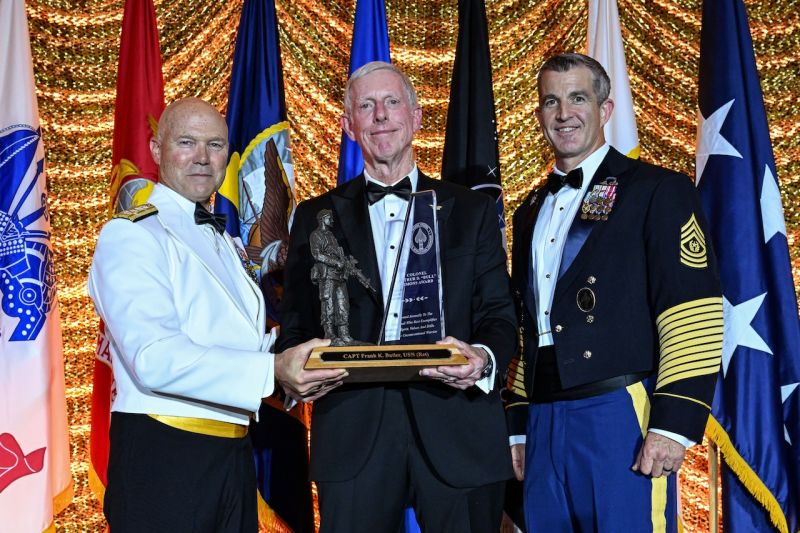
The recipient of this year’s award, which was handed out in Tampa, Florida, during SOF Week this past May, was retired Navy Captain Frank K. Butler, who served as a Navy SEAL officer and Navy physician during his 30-year military career. (Captain Butler is also the father of this author.)
Captain Butler was presented the award by the current commander of SOCOM, Navy SEAL Admiral Mitch Bradley, for the creation, advancement of and relentless advocacy for Tactical Combat Casualty Care (TCCC).
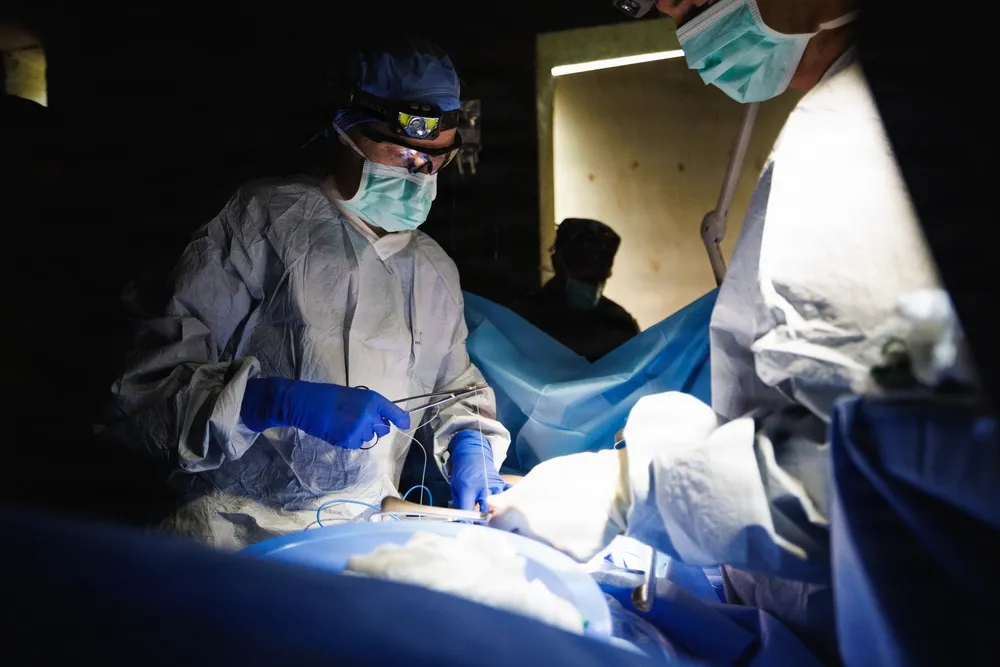
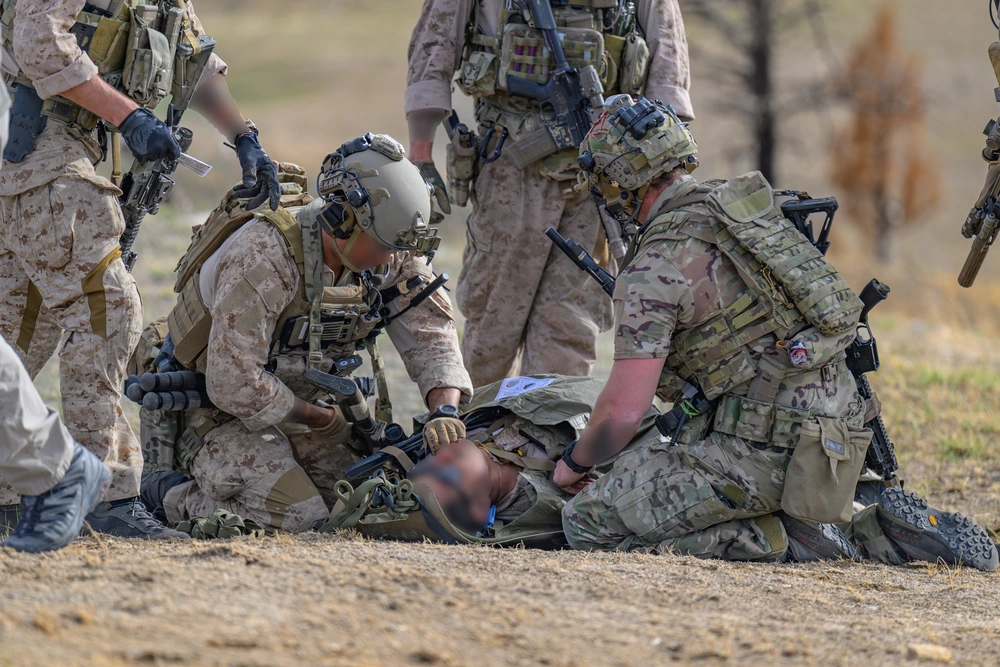
TCCC are the set of battlefield trauma guidelines pioneered by Butler and others since 1996 that first became standard across all U.S. Special Operations commands before they ultimately spread to the rest of the U.S. military, and beyond. This was due in large part to the efforts of Butler and those working alongside him in TCCC for the past 30 years.
Today, those guidelines have been adopted by numerous allied militaries across the world, perhaps most significantly in the current war in Ukraine, where they are routinely saving Ukrainian lives. TCCC has also migrated fully into civilian pre-hospital trauma care in the United States, as well, and is taught in EMS systems across the country. Captain Butler is now regularly referred to as the “father of modern-day battlefield medicine” for his efforts, which are recognized as having saved several thousand American lives in combat.
Related: Death of the Golden Hour in Ukraine might make it harder to save US combat casualties in the future
In January 2025, Butler was awarded by President Biden the second-highest civilian award in the United States, the Presidential Citizens Medal, for his efforts in TCCC. He also received in 2006 the inaugural award given annually by the Committee on TCCC for outstanding contributions to the field; the award has since been renamed the “CAPT Frank K. Butler Award.”
Frank Butler celebrated receiving the 2026 Bull Simons Award alongside his wife of 50-plus years, Deborah, his four children, his five brothers and sisters, and a group of in-laws, grandkids, and other friends and family.
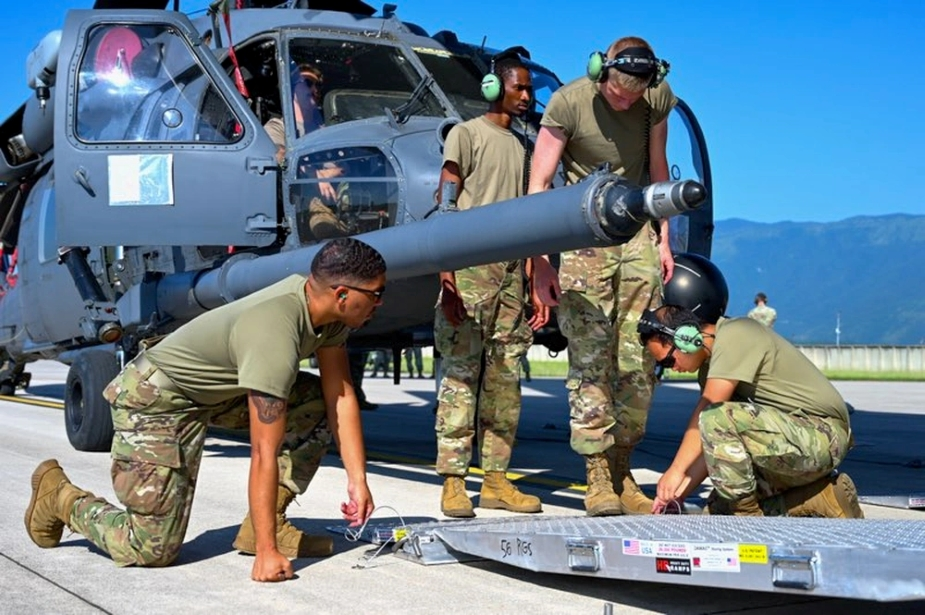
When asked what it meant to him to be the first Navy SEAL to receive the award, Butler demurred and shifted the focus onto the efforts of those he described as “the real superstars of TCCC:” the medics, corpsmen, and PJs who “took the new TCCC concepts out onto the battlefield and used them to actually save the lives of their wounded teammates.”
Finally, Captain Butler stated that he was honored to accept the Bull Simons Award on behalf of all of the incredible people who took part in the decades long TCCC effort; he gave no small amount of credit to the divine in the success of TCCC. “My take on TCCC is that the Lord had a plan,” Butler stated “and I am very blessed to have been a part of that plan.”
Feature Image: Captain (Ret.) Frank K. Butler receives the Bull Simons award during SOF Week 2026. (SOCOM)
Read more from Sandboxx News
- What could be the mysterious jellyfish drones a downed American pilot allegedly saw over Iran?
- World’s first two operational drone fighters will be American
- A Marine who flew the F/A-18, F-16, F-22, and F-35 says one jet stood apart
- More mystique than results: The legacy of Russia’s Wagner Group
- SOCOM wants to double the range of its M4 rifles, but that won’t be easy