There are numerous well-documented cases of misuse, waste, mismanagement, and even outright fraud in defensive spending. Fraud in military spending is sadly a crime that’s committed all too often. One of the most brazen examples was the famed ADE 651.
Designed and produced by Advanced Tactical Security and Communications Ltd., the ADE 651 was a device that the company claimed could detect bombs, guns, people, ammunition, drugs, ivory, and even money from as far as a kilometer away. The company claimed that the device worked through walls, ground, water, and even from an aircraft flying at an altitude of five kilometers.
These claims helped sell €52 million worth (equivalent to about $60 million) of the devices to the Iraqi government after the fall of Saddam Hussein.
The ADE 651 sale’s pitch
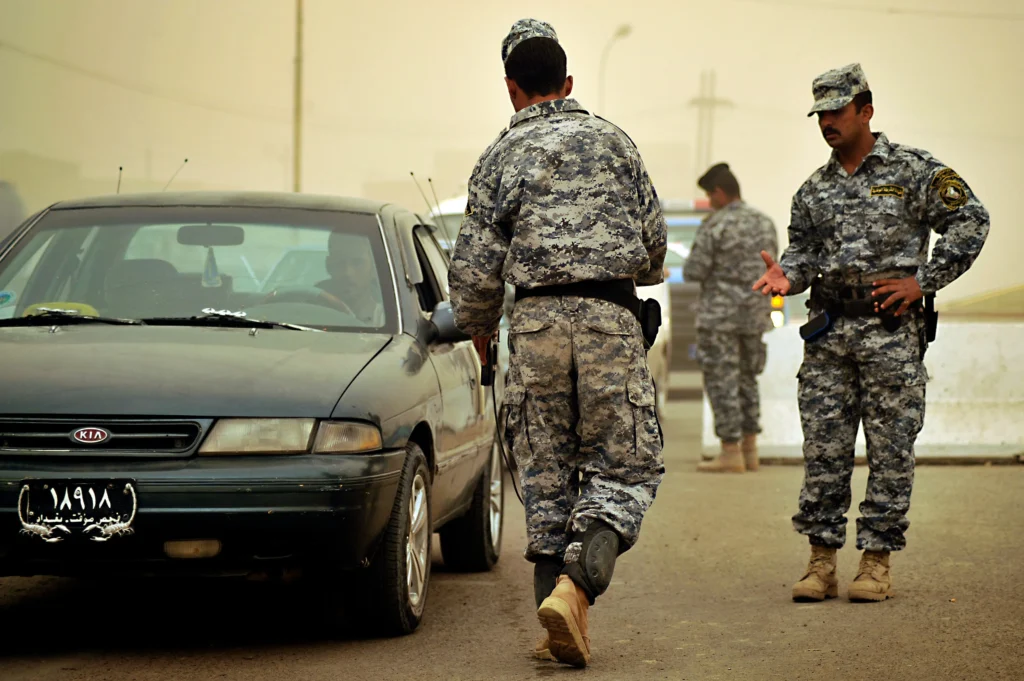
The devices became the go-to method for Iraqi military and police to search vehicles at checkpoints replacing physical inspections. Major-General Jihad al-Jabiri, a member of the Interior Ministry’s General Directorate for Combating Explosives, was a fierce defender of the devices, claiming they had detected hundreds of roadside bombs. In fact, amongst Iraqi higher-ups, in general, the ADE 651 was extremely popular and was considered a useful tool for detecting explosives.
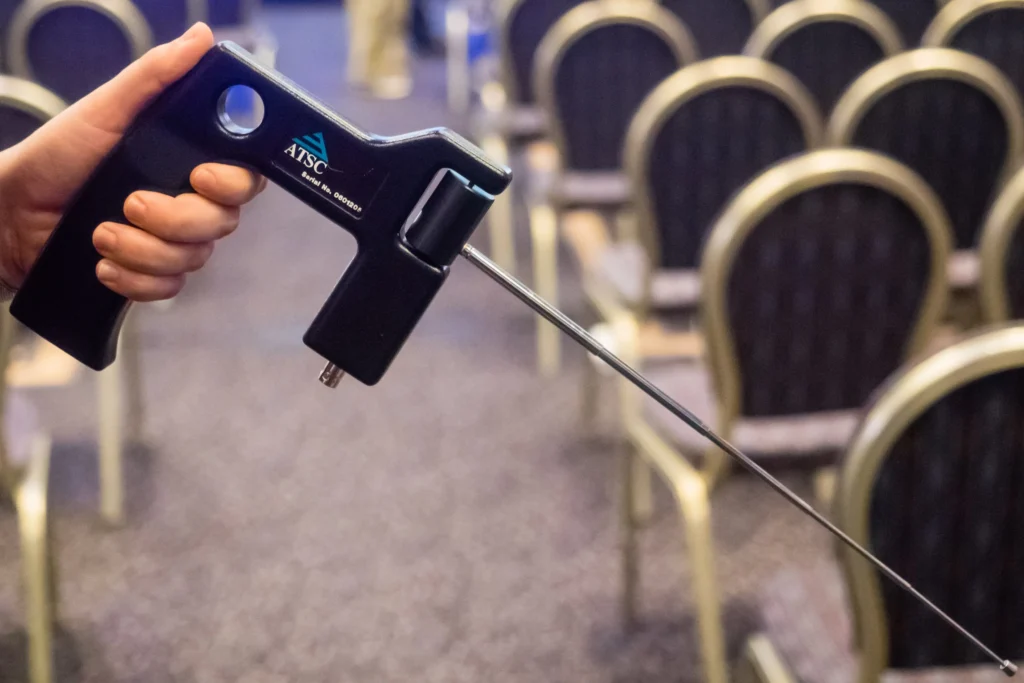
The ADE 651 promised something invaluable to Iraqi troops and seemed to have a lot going for it. The device used programmed substance-detection cards. Users would place a card inside a container – which contained the substance they wanted to detect – for a week. After that, the card would make the device supposedly tune into the frequency of the substance it was programmed to find.
The device had a grip with a swiveling antenna mounted on a hinge. It didn’t even need a battery and would be charged by the static electricity produced by the user who just had to hold it in order to charge it.
The promise of detecting substances through “electrostatic magnetic ion attraction” seemed high-speed, high-tech, and perfect for a place in the midst of an insurgency.
Besides Iraq, numerous countries in the Middle East and Asia also purchased the ADE 651 to equip their police and military forces.
The truth behind the claims
From the very beginning, the device received criticism from explosives experts and numerous active duty and retired military officers. It was essentially a dowsing rod – and even its manufacturer had admitted that the theory behind dowsing was similar to how the ADE 651 worked. So, it wasn’t long before independent testing was undertaken.
The Department of Energy’s Sandia National Laboratories in New Mexico tested the device and the results were as expected: it didn’t perform any better than random chance.
In 2008, Israel also tested it and found it useless. The U.S. Army even X-rayed the device and found that there was no possible way for it to detect explosives. The FBI also issued numerous alerts about dowsing rod-bomb detectors and their uselessness.
Additionally, both the BBC and the New York Times reported extensively on the ADE 651 and consulted experts in the explosives and electronics field. Both investigations found the device to be a total fraud.
All these findings prompted the military to notify all personnel that the device was ineffective.
The most damning testimony to the device’s failure, however, was two bombings in Baghdad in 2009. On October 25 and December 8, insurgents slipped past ADE 651 devices, and detonated their explosives killing nearly 300 people.
The fallout
After numerous failures in both the real world and controlled testing environments, a group of British and American military officers contacted the British police liaison officers in Iraq. This triggered an investigation into the ADE 651, its inventor James McCormick, and Advanced Tactical Security and Communications Ltd.
McCormick was arrested in 2010 and charged with fraud, convicted, and sentenced to 10 years in prison. The British government banned the export of the ADE 651 and similar devices.
In Iraq, an investigation was launched into the ADE 651 and the purchasing contracts. However, the investigation was suppressed allegedly because Iraqi officials had received substantial kickbacks to support the contracts.
In 2011, General Jihad al-Jabiri was arrested on corruption charges. He was convicted of receiving bribes from McCormick. Nevertheless, the devices were still being used until 2016, and it wasn’t until the 2016 Karrada bombing in Baghad, which cost the lives of hundreds of people, that they were fully pulled out of service.
Selling hammers at a ridiculous markup is terrible enough, but selling explosives detectors that couldn’t detect a golf ball is another level of depravity and immorality. The device put servicemembers in danger and cost the lives of many. It’s a sad thing to see, but at least, in some small way, justice was served.
Feature Image: Welsh journalist Meirion Jones holding the fake bomb detector ADE 651, October 2016. (Photo by Alasdhair Johnston/Wikimedia Commons)
Read more from Sandboxx News
- Russia is helping Iran strike American and allied targets in the Middle East
- BREAKING: F-35 allegedly hit over Iran but managed to make impressive, safe landing
- Saab wants to future-proof the Gripen E through the power of software
- Could Delta Force retrieve Iran’s nuclear material?
- Over 200 Ukrainian anti-Shahed experts are helping the US and its allies deal with Iran’s drones, Zelenskyy says