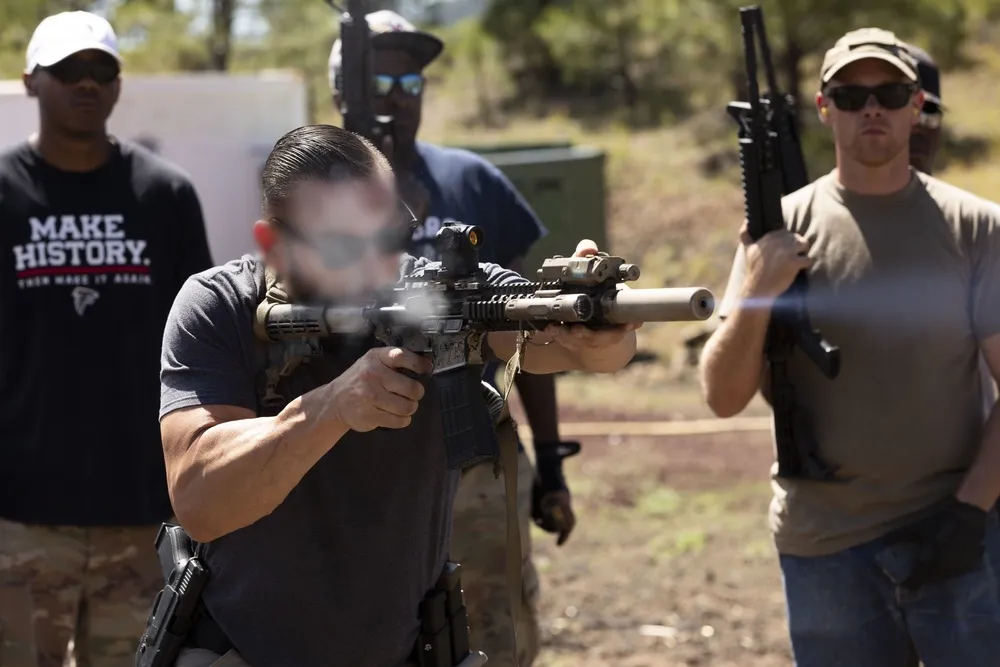
If you follow the U.S. Army small-arms space, you’ll notice a trend: the Army wants to engage the enemy at greater distances and use high-pressure cartridges to do so – that’s a big part of the service’s M7 program. And now the U.S. Special Operations Command, or USSOCOM, is following a similar path by launching the HICAR, or Hypervelocity Improved Capability Assault Rifle, program.
This time, SOCOM isn’t looking for a new rifle but a new upper receiver for its M4A1 carbine.
The M4 series of rifles splits into an upper and lower receiver group. The upper receiver houses the barrel, the bolt, and the bolt carrier.
SOCOM wants to hit targets at longer ranges. The 5.56 cartridge that the M4A1 uses has an effective point-target range of 300 meters. It’s entirely possible to hit targets at longer ranges, but from a practical battlefield perspective, the range is limited to 300 meters for most troops.
The Command wants to double the M4A1 carbine’s effective range to 600 meters. That’s a hefty task for an intermediate cartridge and the standard M855 and M855A1 – the American military’s designation for the 5.56 cartridge and its successor – simply won’t do it. To make this dream a reality, SOCOM is experimenting with the M855A1+.
Currently, SOCOM has not adopted a specific cartridge, but merely a framework for it.
Going farther
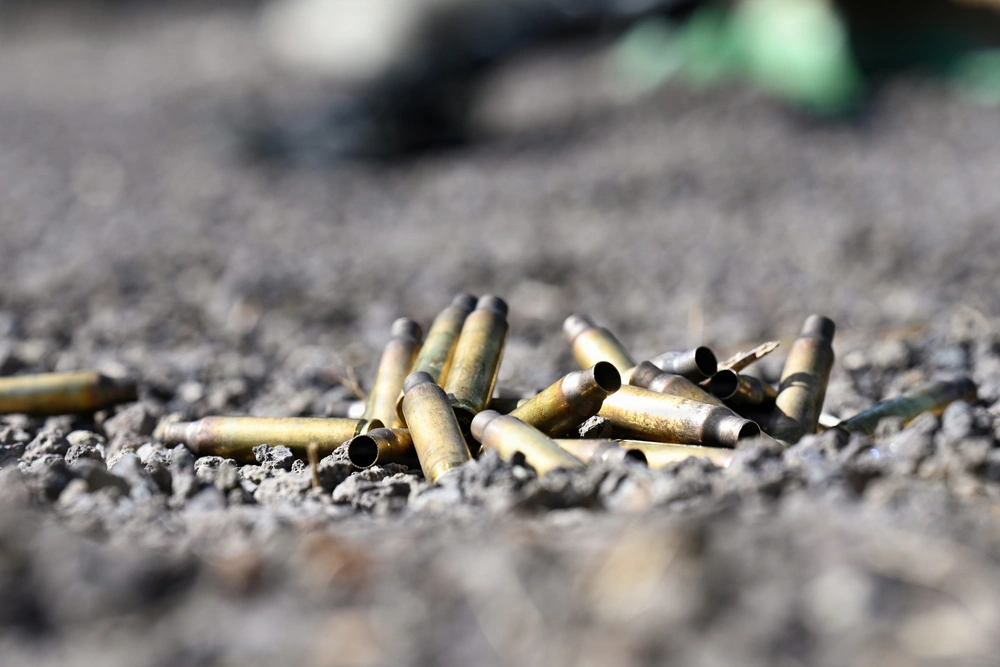
There are limited ways to make a cartridge go farther.
First, you can make its case bigger, and therefore the rifle. That helps manage the extra range, and is the route the M7 went.
But you could also turbocharge the cartridge to send the bullet downrange at a much higher velocity, specifically at over 3,000 meters per second. This is the route that SOCOM has chosen with the HICAR.
To achieve a doubling of the M4A1’s range, you would need to raise the maximum operating pressure from 62,000 to 82,000 PSI. Yet, doing so, will create challenges for the gun.
The upper receiver of the M4A1 wasn’t built to operate at 82,000 PSI. It might not explode dramatically, but it will quickly wear down and break while shooting the M885A1+. Eventually, the pressure will eat away at the barrel, chamber, bolt, and more.
The HICAR aims to provide a new upper receiver that can withstand the high-pressure cartridges. At the same time, SOCOM wants to keep the classic M4A1’s logistics, magazines, optics, and lower receiver. This allows greater flexibility when working with partner forces, something that units like the Green Berets frequently do.
Related: SOCOM wants hypervelocity rifle system to shoot experimental rounds
The HICAR requirements
The HICAR requirements are fairly simple. The new upper needs to be able to:
- Work with M855A1, Mk262, and the new M855A1+ cartridge;
- Fit with zero permanent modifications to the M4A1 lower receiver;
- Have a barrel length of 11 to 12 inches;
- Be drop-safe;
- Employ the HUXWRX Flow 556K L suppressor. (A HICAR-specific suppressor will be fielded later.)
The challenge for manufacturers will be to produce stronger barrels, gas tubes, bolts, and bolt carrier groups.
The rifle will likely require an adjustable gas system to function with both high-pressure and standard cartridges. Without such a gas system, the rifles may have higher recoil with the M855A1+ cartridges, or may not reliably function with the lower-powered cartridges.
Further, manufacturers will need to strike a balance to create a functional rifle design that’s controllable yet versatile.
The ammunition will also require some form of technological innovation as the 82,000 PSI may destroy the traditional brass cartridge. The ammunition case may need to be made of a more advanced material to function reliably at such high pressures. This might call for a hybrid case design not unlike the M7’s 6.8x51mm case.
SOCOM is aiming for the rifle to weigh under eight pounds, with a goal of 6.5 pounds. This will create a light and handy rifle, and will likely restrict what materials can be used to build an HICAR upper receiver. Manufacturers will also have to try to find the right balance of strength and weight savings.
This is a very new program, so there hasn’t been much headway. Only one thing is for sure: it won’t be cheap.
Feature Image: A Green Beret assigned to 3rd Special Forces Group (Airborne) demonstrates the proper way to shoot an M4 rifle at a range during the Red Flag training event in Flagstaff, A.Z., August 15, 2019. During the event Green Berets of 3SFG(A) mentored, trained and assessed the Arizona Air Force National Guard in order to improve various tactical and technical skill sets. (U.S. Army photo by Sgt. Andrew Adaire)
Read more from Sandboxx News
- Attack on FOB 4: The worst day in U.S. Army Special Forces history
- Army still questing for a lighter shoulder-launched munition for urban combat
- SIG Sauer wins the rifle contract for Romania’s military
- Air Force has just awarded the first CCA contracts ahead of schedule
- Advice on self-discipline from an F-35 pilot instructor