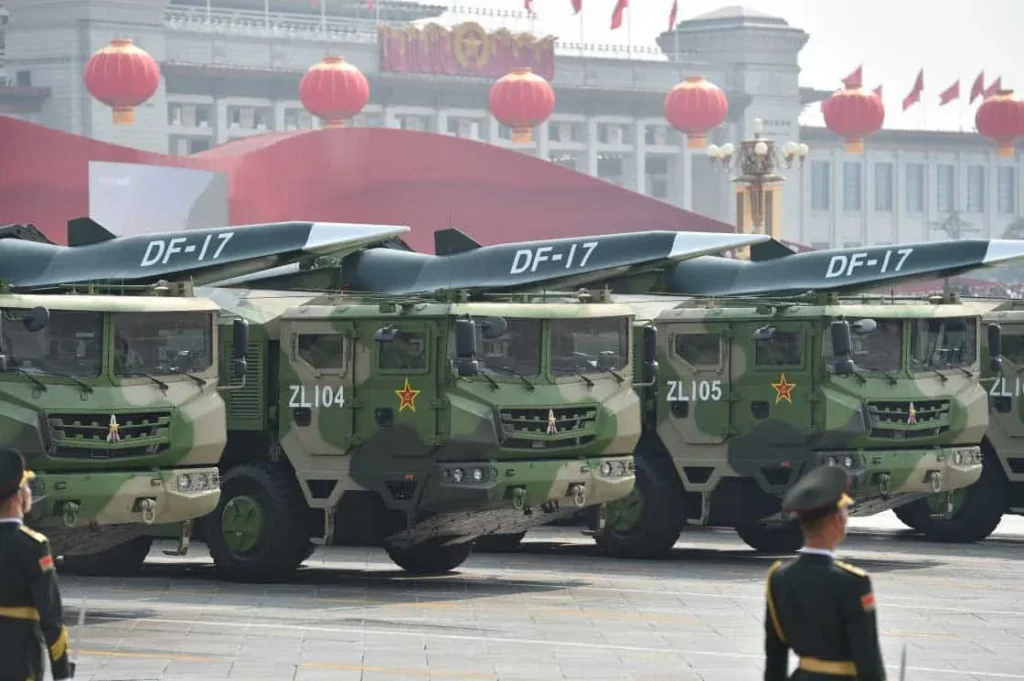
Does it even make sense to extend the range of America’s carrier-based fighters using drone refuelers like the MQ-25, or even entirely new fighter designs like the forthcoming F/A-XX, if China can just field longer-ranged anti-ship missiles to offset them?
The answer is that it not only makes sense, but it is essential for America’s power-projection strategy.
China’s Anti-access/Area-denial strategy rests largely on a variety of long-range anti-ship missiles designed specifically to keep American aircraft carriers at bay.
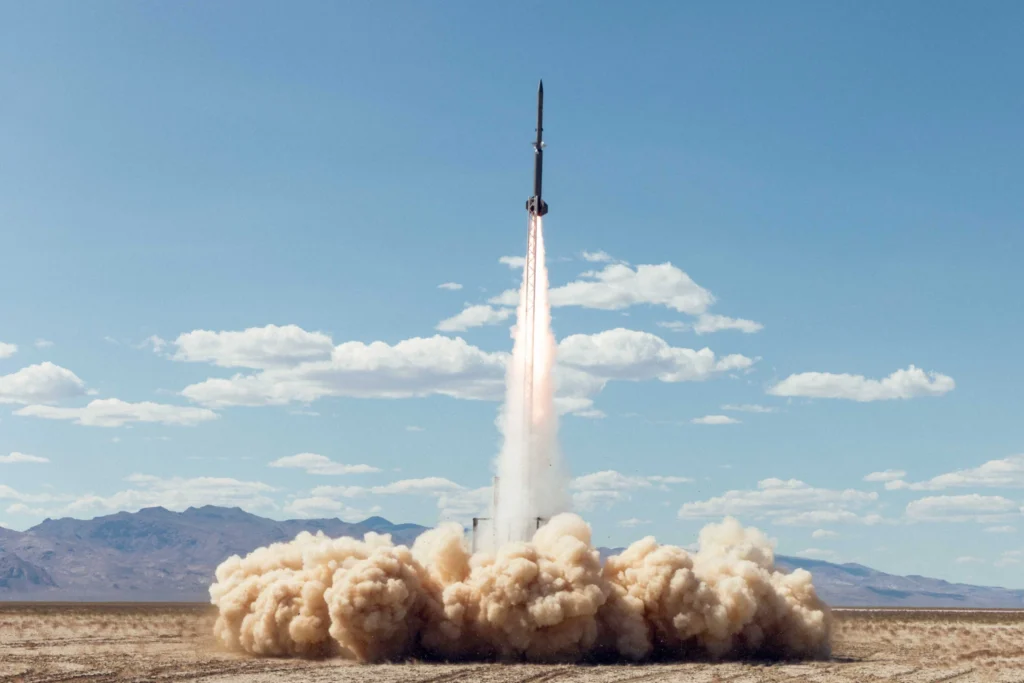
Weapons like the hypersonic DF-ZF boost-glide missile, which is carried aloft by China’s medium-range DF-17 ballistic missile, have a claimed range of about 1,500 miles, and an alleged top speed ranging somewhere between Mach 5 and Mach 10.
With the ability to carry large conventional or even nuclear payloads combined with the sheer kinetic force of a hypersonic impact, weapons like the DF-ZF, or even anti-ship aero-ballistic missiles like China’s YJ-20, could potentially render even America’s Nimitz and Ford-class supercarriers inoperable with a single strike. This is because you don’t have to sink a ship to take it out of the fight; you just have to compromise its ability to function.
However, in the nearly 64 million square miles of the Pacific, distance can become a form of survivability in itself – and this is where the problem of long-range targeting enters the carrier-fighter range discussion.
Targeting a moving object – even one as massive as an aircraft carrier – against the vast backdrop of the Pacific at that range is no small undertaking.
Even once China manages to locate the carrier, it would take even a hypersonic missile a notable amount of time to cover that distance: At a sustained speed of Mach 5, covering a thousand miles would take around 15 minutes, and at Mach 10, it would take upwards of eight minutes.
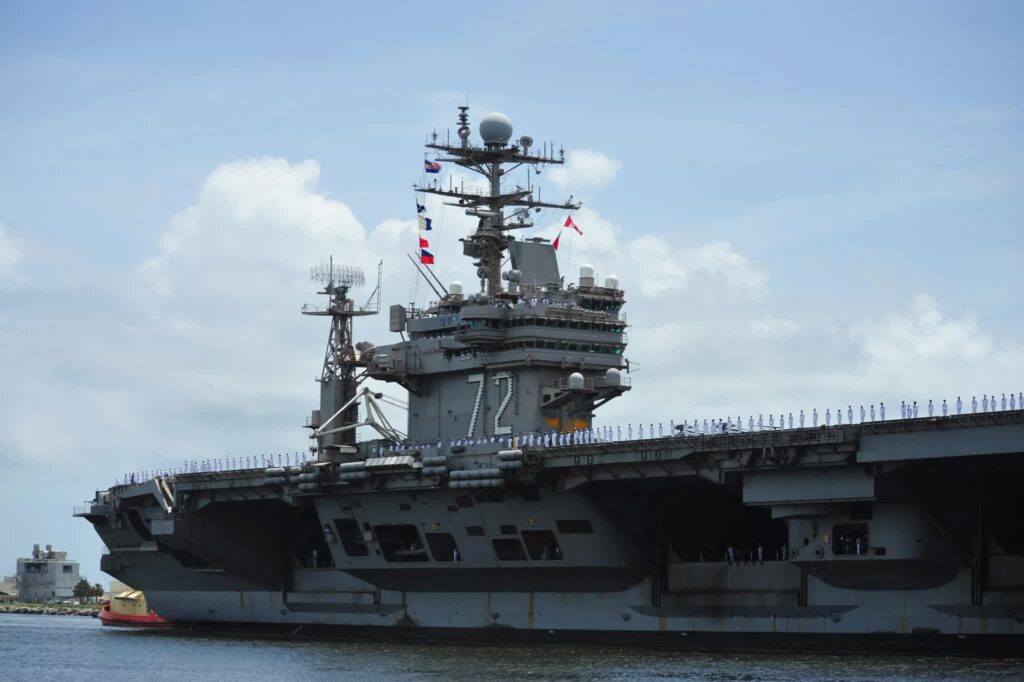
U.S. Navy aircraft carriers may be huge, but they’re anything but stationary. When sailing in contested waterways, maneuver is treated as the vessel’s first and primary means of defense. As a result, the carrier is often sailing at speeds of upwards of 30 miles per hour, and constantly adjusting that speed and its course to make it extremely difficult for adversaries to predict its path through the open ocean.
In the eight to 16 minutes it would take for a hypersonic missile to traverse a thousand miles, the carrier could be anywhere in a circle of between four and more than nine miles away from where it was when the weapon was launched. That equates to a search area of between 50 and more than 250 square miles upon the weapon’s arrival.
That is a big problem for both modern hypersonic weapons and ballistic missiles.
Both weapons travel at speeds in excess of Mach 5. At those speeds, the weapon’s body compresses and superheats the air it interacts with, so much so that the air ionizes into plasma, creating what’s commonly called a “plasma sheath” around the weapon. This sheath substantially degrades or completely blocks radio communications.
Therefore, successfully sending updated target coordinates to your hypersonic missile mid-flight is not guaranteed, even if you use high-power laser-based communications.
Related: Beating China could mean bringing the C-130 back to aircraft carriers
And as the distances grow, so too does the size of the area the carrier could be in when the weapon arrives.
If the weapon needs to cover 1,500 miles at Mach 5, that would take between 23 and 24 minutes, creating a search area of more than 452 square miles. If it needs to cover 2,000 miles, that search area becomes more than 754 square miles, and so on.
Hypersonic glide vehicles like China’s DF-ZF, as well as aero-ballistic warheads like those found in the YJ-20, are unpowered during their descent, meaning they have only kinetic energy (speed) and potential energy (altitude) to burn while making course corrections, which these weapons are already exchanging for range, or distance. So, any shift in course comes at the direct expense of overall reach.
Although this is an oversimplification, overall, long-range targeting is very hard – and it only gets harder the farther out you are.
With current technology, there is a real limit to how far out China could target a carrier with high confidence, and broadly speaking, it’s certainly shorter than the distance crewed aircraft could fly with sufficient fuel stores and tanker support.
Feature Image: Chinese DF-17 missile systems. (CSIS via Creative Commons)
Read more from Sandboxx News
- The F-14 Tomcat fighter wasn’t the US Navy’s first choice
- America’s LUCAS kamikaze drones will get a lot scarier thanks to Hivemind AI
- A Green Beret remembers his favorite foreign weapons
- OA-1K Skyraider II aircraft revealed its impressive capabilities during SOF Week
- Coast Guard will stand up its own Special Missions Command to better counter maritime threats