Androids, robots, and other autonomous medical machines such as those in the Star Wars franchise have been a staple of popular science-fiction for decades.
Much like the flying car or synthetic food replicators, we have tended to consider the eventual arrival of medical robots as more a question of when, not if. The U.S. government’s Defense Advanced Research Projects Agency (DARPA) would prefer the “when” to be sooner rather than later, and is thus taking steps to speed up the arrival of robotic surgeons.
In a statement released on September 15, 2026, DARPA announced a surgical competition with a $3.5 million prize to “spur the development of robotic systems that can act as skilled, reliable partners to human surgeons.”
Known as the DARPA Surgical Competition (DSC), the effort will be under the auspices of DARPA’s Biological Technologies Office and will officially kick off on September 22. It will culminate six months later, in March 2027, with a Finals Competition Event.
DARPA’s goal in launching the DSC is to ultimately create an autonomous robotic capability for use by military surgeons — and by extension, at some point, their civilian counterparts — in handling overwhelming numbers of trauma patients.
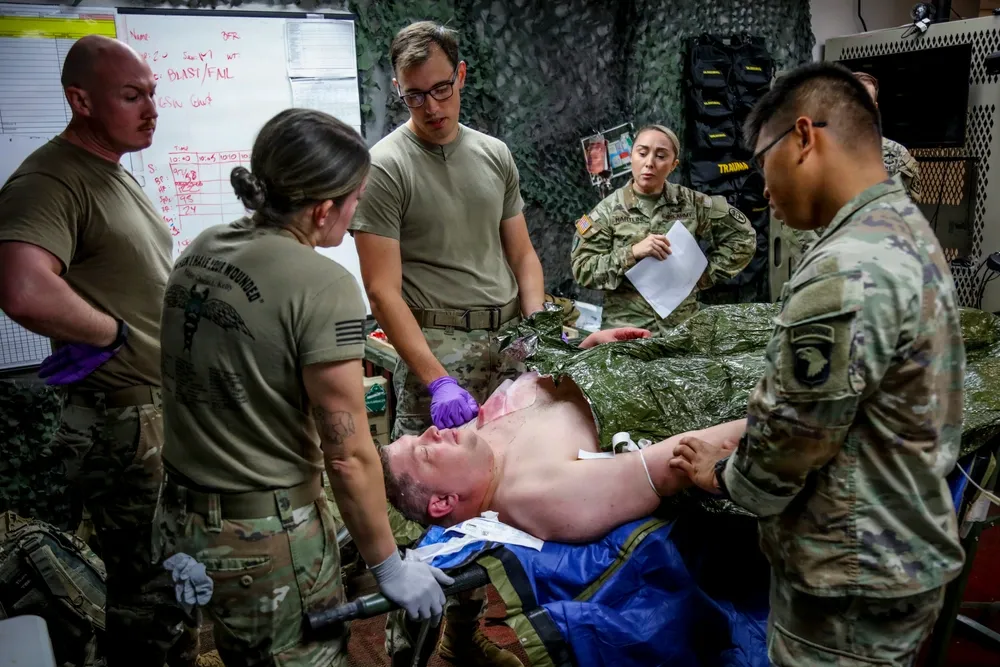
In theaters of war, or in large mass casualty events in the civilian sector, trauma surgeons can be inundated by patients needing life-saving care. This could result in patients, who might have otherwise survived, succumb to their injuries due to a lack of capable surgeons.
“In future conflicts or mass casualty incidents, our human medical capacity will be stretched beyond its limits,” Dr. Jeremy C. Pamplin, the competition’s program manager said.
If DARPA’s effort succeeds, one day trauma surgeons will have at their disposal, and working alongside them, robotic systems that can “collaboratively assist human surgeons during complex trauma procedures, and ultimately, independently execute life-saving surgical interventions,” DARPA wrote.
“We are not trying to replace surgeons; we are building them a highly skilled partner. By pushing the boundaries of artificial intelligence, robotic dexterity, and human-machine teaming, we can create scalable, life-saving capacity when and where it is needed most,” Pamplin added.
Related: SOCOM presented its highest award to a Navy SEAL for the first time
All good, right?
Of course, like everything else involving artificial intelligence (AI) these days, as we find ourselves living through the emerging AI era, questions and doubts will accompany this effort.
Since we simply do not yet know how AI will eventually fully develop, because of the rapid pace of its current growth, we therefore cannot know how these robotic surgeons will ultimately behave.
Will they make their own surgical decisions? Will they be at the command of human surgeons, and only able to perform with human guidance and direction? Or will they overrule human decision-making if they determine it is erroneous? And what about the informed consent of human patients when it conflicts with decisions made by AI-powered robots?
These are all questions that must at some point be answered by biomedical ethicists, AI experts, policymakers, and the medical and legal communities. Regardless of the uncertainties involved, however, DARPA is pressing forward with its effort to develop these technological capabilities.
Like so many other AI-related efforts in the modern world, we appear to be charging forward with little regard for the necessary guidelines and protocols that should probably be put in place first. At least as of this moment in time, it appears that the AI-dominated future is coming, whether we like it or not.
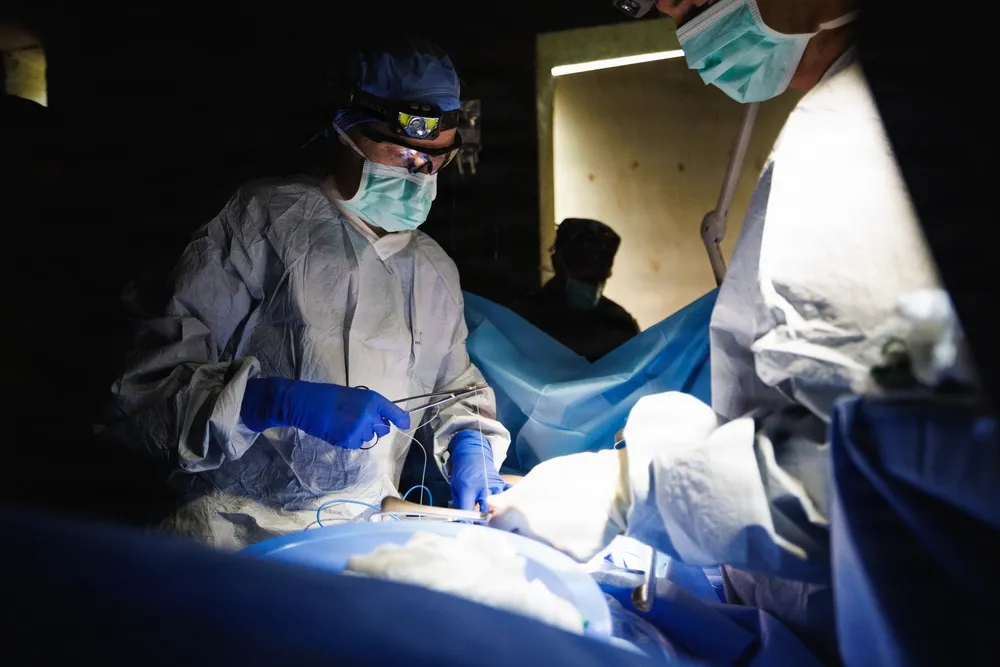
Feature Image: A U.S. Army 61J General Surgeon assigned to 160th Forward Resuscitative Surgical Detachment (FRSD) performs surgery on a simulated casualty during a surgical validation exercise on the Baumholder Local Training Area, Baumholder, Germany, Sep. 01, 2026. The surgical validation exercise is designed to certify U.S. Army 61J General Surgeons on critical surgical tasks and lifesaving procedures. (U.S. Army Photo by Daryl Averill Jr.)
Read more from Sandboxx News
- The Littoral Combat Ship should serve as a warning to the US Navy
- Marine Corps document points to autonomous robots, drones, and basic soldiering skills for Marines’ future
- ‘Time is a weapon:’ Former fighter, bomber pilots deliver report card on Operation Epic Fury
- Anduril is working to make its FQ-44 Fury fighter drone lethal against ground targets too
- SWCC are the Naval Special Warfare’s elite boat operators