The Marine Corps has released its Ground Combat Element 2040 (FY26 Update), and it’s a brisk 40-page read I was happy to dig into. The publication lays out the roadmap, operational doctrine, and material priorities for the branch’s infantry and combat arms for the next 15 years.
The Marine Corps’ goal is to remain modern by embracing AI (in a balanced way), autonomous systems, and more with a human-centric ethos. Nevertheless, basic infantry warfighting skills remain the most critical part of the Marine Corps’ effort, but the branch is willing to enhance its lethality with modern technology.
These are the five most interesting takeaways of the Ground Combat Element 2040 update.
Squad-level drone defense
The Marine Corps has labeled small, cheap drones as the single greatest risk to troops fighting on the ground.
So, it wants to potentially push drone defense all the way down to the squad level. This means multiple echelons of Marine Corps command and control will have counter-drone capabilities.
Further, the branch wants to continue evolving counter-drone technology and specifically develop handheld tools to counter cheap FPV drones. The specifics are not clear at this time, but these tools could be as simple as a new type of shotgun or 40mm airburst grenade, or advanced electronic warfare tools.
Loitering munitions as fire support
The Corps sees great potential in loitering munitions in a fire support role.
These assets will be used much like artillery and missile batteries. But unlike traditional artillery munitions, they have the ability to be launched and then remain in the sky until a target is spotted.
Loitering munitions can put precision effects on targets without relying exclusively on artillery and missile batteries, and will potentially expand a commander’s fire support capability.
Autonomous mass replacing human troops
The military has been using simplistic robots for tasks like bomb disposal, but the Marine Corps seems to want to push it to the next level. Although the publication doesn’t go into details, the Corps wants to replace human troops with autonomous robots.
The Marine Corps is looking to a future where autonomous mass takes on the first-contact risk inside an enemy’s engagement envelope.
Why send a wave of Marines when we can send a wave of robots charging the enemy, taking the first dose of small arms, rockets, mortars, and even mines?
The Marine Corps isn’t being specific, but I’m imagining robots capable of being the first tool in the trench, or through the door, or even on the beach. These are all extremely dangerous places to be, so establishing a small foothold with autonomous mass means more Marines come home.
Hard to find, hard to kill

In an age of drones, sensors, and satellites, the Corps will focus on making its Marines hard to find and therefore hard to kill.
Hiding in the battlefield, will only become more difficult, so Marines won’t just be integrating traditional fieldcraft, like old-fashioned camouflage, but also more high-tech methods. This includes things as simple as light discipline and as advanced as signal management.
Marines will have to develop the ability to work in smaller groups and conduct decentralized operations. Large Forward Operating Bases and Command Observation Posts will be massive targets that are easy to see and spy on.
Smaller operations at the squad and platoon levels will reduce their footprint and make them hard to find and hard to kill.
For a force used to fighting insurgents, Marines will have to start adopting the tactics and techniques of insurgents to conquer the next battlefield.
Related: Recon Marines will need to swim more and hide from drones in training shakeup
Low-tech skills still matter

While the Marine Corps is keeping an eye on the future of the battlefield and the integration of new technology, it isn’t ignoring low-tech skills. And the next generation of Marines is going to have to learn to wage warfare with both high-tech tools and low-tech skills.
Technology fails, and when you rely entirely on it, you’re setting yourself up for failure.
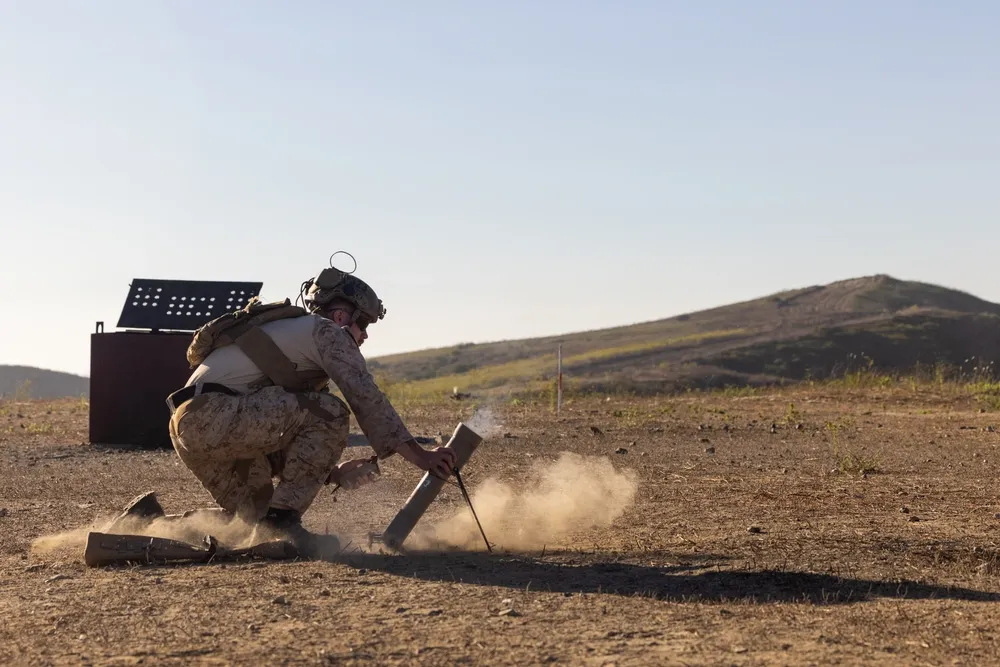
For this reason, the Marine Corps has a strict requirement that its infantry forces maintain basic, low-tech warfighting skills that have been part of the Corps since its inception: Marines will still have to know how to range threats, dig fighting holes, identify intelligence, launch mortars, and fire rockets.
The new Marine Corps
The future of the Marine Corps appears to be bright and potentially autonomous.
A guiding principle of the Marine Corps has always been to increase lethality. In the modern battlefield, lethality will be defined by who can adapt to new forms of warfare, and the Marines aim to adapt.
That adaptation might see the use of drones, AI, loitering munitions, and maybe even room-clearing robots. Yet, at the end of the day, the Marine Corps doesn’t aim to be dependent on this technology.
It doesn’t matter if they need to use a drone or a bayonet to accomplish the mission; the mission will be accomplished.
Feature Image: U.S. Marines with 2nd Battalion, 5th Marine Regiment, 1st Marine Division, line up for a live-fire range during Counter-small Unmanned Aerial System training as part of Service Level Training Exercise 4-26 at Training Area Prospect, Marine Corps Air Ground Combat Center, Twentynine Palms, California, July 16, 2026. (U.S. Marine Corps photo by Cpl. Richard PerezGarcia)
Read more from Sandboxx News
- ‘Time is a weapon:’ Former fighter, bomber pilots deliver report card on Operation Epic Fury
- Anduril is working to make its FQ-44 Fury fighter drone lethal against ground targets too
- SWCC are the Naval Special Warfare’s elite boat operators
- Some of America’s best fighters almost ended up having aircraft-carrier variants
- Anthropic says Russian and Chinese actors used Claude as weapons engineering assistant for drone swarming and more