Last week, America’s first upgraded B-52 bomber took flight, and it was carrying a more advanced fire control radar than you’d find in just about any Russian fighter. This marked a significant step toward fielding the updated and advanced new iteration of this now-73-year-old design, which will be known as the B-52J.
This new active electronically scanned array radar will dramatically improve the bomber’s targeting and intelligence gathering capabilities, while bolstering other improvements that are still underway.
“The ferry flight of this upgraded B-52 marks an important moment in our efforts to modernize the bomber force,” said Secretary of the Air Force Troy Meink. “This radar modernization ensures that the B-52 will continue to serve as a cornerstone of American airpower well into the future. We are committed to extending the life of this vital platform, allowing it to operate alongside next-generation fighter and bomber aircraft.”
America’s has 76 B-52s in service; they are among the oldest aircraft on the Air Force’s roster, with the aircraft being introduced in 1955 and youngest airframes delivered in 1962. But the combination of the B-52’s relatively simple maintenance and broadly utilitarian, forward-leaning design has allowed it to receive steady updates and upgrades over the years, keeping viable in modern warfare, and among the most dangerous strategic assets in America’s arsenal.
The B-52’s new radar array, the AN/APG-79 Bomber Modernized Radar System, is an active electronically scanned array radar set that is, more-or-less, the same radar array found in many upgraded F/A-18 Super Hornets and EA-18G Growlers. Unlike the bomber’s previously mechanically scanned 1960s-era AN/APQ 166 array radar – which has to be physically steered while in use – actively electronically scanned arrays have no moving parts. Instead, AESA radars use a number of different solid-state transmit and receive modules dramatically reducing the chances of failure and maintenance requirements.
These separate modules allow the aircraft to project multiple radar beams in different directions simultaneously without any part of the array having to actually move. Further, because of the modules, AESA radars are extremely jam-resistant, as they can leverage a breadth of frequencies simultaneously.
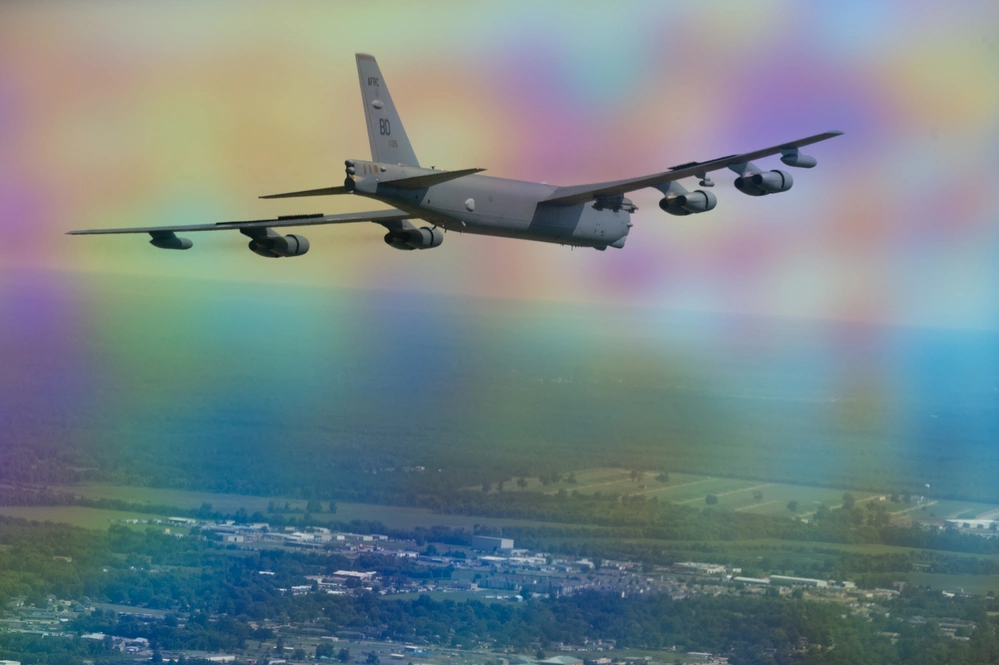
This modern X-band array, which is similar in function to the F-35’s AN/APG-81 radar, has a reported detection range for small one-square-meter targets of more than 93 miles (150 kilometers). It offers high image resolution and can identify, track, and guide weapons towards multiple targets at the same time; importantly, it also allows for intelligence, surveillance, and reconnaissance operations.
Additionally, the system is capable of Synthetic Aperture Mapping (SAR), or producing three-dimensional reconstructions of landscapes, terrain, and even targets.
B-52 bombers can currently carry an incredible 70,000 pounds of ordnance and covering more than 8,800 miles without refueling. Despite all that heft, the B-52 is pretty fast, with a top speed of 455 miles per hour (this speed beats the A-10 Warthog by more than 200 miles per hour and is similar to that of the F-117 Nighthawk).
However, the newly upgraded B-52Js will carry new engines, updated crew compartments, more advanced avionics and communications suites, and more. The upgrades are meant to keep the bomber viable out past 2050 and, likely, all the way to the century mark in 2055. The new F130 engines alone are said to potentially extend the bomber’s range by as much as 40%.
Despite lacking stealth, the B-52’s upgraded avionics and massive payload capabilities make it an extremely effective “standoff bomber,” or platform from which to launch longer-ranged weapons like large hypersonic missiles or air-breathing cruise missiles, effectively allowing the B-52 to strike adversary targets from well outside the reach of enemy air defenses. In fact, the U.S. is currently developing a new stealthy nuclear-armed cruise missile for this specific purpose allowing the B-52 to retain its job within the American nuclear triad.
Yet, this upgrade hasn’t been without delays or setbacks, and the new B-52J still has a long way to go before finally entering service.
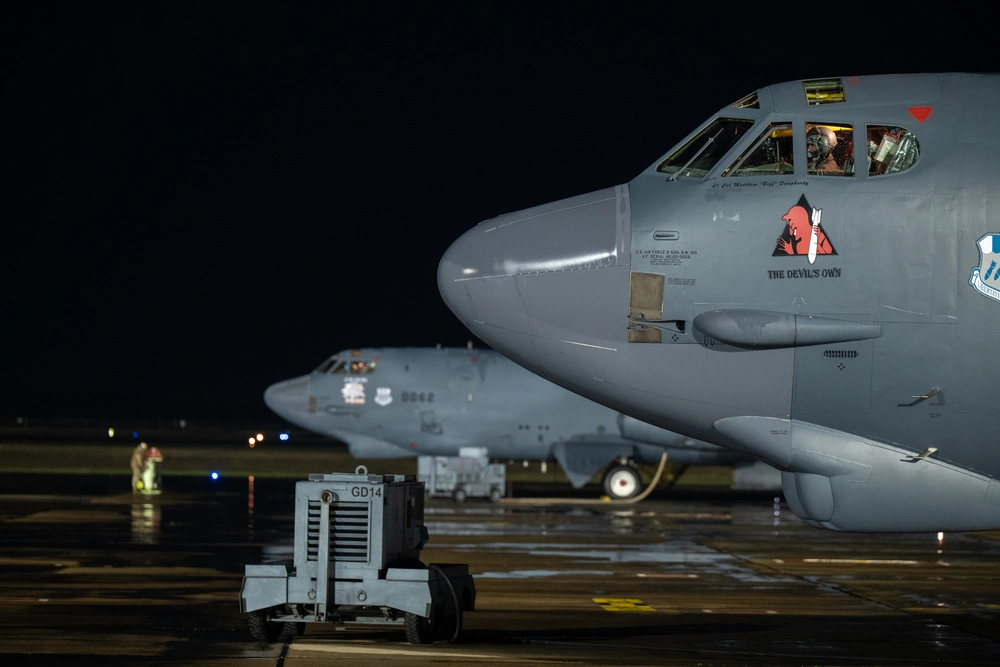
Feature Image: Two U.S. Air Force B-52H Stratofortresses assigned to the 2nd Bomb Wing, Barksdale Air Force Base, Louisiana, are parked on a flightline at Morón Air Base, Spain, Nov. 16, 2025, as part of Bomber Task Force Europe 26-1. (U.S. Air Force photo by Staff Sgt. Zachary Willis)
Read more from Sandboxx News
- Ukraine strikes Russian Kilo-class submarine docked in port
- Attack on FOB 4: The worst day in US Army Special Forces history
- America operates a mixed fleet of fighters, but could Canada do the same?
- How pagers became a status symbol for Delta Force operators
- Space is increasingly looking like a key battlefield in future military conflicts