The U.S. military and its allies are practicing how to sink Chinese warships during one of the largest exercises of the year.
With the prospect of a clash with China in the Indo-Pacific region being a real possibility, the U.S. military is getting ready to counter one of Beijing’s strong points: its vast naval fleet that could number over 700 ships in wartime.
Balikatan is one of the largest annual exercises in the Indo-Pacific with over 20 countries, 17,000 troops, and hundreds of warships and aircraft involved.
This year’s version of the exercise focused particularly on ground-based anti-ship operations. Sinking enemy warships and support vessels is an essential component of naval warfare. But ground-based anti-ship operations are not common.
Balikatan 26 focuses on the Philippine Archipelago near the South China Sea.
“Meaning ‘shoulder-to-shoulder’ in Tagalog – the U.S.-Philippine bilateral Exercise Balikatan is designed to strengthen regional security through combined air, land, sea, cyber and space operations featuring maritime drills, coastal defense training, joint live-fire exercises and humanitarian projects,” the Department of Defense states about Balikatan 26.
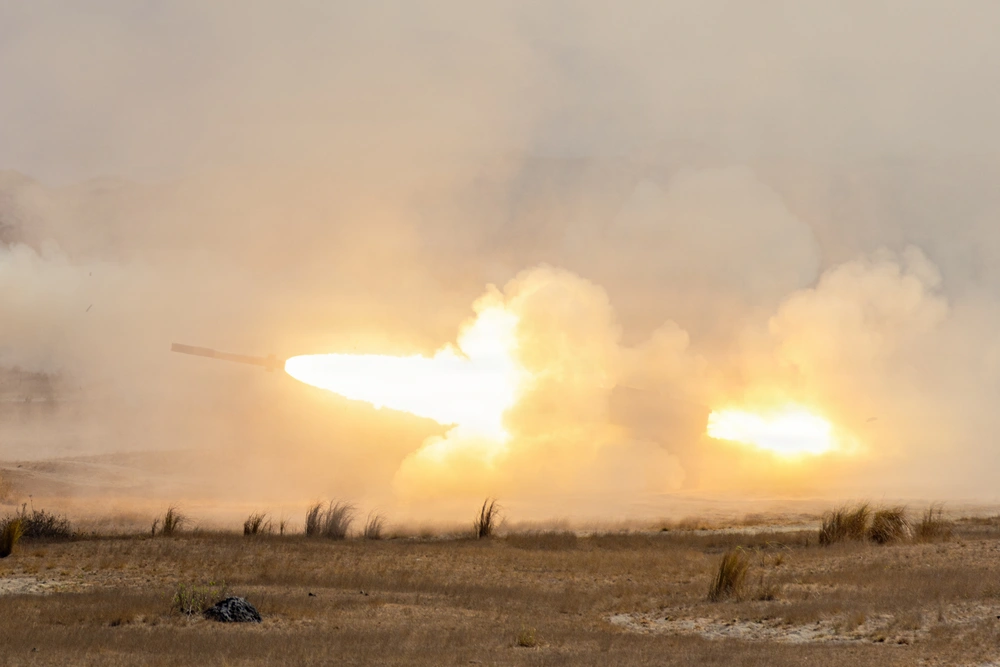
During the exercise, U.S. Marine Corps, U.S. Army, Japanese army, and Philippine marine units used long-range rocket artillery systems to successfully sink the BRP Quezon, a World War II-era corvette previously used by the Philippine Navy. The decommissioned warship took several hits, including two Type 88 Japanese anti-ship missiles, as well as strikes from U.S. Army M142 High Mobility Rocket Artillery Systems (HIMARS).
The M142 HIMARS became popular with the Ukrainian military for its impressive performance against the Russian forces. This is a ground-to-ground rocket artillery system, and yet, as witnessed in Balikatan 26, the weapon can also have an anti-ship role. However, the absence of a dedicated anti-ship munition for the M142 limits the weapon’s effectiveness against warships and support vessels.
Anti-ship operations in a near-peer setting
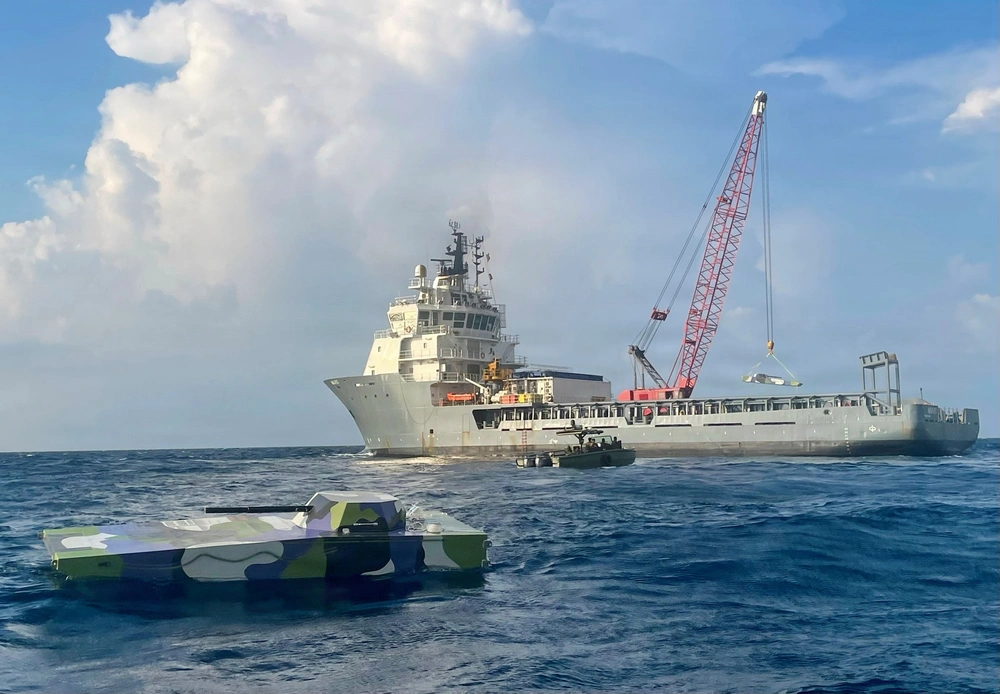
In a potential near-peer clash with China in the Indo-Pacific, naval and air operations will be at the forefront. China has the largest naval force in the world, with over 700 warships and support vessels.
Beijing will very likely deploy these assets in an attempt to blockade Taiwan and enable an amphibious operation for the capture of the island nation.
The U.S. Air Force and Navy recently had the opportunity to hone their anti-ship capabilities. During Operation Epic Fury against Iran, Air Force aircraft and Navy surface combatants, submarines, aircraft dismantled the Iranian navy, sinking at sea or destroying in port scores of vessels.
A submarine even scored the first U.S. torpedo kill since the end of World War II when it sank the Iranian frigate IRIS Dena with a Mk 84 heavy torpedo in the Indian Ocean off the coast of Sri Lanka in the opening hours of the conflict.
Conversely, the Chinese Navy, despite its vast numbers, does not have any operational experience. Although operational experience does not guarantee success in warfare, it provides benefits for a military force, particularly when conducting large-scale operations.
It remains to be seen whether this lack of experience of the Chinese military in relation to the the American will be a decisive factor in a potential future clash.
Editor’s Note: This article has been edited to include a video by the Army.
Feature Image: U.S. Soldiers assigned to 2-11 Long Range Fires Battalion, 25th Infantry Division Artillery, fire a High Mobility Artillery Rocket System during a counter-landing live-fire exercise as part of Exercise Balikatan 26 at La Paz Sand Dunes, Laoag City, Philippines, May 4, 2026. Balikatan is a longstanding annual exercise between the Armed Forces of the Philippines and U.S. military that represents the strength of our alliance, improves our capable combined force, and demonstrates our commitment to regional peace and prosperity. (U.S. Army photo by Sgt. Duke Edwards)
Read more from Sandboxx News
- Frosted misery: A Navy SEAL in Survival, Evasion, Resistance, and Escape School
- Air Force’s MQ-9 Reaper fleet has dwindled, and the service is now looking to quickly fill the gaps
- Army will buy 3,000 Barracuda 500M missiles from Anduril to massively boost its long-range strike capabilities
- Why militaries well-equipped to fight enemy aircraft and missiles may still struggle to confront the drone threat
- Air Force has its sights on buying thousands of low-cost cruise missiles