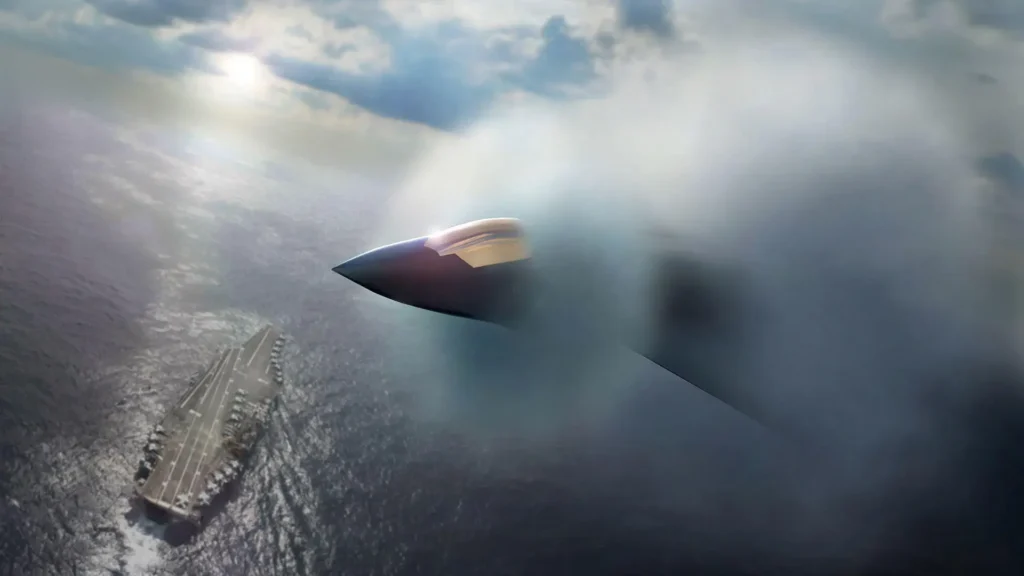
Boeing has secured the contracts for the Navy’s – as well as the Air Force’s – new 6th-generation stealth fighter. But this new Navy fighter, currently dubbed F/A-XX, is not meant to replace the branch’s F-35Cs at all – instead, it will fulfill a different need.
The Navy currently operates, effectively, two fleets of fighters for all combat operations, with roughly 915 4th-generation F/A-18 Super Hornets and their electronic warfare siblings, the EA-18G Growler; and another 130 or so 5th-generation F-35Cs split between the Navy and Marine Corps, respectively.
America’s carrier-based F-35 fleet is expected to grow to a total strength of 273 Navy jets operating alongside another 140 Marine Corps F-35Cs (not including the Corps’ separate fleet of vertical landing F-35Bs). These F-35s are expected to stay in service aboard American flattops for at least another half century. However, the Super Hornets and Growlers are another story.
The Navy’s oldest production Super Hornets were delivered 28 years ago in 1998. The Super Hornets were originally designed for a 6,000-flight-hour operational lifespan, which, due to a heavy operational tempo, would have seen these jets start to retire in mass by 2025.
Fortunately, the Navy recognized that looming date as far back as 2009, and has invested billions of dollars into extending the lifespan of these jets to 10,000 hours, which should keep them flying into the 2040s.
Jets are flying intense operations on a daily basis – whether in combat or out. Worse still, carrier fighters, like the Super Hornets, average more flight hours per year, and much more wear and tear per sortie, than their Air Force counterparts. And regardless of extension programs, an airframe cannot remain operable forever.
And this is where the F/A-XX comes in: to take over the role of the Super Hornets and Growlers.
Further, the reason why the F/A-XX program needs to start now is because of how long it takes to develop and field a new high-end fighter.
Modern stealth aircraft are not single inventions, but rather thousands of individual inventions, combined under a radar-absorbent fuselage, and relying on the other systems working seamlessly to function.
It took 14 years for the F-22 Raptor to go from contract award to operational service. It took 14 years for the F-35 to reach service for the Air Force after contract award. The Navy’s F-35Cs, which needed 5,500 pounds worth of added gear to withstand the rigors of flying life at sea, took 17 years.
Therefore, we can expect to see the F/A-XX enter service in the early 2040s – just in time the F/A-18 Super Hornets with very little time to spare.
So, here’s hoping this program can get there on time.
Feature Image: A render of Boeing’s F/A-XX. (Boeing)
Read more from Sandboxx News
- Did British authorities just foil an Iranian plot against US forces in England?
- The Long Range Desert Group and the birth of special operations around the world
- The veteran and the beard – Like peanut butter and jelly
- China acquires F-35 parts and that’s a big deal, despite what Western officials say
- The British Army wants better drone pilots, so it makes them learn ‘the hardest way to fly’