The U.S. Air Force is looking to extend the service life of the B-1 Lancer and B-2 Spirit strategic bombers.
An extended service life of the two venerable bombers will offer the service more time to develop the next-generation B-21 Raider, as well as increase the overall readiness of the strategic bomber fleet.
During a panel titled “Flying and Fixing to Fight and Win” at the Air & Space Forces Association’s 2026 Air, Space & Cyber Conference, Air Force General Stephen L. Davis, commander of the Air Force Global Strike Command, said that the Lancer and Spirit will be upgraded to ensure that there are enough capable bombers to go to war until the B-21 enters service.
While they are getting old, the two aircraft remain an integral part of the Air Force’s strategic bomber fleet.
Indeed, the B-2 can accomplish missions no other aircraft in the U.S. military can do. For example, the Spirit is the only aircraft in the military that can carry the GBU-57A/B Massive Ordnance Penetrator, a massive 30,000 lbs (14,000 kg) bomb. The Air Force dropped 14 of these bunker busters against Iran’s nuclear facilities during Operation Midnight Hammer in June 2025.
Current Air Force plans have slated the two aircraft for retirement sometime in the 2030s.
Davis did not disclose for how long the service life of the B-1 and B-2 fleet will be extended. Yet, as part of the life extension program, the service will spend the funds for the aircraft to receive the required modernization upgrades to keep them competitive in the modern battlefield, according to Davis.
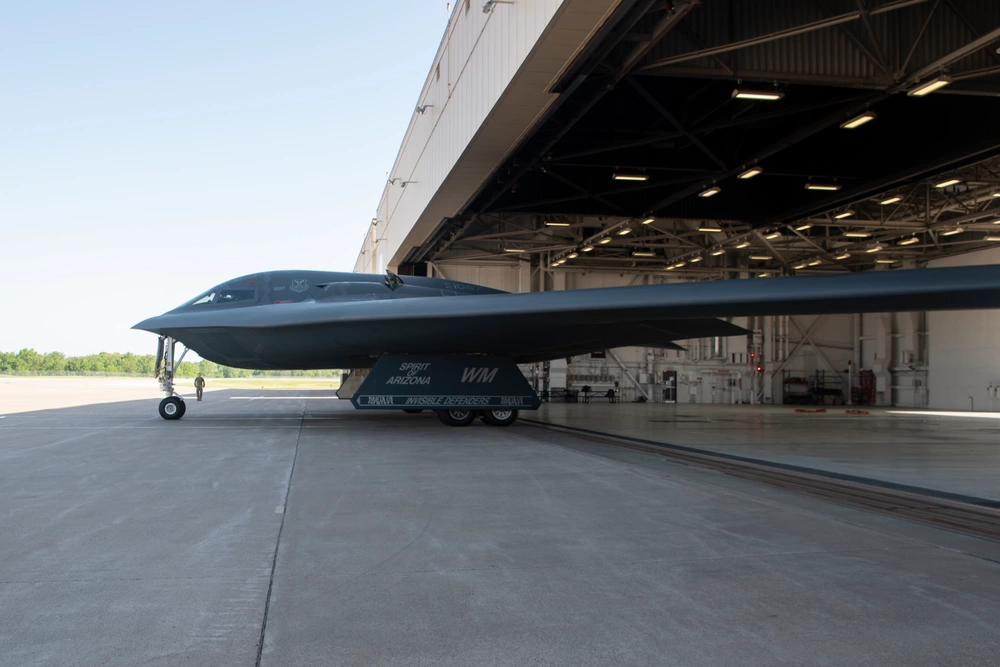
Meanwhile, the service is working on contingencies to ensure that aircraft are ready for operational use. For example, the Global Strike Command – which is responsible for America’s strategic bombing fleet – recently launched the “North Star Readiness Campaign” to increase the mission-capable rates of the B-1 and B-52 Stratofortress.
(The Air Force uses mission capable rates to determine the percentage of total time that an aircraft is able to operate at least one of its assigned missions.)
The Air Force fields around 140 strategic bombers. Specifically, it has approximately 77 B-52s, 45 B-1s, and 18 B-2s. And yet, this is a transitional time.
Even though the service wants to extend the service life of the B-1 and B-2, eventually the two aircraft will be replaced by the B-21. So, the future strategic bomber fleet will comprise of the B-21 and B-52, the former destined for the hardest targets and the latter for softer ones.
The B-21 Raider is a sixth-generation stealth strategic bomber. The Air Force is currently putting several prototypes through trials with an anticipated delivery date sometime in 2027. When the Raider enters into service, it will be the most advanced bomber in the world.
While the Air Force has yet to decide how many Raiders to procure, the number is likely going to be between 100 and 200.
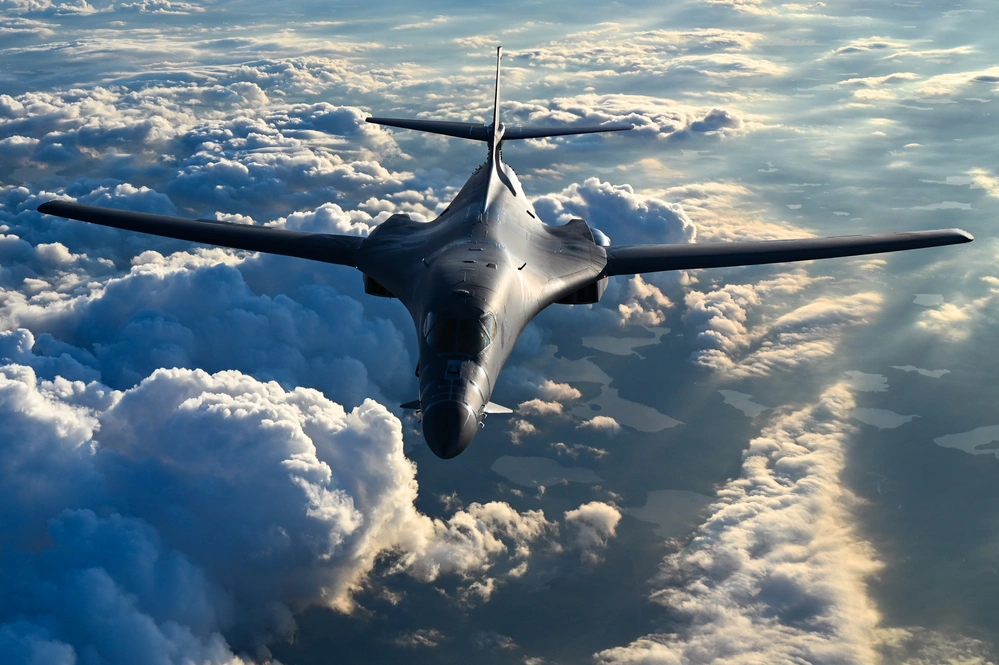
Feature Image: A U.S. Air Force B-1B Lancer aircraft assigned to the 34th Expeditionary Bomb Squadron at Ellsworth Air Force Base, prepares to refuel from a KC-135R Stratotanker aircraft, assigned to 74th Air Refueling Squadron at Grissom Air Reserve Base, over the United States, July 2, 2025. The B-1 is a long-range, supersonic bomber built for high-speed, low-level missions and heavy conventional payloads. (U.S. Air National Guard photo by Staff Sgt. Halley Clark)
Read more from Sandboxx News
- F-35A finds new home in Massachusetts as 104th Fighter Wing welcomes the stealth jet
- The time when a nearly perfect Delta Force sniper made a hilarious mistake
- US Air Force has a $14 billion supply hole, service officials say
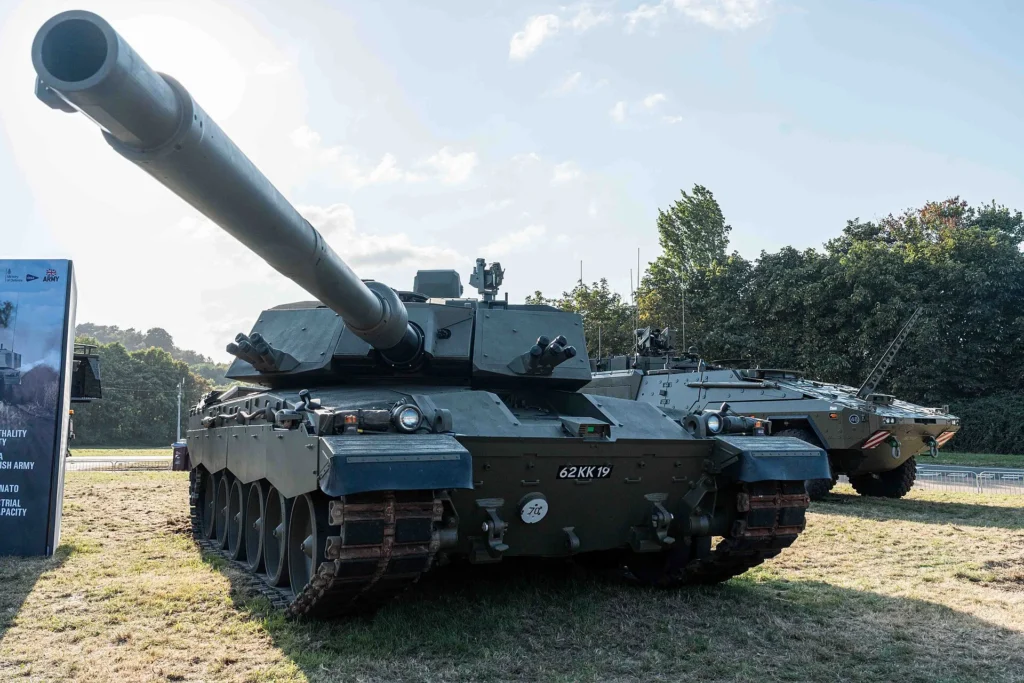
- British Army unveils its latest Challenger 3 tank prototype
- Dr. Robot will see you now: DARPA seeks robotic trauma surgeons to partner with humans