The U.S. Air Force is known for pushing technological limits, but its latest effort is especially audacious.
According to a recent notice published by the Air Force Lifecycle Management Center, the branch is now looking to develop an air-to-air missile that can reach targets as far as 1,000 nautical miles away.
This range is roughly 11 times more than America’s primary long-range air-to-air weapon in service today, the AIM-120 AMRAAM, and would make the weapon the longest-ranged air-to-air missile ever fielded by a wide margin.
Because there isn’t a tactical aircraft on the planet with a radar powerful enough to target enemy aircraft at anything close to a 1,000-nautical-miles range, the Air Force’s notice points to America’s growing confidence in its distributed off-board targeting kill webs that relay target data to weapons from far-flung sensors.
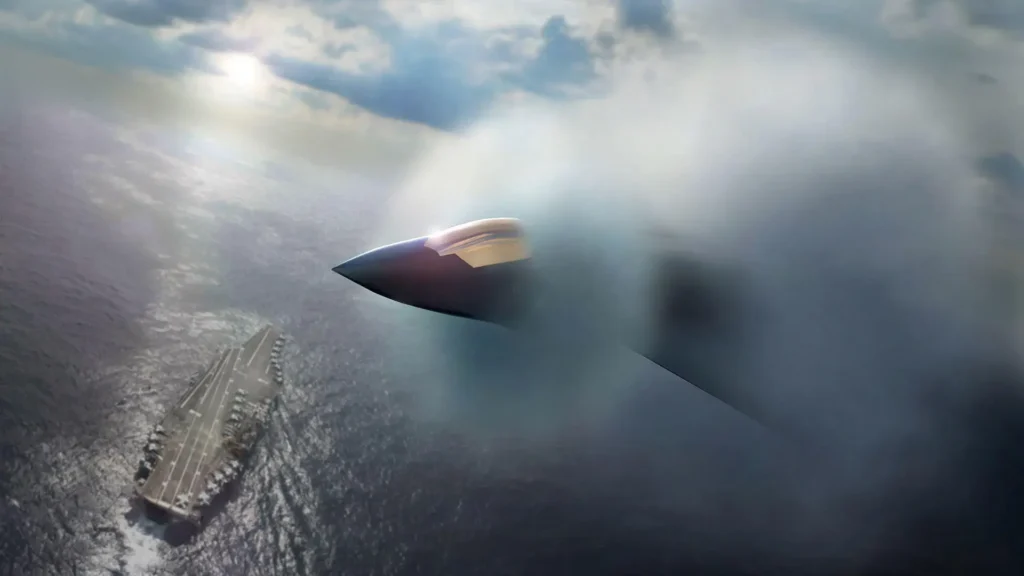
To fire the missile, the launching aircraft would receive target data from forward-advancing stealth fighters, powerful arrays onboard Naval vessels, or any number of other offboard sources. It would then launch the weapon, which would continue to receive updated target data from those external sensors via its own onboard data link, until it got close enough to turn to its own onboard sensors (likely a radar-seeker) for terminal guidance into the target.
A weapon like this would all but certainly be used to engage large, sluggish targets – like airborne warning and control aircraft (AWACS), enemy tankers, and strategic bombers – from stand-off ranges.
According to a document released by the Lifecycle Management Center’s Armament Directorate, the Air Force is soliciting vendors for two kinds of new long-range air-launched weapons, both with the same 1,000 nautical mile minimum range requirements.
The first is an air-to-air weapon, which the document states will be the focus of the initial operating capability, and the second is an air-to-surface weapon. The document also stipulates that both of these weapons should be capable of striking targets in what it calls “Defense Planning Scenario 2.1 and 7.1 environments.”
Defense Planning Scenarios are classified planning tools that the Pentagon has previously defined as being used for “addressing potential future contingencies that might plausibly occur.”
Publicly available information on what the two specific scenarios is very scarce.
An agenda published for the 2024 Defense Innovation Marketplace has a programming slot named “Defense Planning Scenario 2.1 2032 Campaign Brief.” This might suggest that Scenario 2.1 is tied to a combat capability the U.S. military anticipates a country (likely China) might field by 2023.
Sandboxx News couldn’t find anything specific to Scenario 7.1.
The Air Force’s notice is meant to gauge responses from the industry, meaning there isn’t much more in the way of technical details yet on the weapon. Essentially, the notice amounts to little more than a wish list that defense contractors will now start assessing their ability to fulfill.
Nevertheless, there are some general assertions that we can make base on existing weapon systems and the most likely technological paths forward.
Related: Air Force has a new secret weapon: Warrant officers
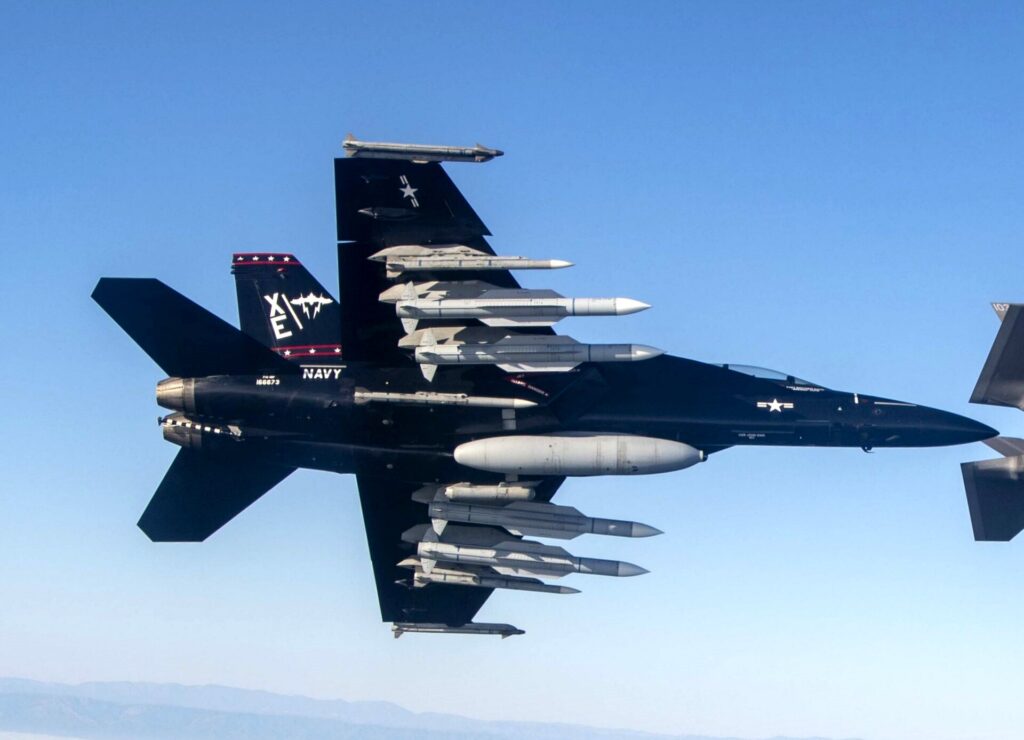
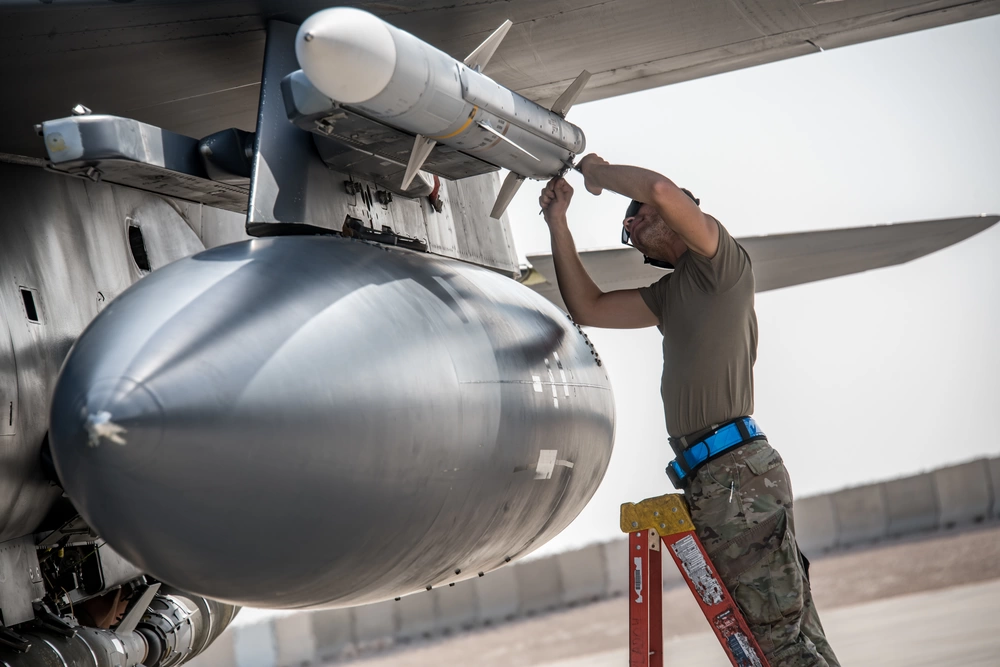
America’s current go-to beyond-visual-range weapon is the AIM-120 AMRAAM, or Advanced Medium Range Air-to-Air Missile. In its latest iterations, the AMRAAM is known to have a maximum reach of just over 100 miles, at a length of 12 feet and total weight of some 356 pounds. Its new successor, the AIM-260, is said to offer a serious boost in range in the same basic size and form factor, but its unlikely to reach farther than 200 miles. America’s farthest-reaching air-to-air missile, the AIM-174 Gunslinger, is much larger, at 15.5 feet long and 1,900 pounds, with a maximum reach that could exceed 300 miles.
Following that weight trajectory, a standard rocket-powered air-to-air missile like the above might weigh 10,000 pounds or more making it impossible to carry on a single fighter aircraft pylon.
It’s much more likely, then, that this new weapon would have to be an air-breathing, air-to-air missile that leverages turbofan, ramjet, or maybe even scramjet propulsion to reduce its weight, making it more akin to an air-to-air cruise missile than the Sidewinders and AMRAAMs we have today.
A Tomahawk missile, for instance, is turbojet-powered, has a range of over 1,000 miles, and only weighs in at around 3,500 pounds – and that’s a weight class modern fighters like the F-15EX could certainly manage.
Feature Image: A U.S. Navy F/A-18 equipped with an AIM-174B missile. (U.S. Navy photo by Lt. Cmdr. Kory Hughs)
Read more from Sandboxx News
- This elite U.S. special operations unit required an oath of secrecy to join
- What happens when a Delta operator collects too much equipment?
- Air Force reveals that the B-2 Spirit can also hunt ships – and it’s very good at it
- Air Force solicits ideas for over 1,000-mile range weapon from industry
- Unorthodox firearms used by Ukrainian forces against Russia