The U.S. military pulled off one of the most impressive combat search and rescue operations last weekend. Elite special operators flew into Iran and rescued the weapons systems officer of an F-15E Strike Eagle shot down by Iranian fire.
But behind the operation was a little-known Pentagon agency dedicated to rescuing troops and intelligence officers in danger.
Coordinating the hundreds of assets and troops involved in the successful combat search and rescue of the F-15 weapon systems officer was the Joint Personnel Recovery Agency (JPRA).
The Department of Defense established the JPRA in 1999 as the organization responsible for coordinating combat search and rescue and personnel recovery of American servicemembers, intelligence officers, and civil servants. The JPRA is responsible for all things related to personnel recovery, providing both combat search and rescue capabilities during emergencies, but also training on survival, evasion, resistance, and escape (SERE) during peacetime to pilots and special operations forces.
“Ours is a passionate focus. Our only job is personnel recovery. We know we’re supporting a bigger mission,” a retired JPRA officer told me in the past.
According to its official mission statement, “[the] JPRA prepares and supports the Combined and Joint Force to conduct personnel recovery across the spectrum of conflict with focus on large-scale combat operations (LSCO) to maintain warfighting capability.”
The JPRA has an unparalleled institutional knowledge of its specialty. Indeed, the agency has debriefed all prisoners of war, troops evading the enemy, and detainees from the Vietnam War till now. It also has anecdotal information from the major wars before that, including Korea, World War II, and World War I. The accumulated knowledge is translated into practical training for pilots and special operators.
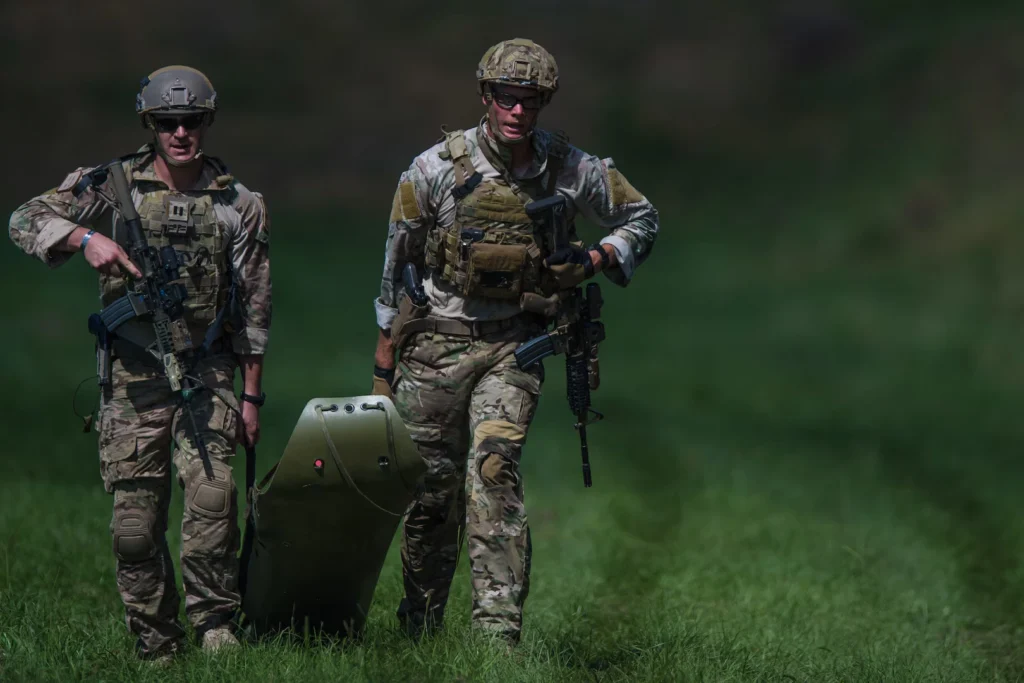
Sometimes, however, there is a lack of understanding of the agency’s mission by the public.
“For example, the Mike Durant incident in Somalia was a personnel-recovery event, but most people outside the U.S. government would see it as a hostage rescue,” the officer said, referring to the famous “Black Hawk Down” incident when Delta Force, Night Stalkers, and Army Rangers got trapped in the dense streets of Mogadishu, Somalia, in 1993.
“If rescue had occurred, the combatant commander could have tasked JPRA for specific support,” the JPRA officer added.
In the recent combat search and rescue operation in Iran, the U.S. military and Intelligence Community committed significant resources, including over 150 aircraft and hundreds of conventional troops, intelligence officers, and special operators. Two MC-130J Commando II transport aircraft and at least one MH-6 Little Bird were destroyed on the ground because they could not take off from Iran. The overall cost for the operation was significant. But it was worth it. Knowing that someone will be out there looking for you if things go south is a great psychological boost. Pilots and commandos operate more easily with that peace of mind.
“Sometimes teams or even individuals will go out with zero support – no fighters, no armor, no artillery, no nothing – and also with a very light footprint, just a sidearm and perhaps an M4 here and there. So with the JPRA, they don’t feel completely ‘alone and unafraid,'” the former officer said.
This was not the first time U.S. combat search and rescue assets had to scramble in search of a downed F-15 fighter jet.
In 2011, during Operation Odyssey Dawn, the air strikes against the Libyan regime of Colonel Muammar Gaddafi, an Air Force F-15E Strike Eagle was shot down. Like the recent incident, both the pilot and weapon systems officer managed to eject and began escaping and evading in enemy territory. The JPRC responded, and both aviators were safe and sound within a few hours.
As the JPRA proved once again in Iran, the organization lives by its motto: “These things we do so that others may live. To return with Honor.”
Feature Image: The seal of Joint Personnel Recovery Agency. (JPRA)
Read more from Sandboxx News
- The C-17 Globemaster is the Air Force’s unsung hero
- How the US saved the crew of a downed F-15 deep within Iranian territory
- YFQ-42 AI-enabled drone crashes for the first time during testing
- North Korea’s Type 88-2 AK rifle is horribly bad
- BREAKING: US military and CIA rescue F-15 airman from central Iran in dramatic operation