1 x
$8.42
-
+


Share This Article
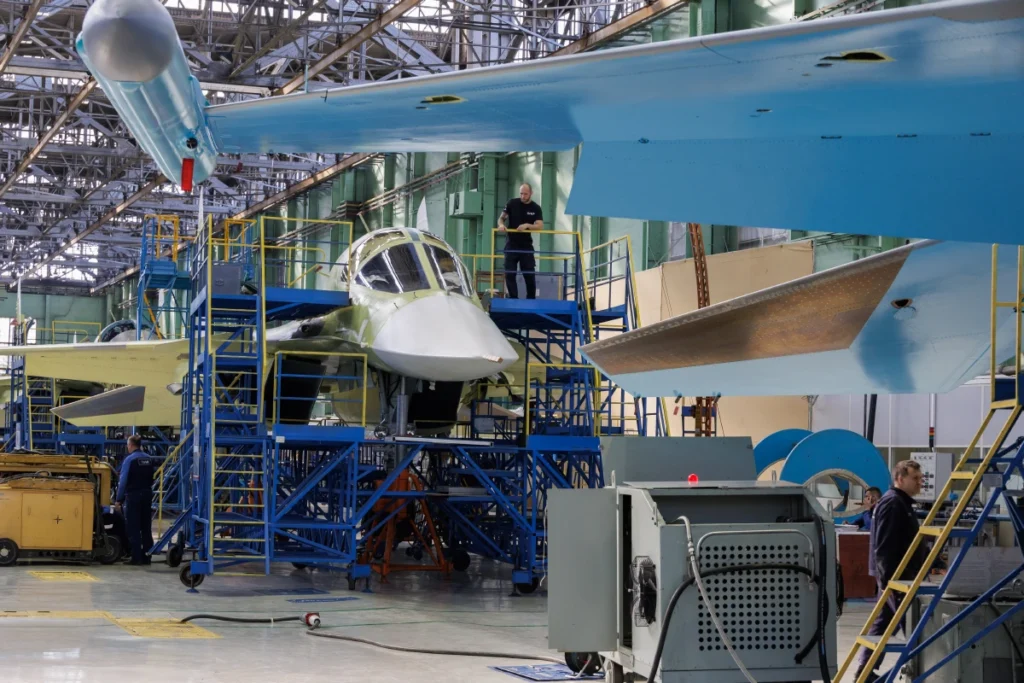
The Russian Air Force has lost at least 130 fighters and bombers since the onset of the full-scale invasion of Ukraine in 2022, but surprisingly, it is arguably stronger today than it was at the beginning of the war.
Last week, Dr. Justin Bronk published an analysis for RUSI, a think tank, of how Russian and Chinese air power threats have evolved over the past half-decade. And what he found was that Russia’s replacement rate for high-end jets has actually exceeded its losses over the past four years of fighting. Meanwhile, its losses of lower-end jets don’t matter all that much because these aircraft would have been of little use in a fight against NATO anyway.
And the data seems to support Dr. Bronk’s assessment.
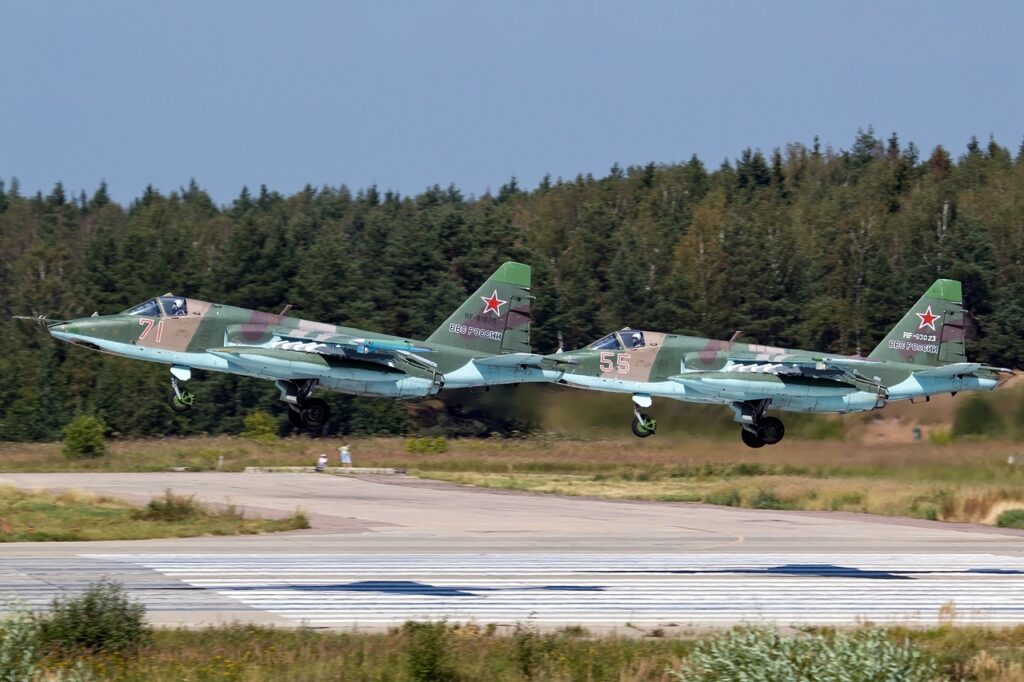
The website Oryx, which maintains an extensive database of equipment losses in Ukraine as confirmed by photographic evidence, shows that Russia’s fighter fleet has suffered a total of 119 airframe losses since the onset of the war; another 14 aircraft have been damaged but not destroyed. These figures do include Russia’s most advanced and expensive tactical jets, like one Su-57 damaged in a drone strike and at least eight advanced Su-35S lost entirely, but the vast majority of these fighter losses come from two specific platforms: Russia’s close-air-support focused Su-25 Frogfoot (at 41 lost to date), and its primary strike platform, the Su-34 (with 40 lost to date).
The Su-25 Frogfoot is, to some extent, Russia’s equivalent to the American A-10 Thunderbolt II, or Warthog. It’s a single-seat, twin-engine, subsonic attack aircraft that’s been flying since 1975. The Su-25 faces the same survivability concerns in a modern fight as its A-10 cohort.
Losses of these aircraft over Ukraine, while beneficial to the Ukrainian effort, have less of an impact on Russia’s ability to fight NATO because these aircraft would be all but useless against the advanced fighters and air defenses NATO can bring to bear in much higher volumes than Ukraine can. To some extent, Russia’s losses of Su-25s on the front lines are similar to America’s peacetime divestment of A-10 airframes: these just aren’t jets that would be relied on heavily in a high-end fight.
On the other hand, losing 40 Su-34 Fullbacks is a much bigger deal for Russia. These supersonic, twin-engine fighter bombers represent the most potent element of Russia’s medium-range strike capability. These jets entered service in 2014 and would be a vital element of Russia’s air war against NATO if it were ever to come to that – and Russia has invested its resources with that in mind. In the same period that Russia lost 40 Su-34s, its managed to produce between 48 and 50 replacements. In other words, despite these heavy losses, Russia’s Su-34 fleet has grown since the fighting began.
The Su-34 not the only Russian fighter aircraft that’s seen new deliveries exceed losses. Those eight aforementioned Su-35s lost have since been replaced by at least 55 new ones, and their four MiG-31s shot down have since been replaced by at least 20 new ones.
Further, Russian fighter pilots have also been rapidly gaining combat proficiency and vital cockpit experience throughout the conflict, making the combination of newly built fighters and seasoned pilots all the more dangerous.
Of course, NATO’s combined military force still dwarfs that of Russia, and this analysis does not take other aspects of the war in Ukraine into account (like losses on the ground or the state of Russia’s economy). That is to say that, while Russia’s air power capabilities may not be on a distinct downward trend, a more macro-perspective of the nation’s military apparatus shows clear signs of strain.
Yet, Russia’s ability to overcome its fighter losses with increased production serves as a valid reminder that the Russian military’s focus may well extend beyond Ukraine itself, and in that regard, Russia remains a regional power worthy of concern.
Feature Image: A Su-34 assembly line, October 2023. (Ministry of Defence of the Russian Federation)


Alex Hollings is a writer, dad, and Marine veteran.