As the operational needs of the Marine Corps evolve, the service is making significant changes to its reconnaissance training pipeline to add new skills – and considering building a primary new job specialty for infantry scouts.
The move, announced in a round table with reporters on Tuesday, comes three years after the Marine Corps replaced its scout sniper platoons with scout platoons in infantry battalions. At the time, the service emphasized the need for “continuous all-weather information gathering” for battalion commanders.
As the Corps continues its quest to develop the capabilities it needs, particularly in coastal regions in the Indo-Pacific where advanced sensing and water skills are paramount, it is building out the necessary training, said Maj. Gen. Mike Brooks, head of Marine Corps Training Command.
“About a year ago, the interest grew to try to look at ways to turn the scout community, the infantry scouts, into a primary [military occupational specialty] so that we could use the primary MOS to improve the MOS health out in the fleet,” Brooks said. ” … And so we started looking at perhaps some training efficiencies between the skills that infantry scouts needed, and the skills, or at least a subset of the skills, that the Recon Marines needed, and perhaps use that to build a more efficient and common start in the training pipeline.”
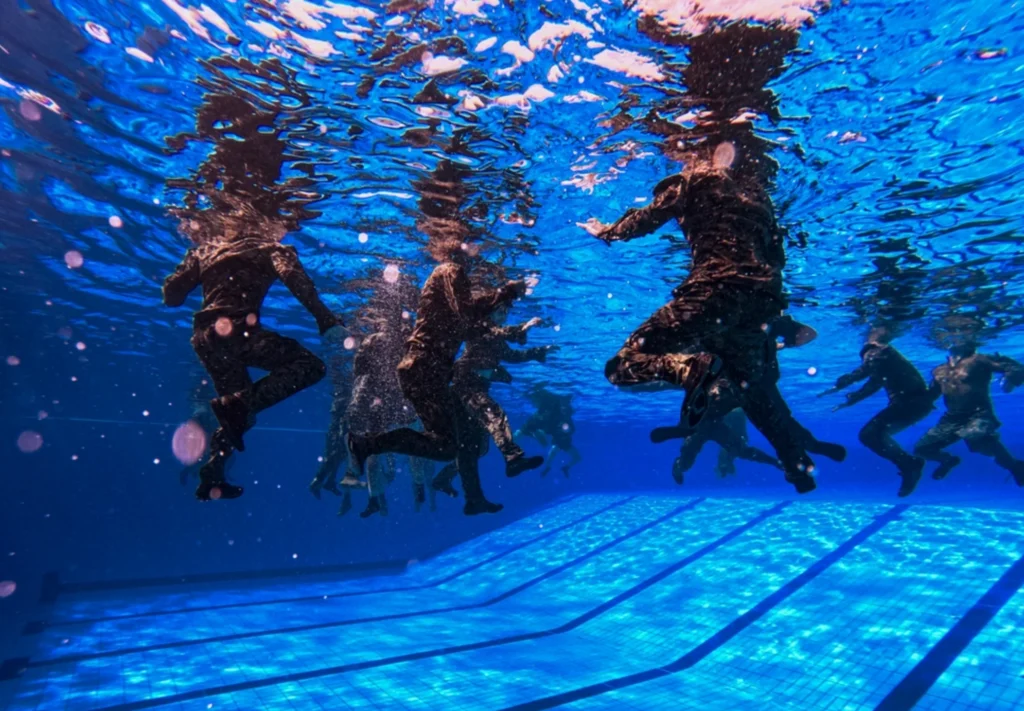
Starting this month, he said, the Corps is kicking off a Ground Reconnaissance Course, or GRC, one of two courses replacing the Basic Reconnaissance Course that Recon Marines previously attended after the 29-day Marine Combat Training. The second of the two is an amphibious reconnaissance course that emphasized water skills and swim training.
Historically, swimming proficiency has been a pain point for the Marine Corps. The Corps announced a greater focus on swim skills in 2023 following public attention to drownings off-duty and in training the previous year, and scrutiny around the number of facilities available to execute existing swim training requirements.
“They are going to receive more swim training, and I would say a coherent human performance program every single day from their first day at [School of Infantry] until they graduate,” Brooks said. “This is a necessity based on realizing that we had a lot of time where we weren’t teaching swim skills, and it’s a big requirement for the fleet and Training and Education Command … it’s 100% tied to Marines surviving until they can become rescued.”
Drones and sensors will also feature in both of the two new courses, officials said.
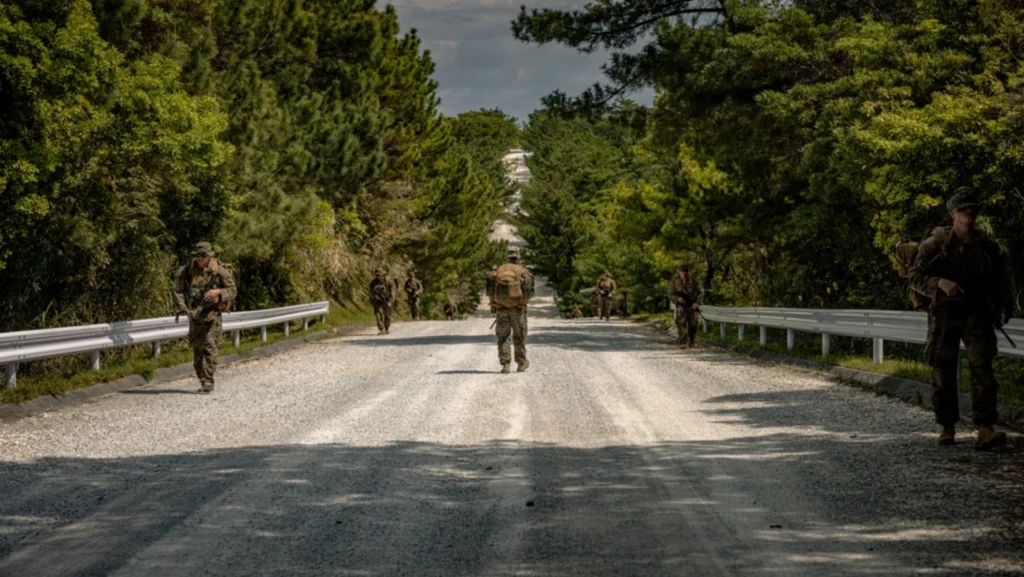
According to Maj. Jonathan Bender, company commander for Reconnaissance Training Company, the work will begin with familiarizing new grunts with various small uncrewed aerial systems, and then employing them on patrols.
“We will actively have those assets out there; they’re actively looking for the Marines,” Bender said. “That’s twofold: one, so that they can understand that the threats are always out there, and then two, we can provide direct feedback to the teams, so that they can understand that they are either subpar in their camouflage techniques, or they did a good job.”
The amphibious reconnaissance course will feature training with additional sensor systems designed for use in the littorals and on the water, Bender added.
Related: Marines conduct first air insert of an unmanned ground vehicle
The two nine-week courses will add up to 18 weeks of reconnaissance training, which Brooks and Bender said will actually cut two months out of the boot camp-to-the-fleet training pipeline for Recon Marines. The changes, they said, will also provide a greater common reconnaissance training foundation between Recon Marines and scouts, which operate inside infantry battalions in 26-man platoons.
“So if a scout at a later date decided they wanted to go to a recon battalion, they would already have a really strong set of prerequisites and an understanding of their occupational field. So it would be a prime candidate for [a lateral] move to the reconnaissance field,” Brooks said.
Both new courses are still in the pilot phase, meaning the Corps will retain the ability to tweak them as feedback comes in. And leaders continue to consider the development of a primary MOS for infantry scouts – to be given the code 0315 – though they haven’t set a timeline on making a decision. The ground recon course would be the main training school for that MOS, Brooks said.
As top officials identify risk and impacts, “it feels like we’re getting closer to that decision,” he said.
Feature Image: U.S. Marines with Charlie Company, 1st Reconnaissance Battalion, 1st Marine Division complete swim qualification prior to amphibious training as part of Exercise Black Jack 25 at Lavarack Barracks in Townsville, Australia, July 10, 2025. (U.S. Marine Corps photo by Sgt. Atticus Martinez)
Read more from Sandboxx News
- Operation Olympic Games: When history’s first cyberweapon targeted Iran’s nuclear program
- Thank you, Maverick: Senate wants to see the legendary F-14 Tomcat fly again
- Ukraine releases new videos of its Flamingo missiles blasting off for 900-mile strikes on Russia’s rear
- Air Force wants to invest $500 million to arm its cargo and tanker aircraft against missiles and drones
- The gravity of the situation: How to fly a fighter jet upside down