The U.S. Navy wants to continue adding weapons to its air-to-air arsenal, this time, with plans to create a mini air-to-air missile meant to increase the magazine depth of stealth fighters and better equip a growing line of carrier-based drones.
Dubbed the Compact Air-to-Air Missile, or CAAM, this weapon is meant to be optimized for relatively short-range engagements, and are what the Navy is calling “inner boundary weapons.”
In this context, “inner boundary weapons” are air-to-air missiles that you can employ effectively at relatively close ranges where there’s little time to react.
Often, missiles have a minimum range, because an air-to-air missile needs to go through a whole series of steps to hit an enemy aircraft: from ejection from the jet; motor ignition; shift toward the path to the target; transition to its own onboard guidance; seeker acquisition and tracking; fuze arming; final maneuvers; and finally, the intercept itself.
Weapons that are designed for outer boundary engagements, like the massive AIM-174 Gunslinger or the new AIM-424 Malice, probably wouldn’t be as effective at 10 miles as they are at 100 because they’re just not made for that kind of fight. That’s why weapons like the AIM-9X Sidewinder are specialized close-range tools with thrust-vectoring rocket nozzles and an onboard guidance suite purpose-built for air-to-air knife fights.
The Navy wants the CAAM mini-missile to be good at the same.
In fact, as Joseph Trevithick and Howard Altman from The Warzone reported, this new Navy program already has a great deal of overlap with the Navy-funded AIM-9X CV program that aims to field extra-compact variants of the Sidewinder for this same sort of inner boundary role.
The CAAM isn’t the first American mini-missile concept.
In 2019, Raytheon’s rolled out its Peregrine missile. Raytheon, which also builds the AIM-120 AMRAAM, the AIM-X, and the AIM-424 Malice, said Peregrine offered comparable range to that era’s AMRAAM but in a missile that’s roughly half the size.
Likewise, a few years earlier, Lockheed Martin pitched its own mini-missile called Cuda, which came with the same basic pitch: full-sized performance in half-sized missiles. Lockheed Martin even produced a model of the F-35 with its internal weapon bays packed with 12 Cuda air-to-air missiles, rather than its standard capacity of just four AMRAAMs.
Notably, the AIM-9X CV is an infrared-guided weapon while both Peregrine and Cuda were touted as being radar-guided.
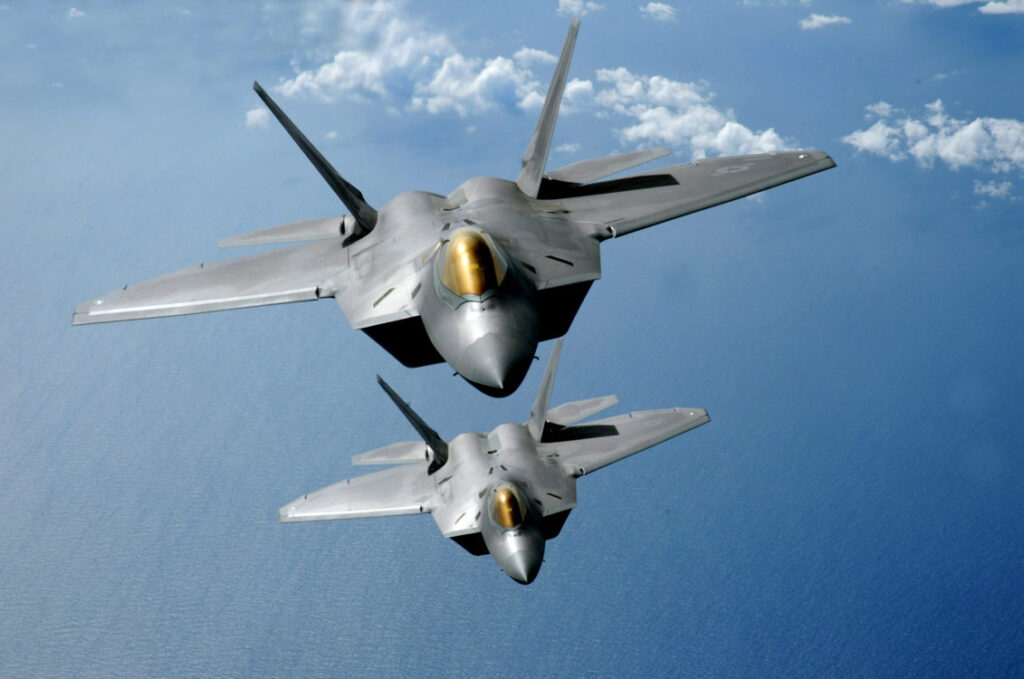
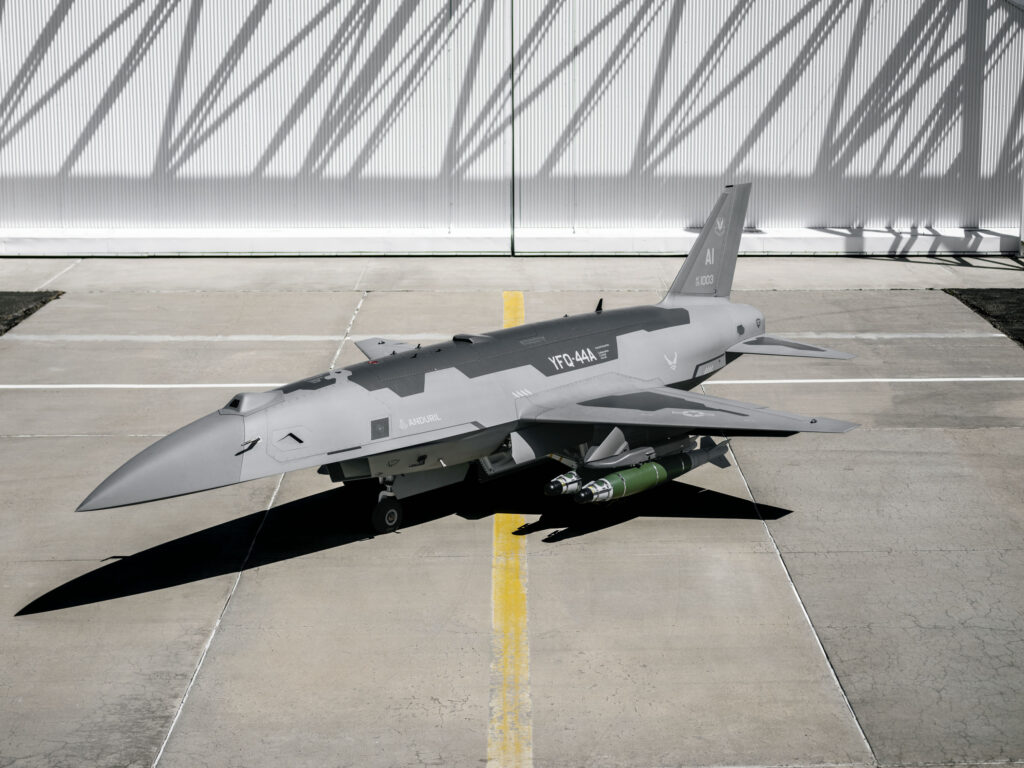
The value of fielding these kinds of mini-missiles is in increasing the magazine capacity of the internal weapons bays of stealth fighters like the F-35, F-22, forthcoming F-47 and the Navy’s next F/A-XX – all of which carry their missiles internally when maintaining a stealth profile. But just as importantly, these weapons could also really increase the magazine capacity of smaller CCA-style drone fighters and wingmen, especially in a carrier defense role.
No timeline has been disclosed for the CAAM missile yet, but it’s getting evidently clear that the Navy is getting very serious about air combat.
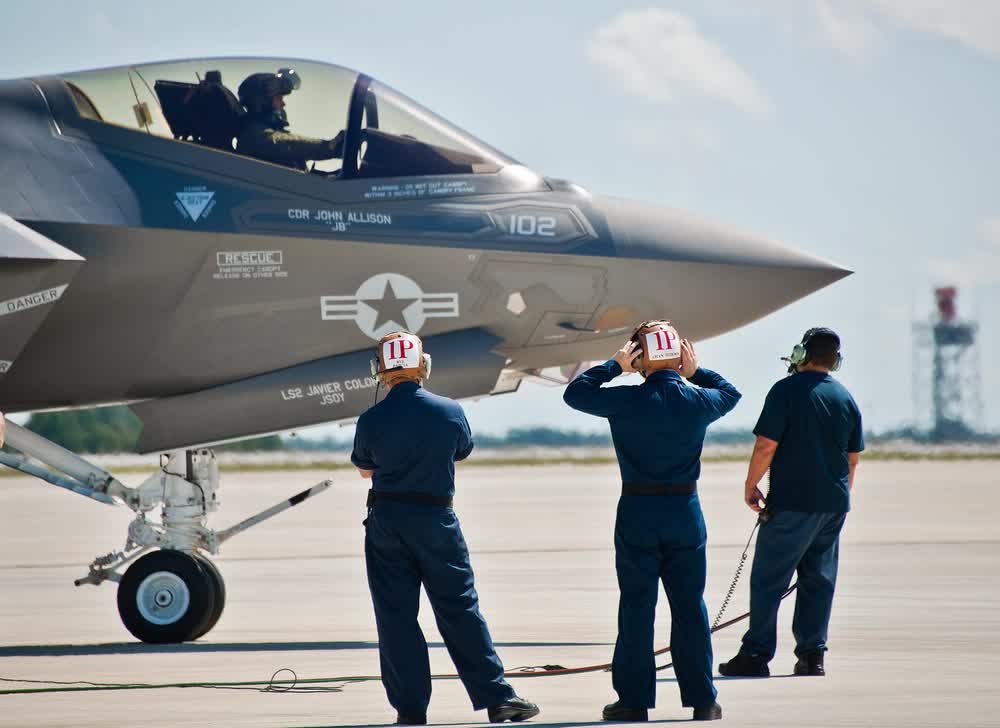
Feature Image: Sailors from the Strike Fighter Squadron-101, perform preflight checks on an F-35C Lightning II after a hot pit session on the 33rd Fighter Wing flightline at Eglin Air Force Base, FL. (Photo by Samuel King Jr./Air Force)
Read more from Sandboxx News
- Airmen may get kits to build their own drones and drone-killing weapons in the field
- Just how good would an F-22/F-35 hybrid fighter really be?
- Energy drinks were the unsung hero of the Global War on Terror
- How to get through Special Forces selection? Don’t be the ‘Grey Man’
- Navy reveals its new, low-cost hypersonic missile. And the Army is also interested.