In 2017, Canada kicked off the Future Fighter Capability Project with the goal of replacing its aging fleet of CF-18 Hornets. By 2021, both the Eurofighter Typhoon and the Dassault Rafale had bowed out of the competition, claiming Canada’s requirements unfairly benefited American manufacturers. Then Canada booted Boeing’s F/A-18 Super Hornet from consideration with little in the way of formal explanation, leaving it down to Lockheed Martin’s 5th-generation F-35 and Saab’s 4.5th-generation Gripen E.
In 2022, Canada announced their selection of the F-35, and in 2023, a deal was finalized that included the purchase of the nation’s first 16 F-35As, with long-term plans to acquire a total of 88 stealth fighters. But that was all before relations between the U.S. and Canada began to sour, with the Trump administration taking a very adversarial approach to managing its relationship with America’s neighbor to the north.
However, in 2025, newly elected Canadian Prime Minister Mark Carney announced that, while Canada was already committed to purchasing those first 16 F-35As, his government would be reviewing the planned purchase of the remaining 72, re-opening the Gripen vs. F-35 floodgates and prompting a renewed push for buying Swedish fighters over American ones.
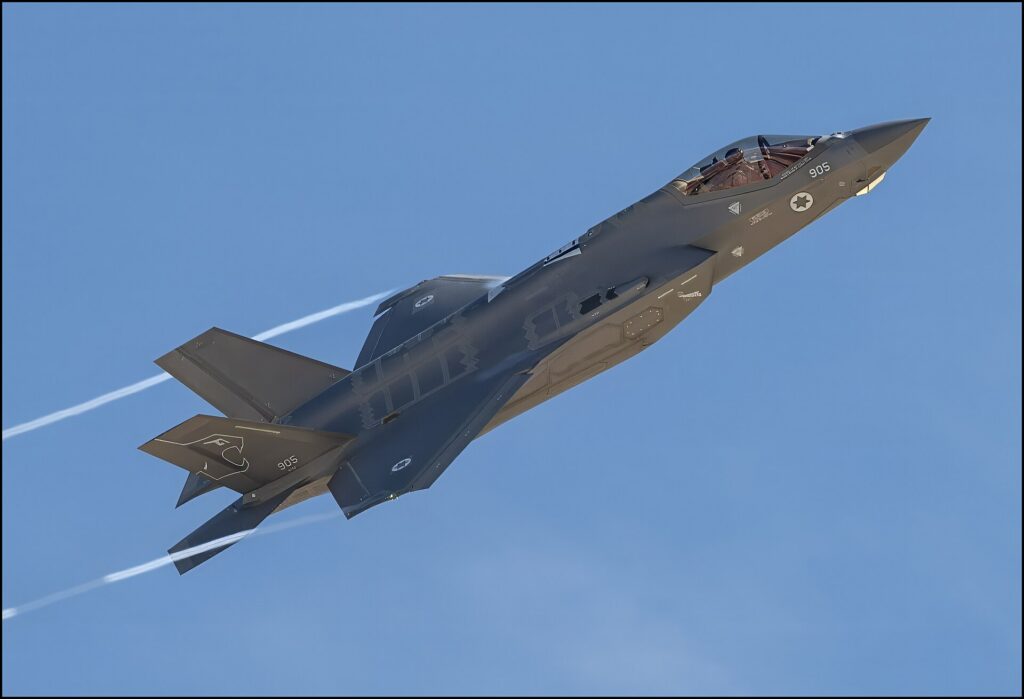
The runway-queen F-35A is 51.4 feet long (about 15.7 meters) with a 35-foot (11-meter) wingspan. It’s powered by a single Pratt & Whitney F135 turbofan engine capable of producing 43,000 pounds of thrust under afterburner, which can propel the jet to Mach 1.6 and delivers a 1.07:1 thrust-to-weight ratio with a half a tank of gas and full combat load. It can currently carry four weapons internally, though that’s expanding to six in the Block 4 upgrade, with six more external hardpoints for when stealth isn’t a concern. It boasts the most capable fighter radar in the world, an infrared distributed aperture system and electro-optical targeting capabilities, and is said to have a frontal radar cross section of roughly .005 square meters, or about the size of a gulf ball. Enemy targeting further hampered by advanced electronic warfare capabilities, radio frequency countermeasures and towed decoys.
The Gripen E is 49 feet 10 inches (15.2 meters) long, with a 28-foot-3-inch (8.6 meter) wingspan. It’s powered by a single GE F414 turbofan engine capable of pumping out just 22,000 pounds of thrust under full afterburner, but with a maximum takeoff weight of just over half that of the F-35, the lighter jet delivers a higher top speed of Mach 2 and a 1.04 to one thrust-to-weight ratio. The E offers a total of 10 hardpoints, all external, with an advanced ES-05 Raven radar array, infrared search and track capabilities, and a robust electronic warfare and countermeasure suite. Importantly, the Gripen is not a stealth aircraft, giving the F-35 an immediate edge in survivability.

In 2021, Canada’s Department of National Defence (DND) held a fly-off of sorts that pitted these two aircraft against one another and assessed them on five categories, each weighted differently from most to least: mission performance; upgradability; sustainment; technical criteria; and capability delivery.
While this information was not publicly disclosed at the time, it was recently revealed that the F-35 absolutely dominated the Gripen in each category. In mission performance, the F-35 scored a whopping 97% against the Gripen’s 22%. In upgradability, the F-35 scored a 100% versus the Gripen’s 28%. In sustainment, where one might expect the F-35 to fall short, it still edged out the Gripen with its 85% versus Saab’s 81%. In technical criteria, the F-35 scored 86% while the Gripen scored 55%. And finally, in capability delivery, the F-35 managed its lowest score of the competition at 67%, but that was still plenty enough to beat out the Gripen at 54%.
With the weighted scores fully tallied, the jets were given a final grade out of a total of 60 possible points. Lockheed Martin’s stealth fighter came in just below perfect, at 57.113 points (a bit better than 95%), while Saab’s Gripen E topped out at just 19.762 points (just under 33%).
This outcome mirrored accounts of a similar Finnish competition called the “HX Fighter” program, held prior to Finland opting to buy the F-35A. This competition allowed different combinations of aircraft to operate in concert with one another, but still ultimately saw the F-35 win or tie for first place in every category, with the F/A-18 Super Hornet and EA-18G Growler combo taking second, and the Gripen E landed in third despite flying with two Global Eye airborne warning and control aircraft, or AWACS in support.
This competition also engaged with the very popular operating costs comparison, with the Gripen E claimed to ring in at just $8,000-$10,000 per flight hour, versus the F-35 at roughly $30,000 per hour. In direct competition, the Finnish found that none of the jets (including the Eurofighter and the Rafale) significantly outperformed the others in terms of operating cost. It turns out Saab’s $8,000-$10,000 per hour claim originated from a self-funded 2012 study that hasn’t been adjusted for today’s inflation, nor does it include anything beyond fuel and consumables. According to Aviation Week, the Gripen E’s hourly operating costs are actually more like $22,175, including $9,975 for operations and Saab’s omitted $12,200 per hour for maintenance. On the other hand, the F-35’s reported operating costs include practically everything, including pay for maintainers and techs.
Related: Ukraine plans to place largest order in history for a jet specifically designed to take on Russia
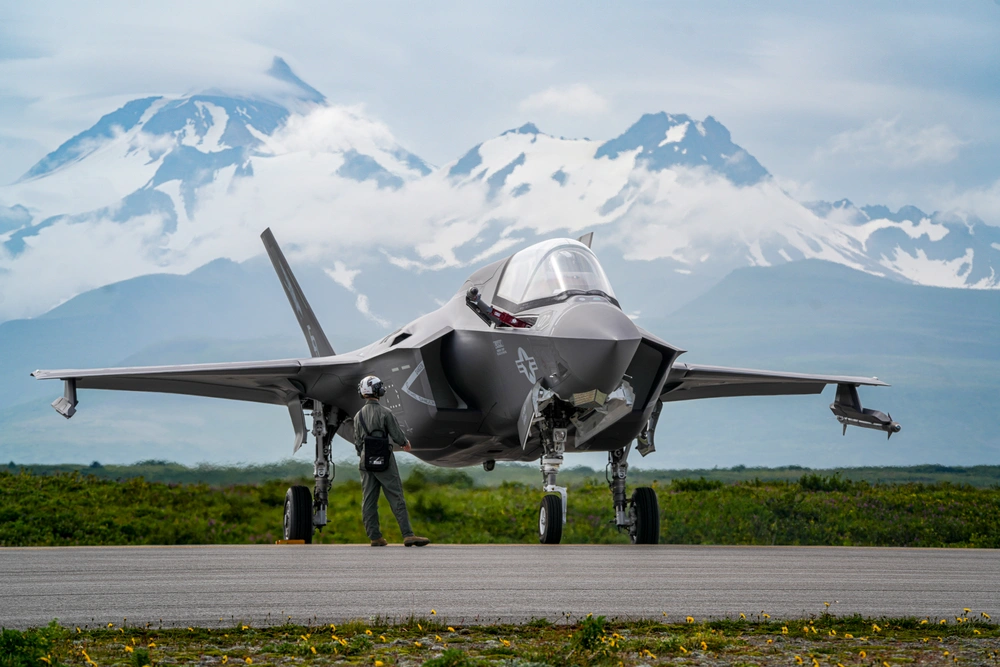
Likewise, Saab marketing materials have really pushed the idea that Gripens are the better choice for arctic conditions, and that’s also a questionable claim. Norway has reported their F-35As performing well in arctic conditions since they arrived in 2015, though they did install custom-designed drag chutes to be able to better operate from shorter, icy runways. The United States has also operated F-35s out of Alaska since 2020.
The Gripen may be a significantly capable 4th-generation aircraft, but at the end of the day, 5th-generation fighters, like the F-35, are just in a league of their own – that’s why they were given a new generational designation in the first place.
Despite political statements made in the press, American and Canadian Defense efforts have a long and fruitful history of cooperation and, in the present, are increasingly intertwined. NORAD, or the North American Aerospace Defense Command, as an example, is not an American command element, but rather a joint American and Canadian one. Canada would benefit from the F-35’s long-range detection and sensor fusion capabilities when it comes to policing their vast northern territories.
In a lot of ways, Canadian security is American security and vice versa, so, there’s at least some reason to believe that the relationship between the two countries is too important and strong to wither away under the policies of any one administration.
Canada is already committed to buying at least 16 F-35s and the Canadian military has been very open about not wanting to operate a mixed fleet of fighters because it would mean having to maintain two different training pipelines, logistics chains, and maintenance facilities, driving up costs across the board.
Conversely, Saab has offered to build a Gripen manufacturing facility in Canada to fill its fighter orders (which would be necessary because Sweden lacks the industrial capacity to fill Canadian, Brazilian, Ukrainian and other orders simultaneously). Saab has also pitched building manufacturing facilities for GlobalEye surveillance planes in Canada as well, which combined, would bring an estimated 13,000 jobs to the Canadian market. And maybe most importantly, Saab has offered to sell the Gripen intellectual property to Canada, making it a Canadian-built fighter that Otawa could potentially export itself (though all but certainly in partnership with Saab).
Related: Just how good would an F-22/F-35 hybrid fighter really be?
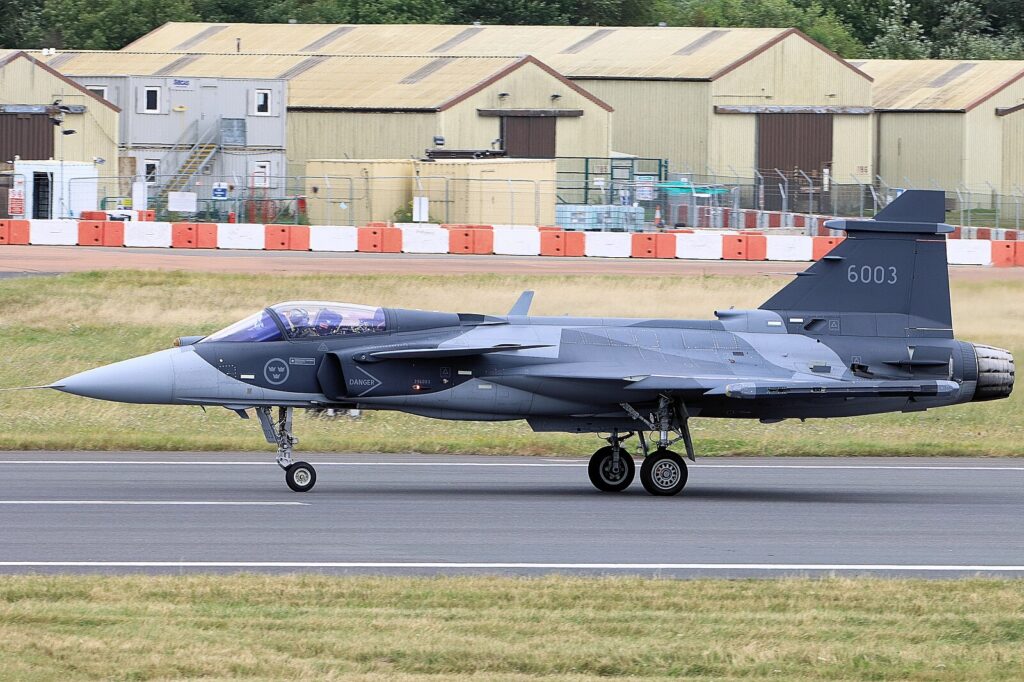
However, the Gripen offer is mired in a lot of uncertainties, with the only concrete certainty being that Canada would end up operating less capable fighters.
The F-35 program, on the other hand, has been benefiting Canadian industry for years, with over $3.3 billion in contracts already awarded to more than 30 Canadian firms for the development and production of F-35 components. And as a part of the F-35 purchase agreement, both Lockheed Martin and engine supplier Pratt & Whitney have signed Economic Benefits Arrangements (EBA) with the Canadian government that ensure future contracts come Canada’s way.
Olive also highlights concerns about the F-35 being cut off logistically by American suppliers, but this line of thought completely ignores how the same could be said for the Gripen. The Gripen E is, after all, powered by an American-sourced GEF414 turbofan engine that is still subject to American export controls, and while there have been rumors of Saab swapping the GE out for a Rolls-Royce engine, that would take a significant (and expensive) redesign that would also significantly delay fighter deliveries.
And, even then, roughly a reported one-third of Gripen components come from U.S. suppliers, including vital elements of its life support system that come from Honeywell. In fact, it’s been reported that the Gripen is more reliant on American-sourced hardware than the Eurofighter Typhoon or Dassault Rafale, making it a poor choice if the driving force in your decision-making process is divorcing your fighter lines from American support.
And then, of course, there’s the rising cost of the F-35 program. When Canada agreed to buy 88 F-35s initially, it was for a total of $19 billion Canadian dollars, but today, that cost has risen to $27.7 billion. This price, of course, doesn’t just cover the jets themselves, but also infrastructure construction, associated equipment, sustainment set-up and services, and training and information services. And while there is no debating that this is a big rise in costs, the way this cost increase has been presented in the media has been a bit skewed.
Related: Canada’s superior C7 and C8 – Service rifles from around the world
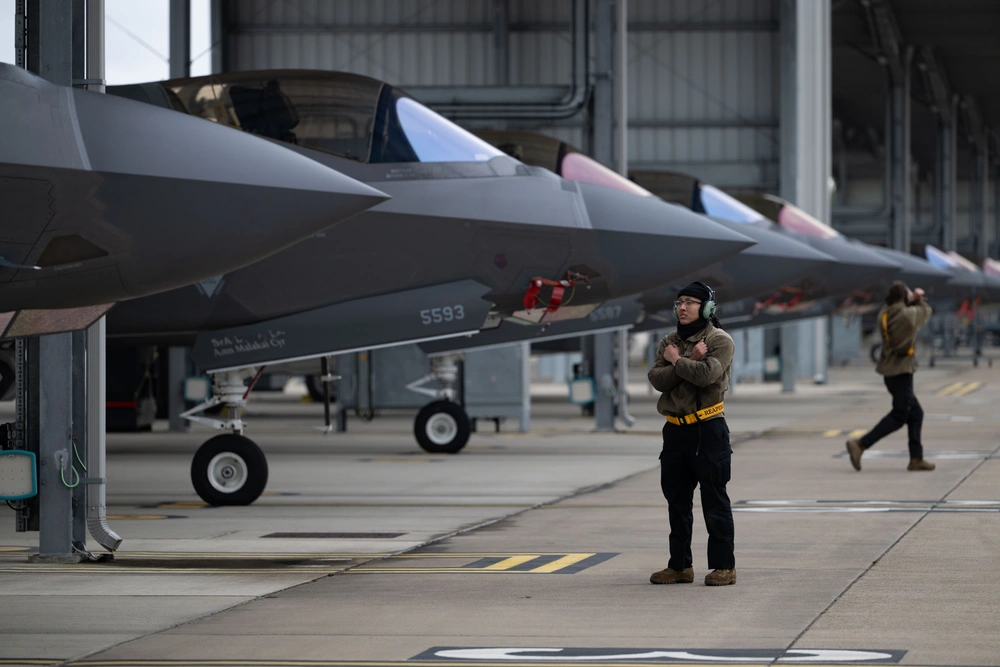
Part of the rise in costs, Canada’s Auditor General Karen Hogan explained, was the Canadian government using outdated figures for its future cost estimates back in 2022, but the biggest culprits, she determined, were actually external factors unrelated to the aircraft itself: “We found that an important part of the increase in the department’s updated cost estimates of $27.7 billion was caused by global factors, specifically: rising inflation; fluctuations in foreign exchange rates and heightened global demand for munitions.”
That means costs would likely increase for the Gripen over time as well, though you could argue that the increases may not be as pronounced with a less advanced fighter.
The Gripen has not been immune to cost increases or delays itself. Brazil has seen deliveries on its Gripen Es now stretch to eight years behind schedule, with its overall program costs increasing by 13% to date, effectively adding the cost of six additional Gripen Es to the overall pricetag.
Maybe the most pointed and fair criticism of the F-35, however, comes down to the fighter’s availability and mission-capable rates. It’s not uncommon to hear people talk about F-35s always being down for maintenance and it is true that F-35 availability rates continue to come in below the Air Force’s goals. But these figures are nearly often reported without any greater context, just presenting F-35 availability rates without any meaningful basis for comparison.
For instance, you might be surprised to learn that, in 2024, American F-35As offered higher availability rates than any other Air Force fighter, beating out the F-15E, the F-16C/D, the F-22, and the F-15C/D. The F-35A also led the U.S. Air Force in flying hours per aircraft in 2024. And while the idea that F-35s are too expensive to operate continues to be pervasive online, the Congressional Budget Office points out that, in 2024, the F-35A cost almost exactly the same to operate as America’s F-15E Strike Eagles.
The F-35 also has much greater future potential. The F-35’s incredibly powerful AN/APG-81 active electronically scanned array radar, for instance, is currently the best in the world… But it’s already got a replacement in the works in Northrop Grumman’s AN/APG-85.
Related: South Korea’s KF-21 fighter enters mass production
But maybe most importantly when it comes to upgrades, the F-35 can actually carry them. The Gripen E is powered by a single F414-GE-39E, which can produce 22,000 pounds of thrust under full afterburner. On the other hand, the F-35 can produce 28,000 pounds of thrust without engaging its afterburner, and an astounding 43,000 pounds when it engages it. This allows the F-35 to carry a lot more hardware.
Further, the Gripen E can lug a maximum payload of roughly 15,900 pounds in total, while the F-35 can carry 15,000 pounds of ordnance underwing in the same fashion, with an additional 5,700 pounds of munitions stored internally.
The Gripen’s lighter weight, however, does give it a higher top speed (Mach 2 versus Mach 1.6) and greater combat radius (930 miles for the Gripen versus 770 miles for the F-35). The F-35’s F135 turbofan engines are also reaching the limits of their cooling capacity, so serious upgrades down the line will have to coincide with engine improvements that are already underway.
Neither the Gripen E nor the F-35 are perfect jets; every fighter design is an exercise in compromise. But if the question is, which is the better jet, the answer is abundantly clear: the F-35 by a mile.
But then, few seem to actually be arguing with that reality, and instead, the push toward the Gripen seems to be more motivated by politics than by battlefield capability. Whether politics will be enough to overcome the F-35’s massive capability advantage, οnly time will tell.
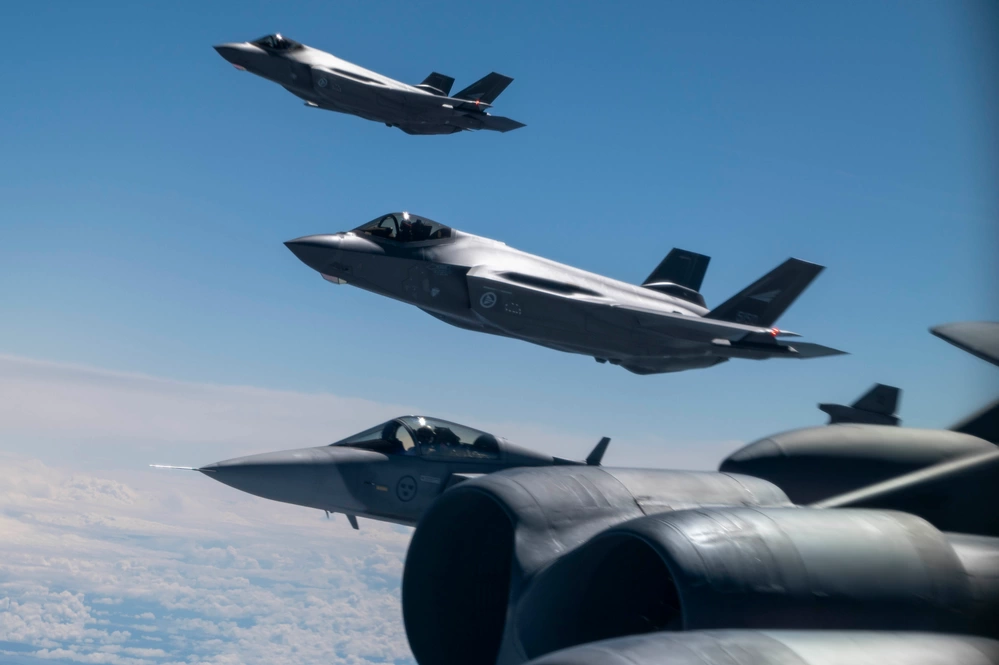
Feature Image: Royal Norwegian Air Force F-35 Lightning IIs and Swedish a Air Force Saab JAS 39 Gripen fly off the wing of a U.S. Air Force B-52H Stratofortress, assigned to the 69th Expeditionary Bomb Squadron, during a Bomber Task Force Europe 24-3 mission over the U.S. European Command area of responsibility, June 18, 2024. (U.S. Air Force photo by Staff Sgt. Emily Farnsworth)
Read more from Sandboxx News
- Air Force wants to transform the MQ-9 Reaper into a drone mothership for its special operators
- Being taken into secondary airport security interrogation while in a spec ops unit
- Can Anduril’s EagleEye become the new face of warfare?
- SOCOM selects small American company for its CAR rifle
- Project Pluto: The most insane missile America ever built