After more than a month of strikes against over 13,000 targets across Iran, with hundreds of American combat aircraft operating inside contested airspace each day and multiple close calls with Iran’s remaining short-range air defense assets, last Friday, April 3, seemed to be the day Uncle Sam’s luck finally ran out.
First, an F-15E Strike Eagle was shot down over central Iran. The Strike Eagle is the air-to-ground oriented iteration of the famed F-15 Eagle fighter line, combining the Eagle’s high speed and aerobatic performance with the ability to carry more ordnance into the fight than the B-29 that dropped the atomic bomb on Hiroshima. In order to support complex air-to-ground operations, they fly into the fight with two crewmembers onboard: a pilot to manage the aircraft, and a Weapons Systems Officer, or WSO, to manage the jet’s vast arsenal of targeting pods, missiles, and bombs.
Iranian troops soon posted pictures of the ACES II ejection seat employed by one of the jet’s crew. The Advanced Concept Ejection Seat II (ACES II) is standard across many U.S. Air Force jets, including the A-10, F-15, F-16 and F-22.
Before long, videos started to surface online of a U.S. Air Force HC-130J Combat King II, which is a specialized variant of the C-130 Hercules purpose-built for search and recovery operations, as well as HH-60W Jolly Green II combat search and rescue helicopters, all flying at low altitudes over Iran. The aircraft were putting themselves at extreme risk as they raced to locate and recover the Strike Eagle’s two-person crew.
Iranian forces very clearly have some air defense capabilities left in central Iran, likely short-range infrared-guided weapons that would make short work of any of those search and rescue platforms. But despite the risk, these search and rescue aircraft were seen flying so low that Iranian police officers can be seen in some videos firing at the helicopters from the ground with small arms.
One of those helicopters reportedly absorbed some relatively serious damage, with images surfacing online of it billowing smoke as it returned to friendly airspace and made a safe landing.
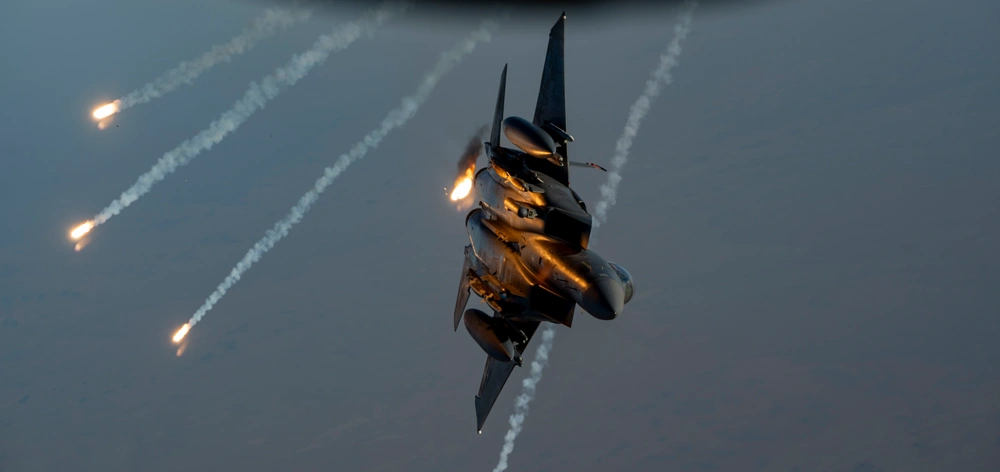
Despite the claims of some defense officials, it’’s nearly impossible to completely eliminate Iran’s widespread and very disparate air defense capabilities, even after all of its high-end equipment has been wiped out.
While the nation’s long-range integrated air defense net has seemingly been destroyed, Iran still has lots of smaller, short range systems that can be easily hidden until they’re used to engage aircraft flying directly, more or less, above them.
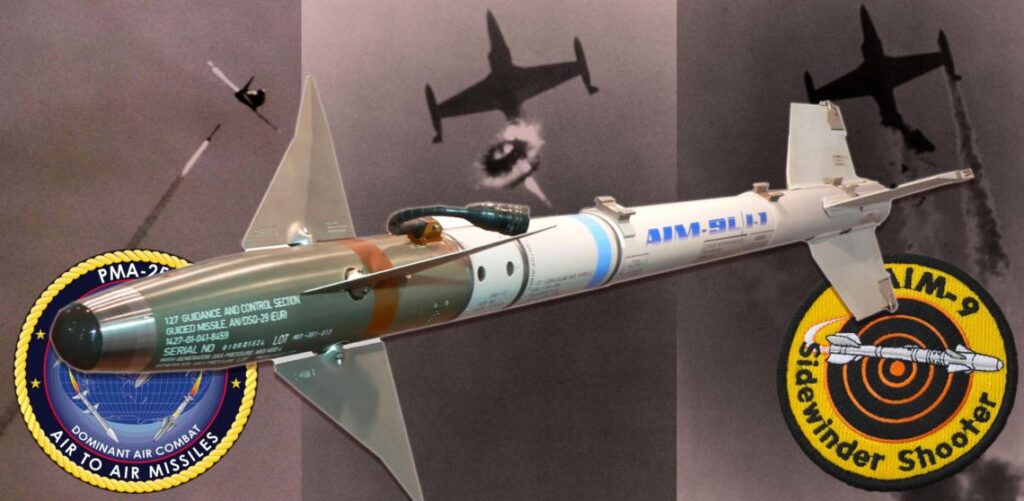
Many of these systems use infrared-guidance, meaning they track heat signatures rather than broadcasting radar waves that could be detected by the fighter. That means pilots often don’t have any notice of an inbound infrared-guided missile until it’s already been launched. And because these weapons have ranges of only a few miles and very limited reach in terms of altitude, that launch tends to be at pretty close range, giving the pilot for very little time to react. We have already seen an F-35A seemingly tank a direct hit from one such short-range infrared-guided missile a few weeks back, and another F/A-18 Super Hornet very narrowly avoid one about a week ago.
These sorts of infrared-guided or electro-optical threats are inherently limited in both engagement range and altitude because they have to rely on line-of-sight. Iran’s domestically produced Misagh-1,2, and 3 series MANPADS all offer maximum ranges of only around three to five miles, and maximum engagement altitudes of under 13,000 feet or so. But they’re also very easy to hide from prying eyes in the sky, at only about four feet long and weighing a total of just around 37 pounds.
Iran also boasts larger short-range air defense systems that deliver more capability, but remain small enough to keep tucked out of sight until they’re used. Platforms like the Majid air defense weapon system rely on electro-optical targeting, carry two infrared-guided missiles called AD-08s, and can reach a bit further out – potentially as far as five miles or altitudes as high as nearly 20,000 feet.
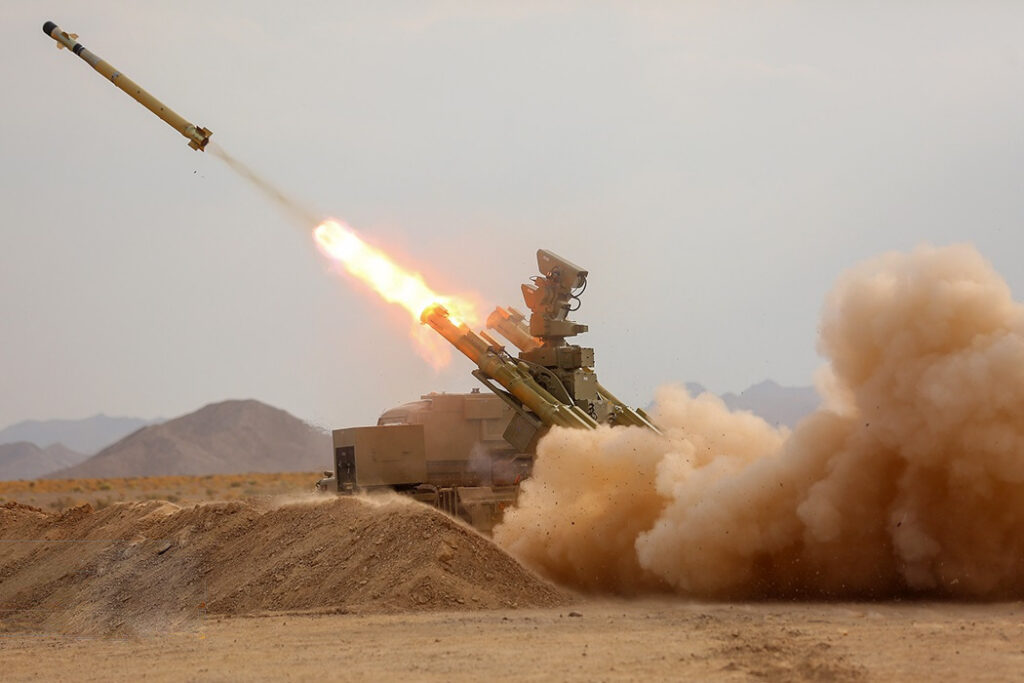
What all of this ultimately means is that, despite Iran’s most capable long-range air defense capabilities being, more or less, wiped off the board, allowing American fighters, bombers, and even unarmed ISR aircraft to operate over vast swaths of the nation with little risk, any American aircraft that ventures down below 20,000 feet or so – or especially below the 13,000 foot mark reachable by Misagh-series MANPADs – still face serious, though unevenly distributed, pop-up threats.
And nowhere is that risk more pronounced than in the area immediately surrounding a downed aircraft like the Strike Eagle. Not only does downing a fighter jet already demonstrate that there are existing and capable air defense assets nearby, but once a jet goes down, local forces are immediately mobilized throughout the region to capture downed airmen; recover as much technology as possible for intelligence assessment or reverse engineering; and secure a significant propaganda victory for the regime, which would then have the opportunity to parade a captured American across the news cycle, effectively using their life as a bargaining chip that no elected official can ignore.
True to that point, Iranian State Media, IRIB, announced a cash reward totaling 10 billion tomans, roughly equivalent to $60,000 American dollars, for the Airmen’s capture almost immediately after news broke of the downing. The average Iranian only makes between $5,000 and $8,000 per year in equivalent American currency, making $60,000 the equivalent of more than a decade’s income for many.
After roughly six hours on the run, the F-15E’s pilot was reportedly rescued amid a heavy firefight that saw U.S. attack helicopters and “attack planes,” likely A-10 Thunderbolt II’s, engaging closing Iranian forces as he was picked up and evacuated. That left just the Weapons Systems Officer, on the run and evading Iranian militias hundreds of miles inside enemy territory.
According to officials who spoke to the New York Times, there was initially no sign that the WSO had even survived, with drones combing the airspace for some 14 hours looking for any indication that the American was alive and on the move, but coming up empty handed. There’s always a chance that someone who ejects won’t survive the incredible forces of the ejection, which often exceed 18 Gs and are enough to cause spinal fractures in as much as 30% of people forced to do it.
Related: 3 military options the US has to protect maritime traffic through the Strait of Hormuz
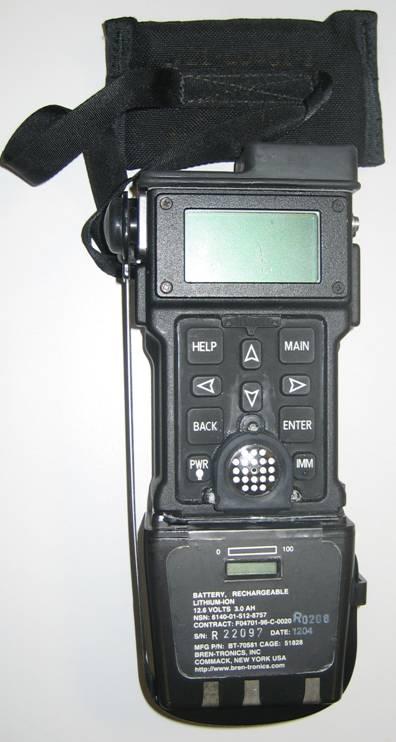
Fearing the worst, U.S. Central Command prepared to release a statement acknowledging the loss of the aircraft and the recovery of its pilot; but just before it released it, it received a ping from the downed Weapon Systems Officer’s emergency beacon, which is a function of the AN/PRQ-7 Combat Survivor Evader Locator (CSEL) radio system.
These hand-held survival radios are specifically designed to support search and rescue operations inside enemy territory. They first use GPS coordinates to determine the radio operators precise location within a few tens of meters, then relay that information to military satellites via low-probability of intercept, encrypted ultra-high frequency (UHF) transmissions. The device can also relay simple text messages back and forth to help coordinate rescue until Combat Search and Rescue platforms like the HC-130 reach the area.
At that point, the radio has two more capabilities to improve the chances of rescue. The first is Terminal Area Guidance, which allows CSAR crews to ping the location of the downed airmen’s radio when they’re close to get a precise position, and the second is terminal area communications, or enabling direct line-of-sight communications between the rescuers and the downed airman as they approach.
With Iranian troops hot on his tail and despite any injuries sustained in the ejection, the downed colonel had managed to scramble up a 7,000-foot ridge before climbing into a crevice to make himself hard to see from anywhere except directly above. A group of Iranian troops had tracked his presence to the mountain and were beginning to mass at its base. The American, armed with nothing more than a 9mm M8 pistol, stood no chance against a numerical superior force armed with AK-47s and more.
The colonel kept his beacon transmitting intermittently to limit the chances that Iranian forces would detect the signal and use it to triangulate his location more effectively themselves, but time was very clearly running out. At that point, two separate operations centered on the rescue of this missing colonel were already underway.
Related: Frosted misery: A Navy SEAL in SERE School
The CIA worked to use its network of assets throughout Iran to spread the rumor that the American had already been recovered by U.S. forces and was being moved out of Iran in a ground convoy. The idea, it’s been reported, was to not only sew doubt in the minds of those on the colonel’s trail, but also to give Iranian forces a potentially juicy target to divert their attention to. After all, if they could successfully intercept that convoy, they not only had the chance to destroy more American hardware, but they could potentially secure an even more powerful propaganda win in the form of multiple captured Americans and a costly battlefield loss.
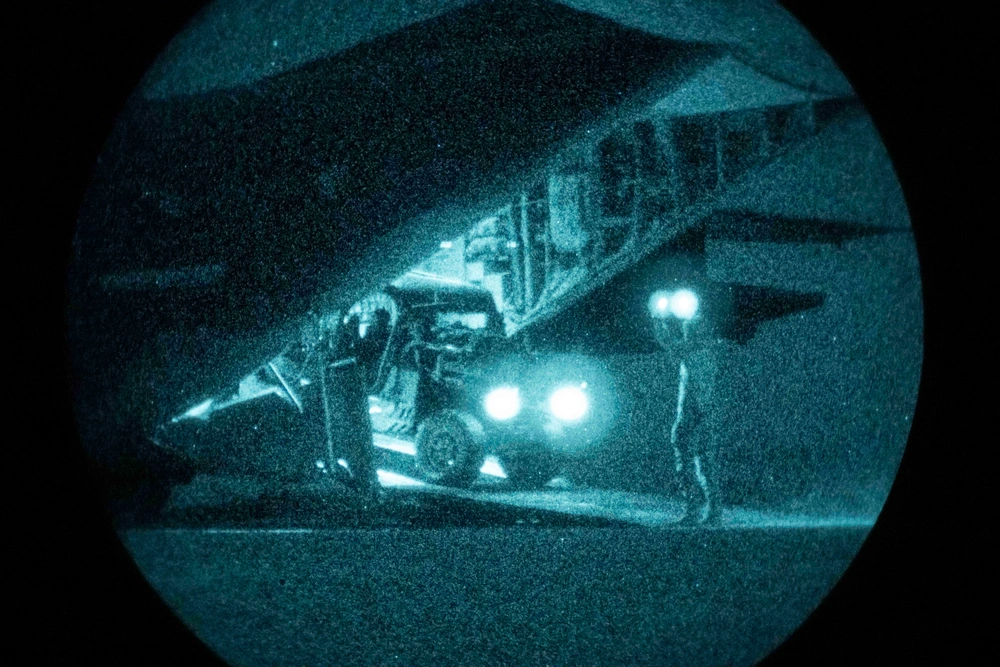
While the CIA spun up the rumor mill, a group of some 100 of America’s most elite special operators, including members of SEAL Team 6, boarded two MC-130J Commando IIs – which are special operations-specific variants of the C-130 Hercules purpose-built to get operators into and out of contested environments. It seems these MC-130Js were also loaded with four MH-6 Little Bird light helicopter gunships to be unloaded for close air support once inside Iran.
Elsewhere, a larger force that included Delta Force operators, a group of Army Rangers, fighter jets, tanker aircraft and more began gearing up to go in to support the large rescue force if the worst were to happen and a large-scale ground fight were to kick off.
According to the New York Times, there were concerns that the emergency beacon might have been a trap set by Iranian troops which might have recovered the downed airman and were hoping to shoot down any rescue effort. In order to ensure it was indeed the missing colonel calling for help, the CIA used an undisclosed technology to locate the precise location of the American in the crevice and verify his identity.
As darkness fell over the mountain, time was quickly running out for the Airman. Yet, darkness is the domain of American special operations troops, and as the light waned, the low thud of American helicopters pierced the silence. Tens of thousands of feet above, four American B-1B Lancer supersonic heavy payload bombers deployed over a hundred 2,000-pound JDAMs, eliminating targets on the ground and creating a large buffer zone through which no more Iranian troops would dare cross. And as the helicopters got closer to the downed colonel, he used his radio to tell the rescuers where he could see Iranians closing in on his position, allowing the rescuers to open up with suppressing fire and keep them from advancing.
Related: How US Special Forces took on Wagner Group mercenaries in an intense 4-hour battle
According to reports, the Iranian troops on the mountain chose not to engage the American rescue force at that point. The downed colonel sprang from his hiding place in the crevice and made it onboard a landing helicopter, all but certainly believing he had seen the end of his life threatening ordeal… But unfortunately, neither he nor his rescuers were out of trouble just yet.
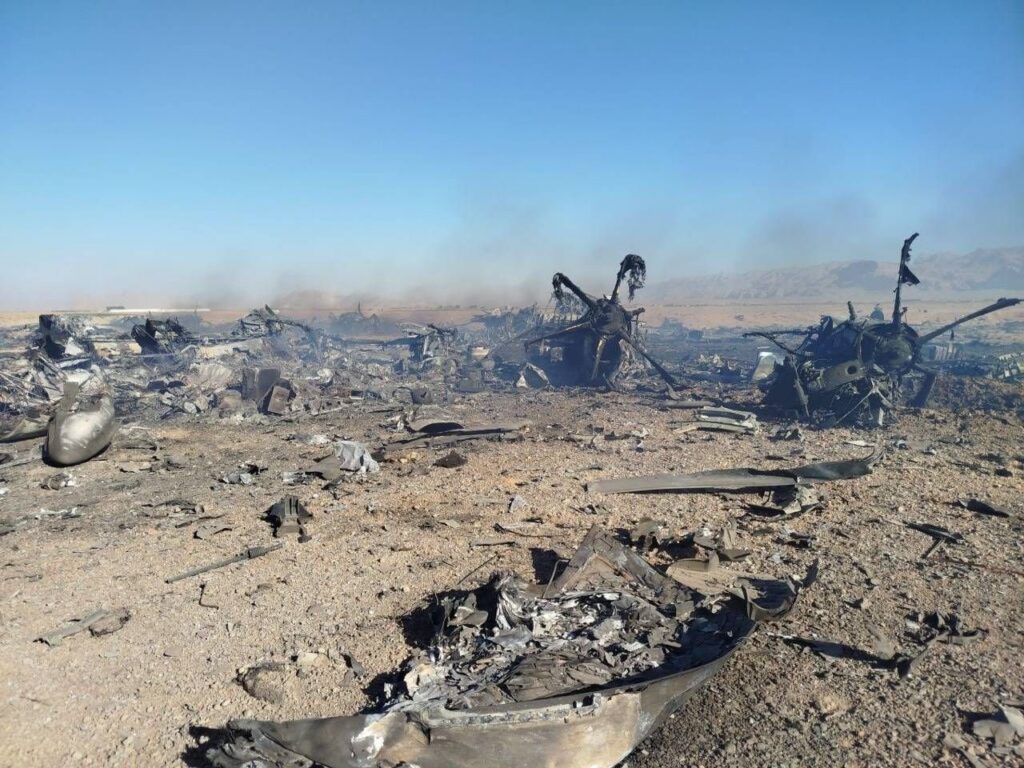
Those MC-130Js had landed some 200 miles inside Iran on an austere patch of desert where they established a forward arming and refueling point, or FARP. The idea was for the helicopters to return to that point, where the rescue team would break down the short-ranged Little Birds, load them back onto the MC-130s, and then all fly out of Iran and straight to a friendly airstrip in Kuwait. But when they arrived, they found that the nose landing gear of at least one MC-130, but seemingly both, had broken through the firm landing surface and into the loose sand below, making them practically immobile.
The rescue team spent hours in the dark, hundreds of miles inside Iran, working to free the aircraft from the sand, but it was no use. Finally, the decision was made to call in three replacement aircraft to pick up the rescue team and the colonel. At that point, reports diverge depending on the source. Either the departing special operators loaded their abandoned MC-130s and Little Bird helicopters with explosives and detonated them, or they called in for an American airstrike. Regardless, the outcome was the same, with all six aircraft destroyed to prevent Iranian forces from recovering anything valuable from the wreckage.
Finally, as the sun came up on Easter Sunday, the three additional aircraft took off from their austere airstrip and departed Iranian airspace.
Related: US air superiority against Iran won’t protect shipping through the Strait of Hormuz
All told, the operation cost the United States two purpose-built special operations fixed-wing aircraft, each of which costs more than $100 million, and four more MH-6 Little Birds at maybe more than $7 million a piece, for a total of at least $228 million in equipment losses just to save a single downed Airman.
And, in the minds of some, that figure represents a loss of sorts, for American forces and the United States at large.
However, when we talk about the cost of American military might, we tend to talk dollars and cents because that’s the only part that we, the taxpayers, are on the hook for. But the majority of the real cost doesn’t ever reach our wallets. It’s paid in full each and every day by the men and women who lace up their boots each morning, and go out to make mission. Those lost aircraft might represent dollars and cents that could have been better spent elsewhere to you, but for the American military, they’re just tools – tools that enable the mission, that can save lives, and most importantly, that can be replaced.
Because what’s the point of having the largest Air Force on the planet if you aren’t willing to drop a few airframes off the roster to save the life of someone who’s already sacrificed so much? For the American military and for each servicemember working under our flag, this weekend’s rescue mission was nothing more than the reciprocation of promises made.
Servicemembers keep their promise every day, working tirelessly to make mission and accomplish the objectives set for them. And when they find themselves in the worst possible scenario, with enemies closing in on all sides and practically no hope for escape, the U.S. military keeps its promise to them: by using all of its immense power to bring them home safe, or die trying.
Feature Image: Pararescuemen from the 82nd Expeditionary Rescue Squadron prepare for a night jump from a C-130 Hercules over Grand Bara, Djibouti March 20, 2017. (U.S. Air Force photo by Tech. Sgt. Joshua J. Garcia)
Read more from Sandboxx News
- YFQ-42 AI-enabled drone crashes for the first time during testing
- North Korea’s Type 88-2 AK rifle is horribly bad
- BREAKING: US military and CIA rescue F-15 airman from central Iran in dramatic operation
- China’s reported decision to convert 500 dated J-6 fighters into kamikaze drones doesn’t make sense
- The Army adopts the XM8 carbine to go along its new M7 rifle