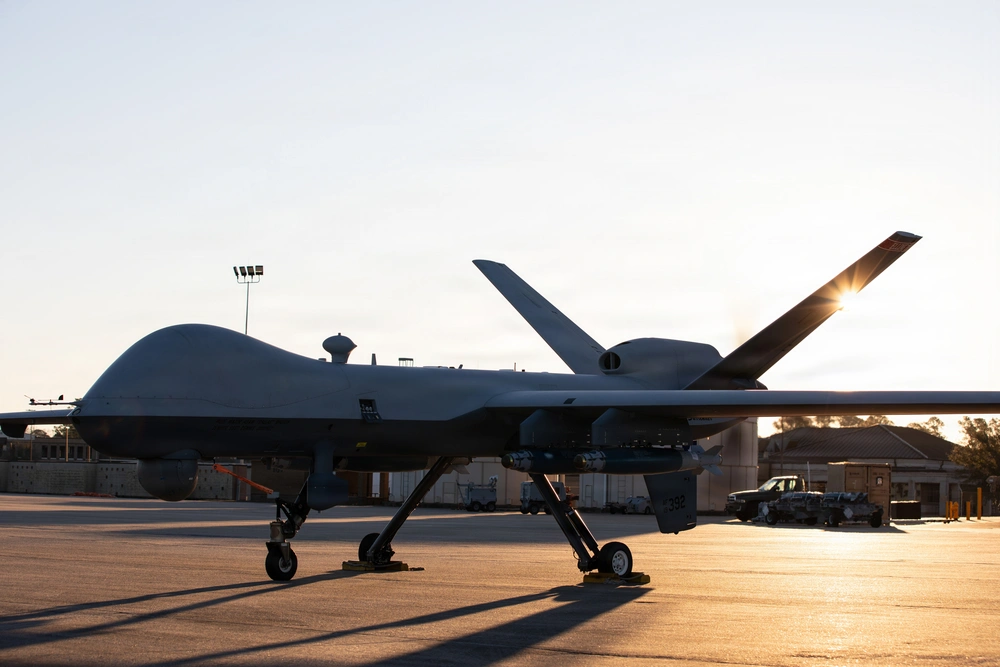
After losing as many as 30 MQ-9 Reapers against Iran in Operation Epic Fury, the United States is now looking to replenish its drone fleets with cheaper “attritable” drones that can be lost in combat without breaking the bank.
Despite heavy losses, Air Force Chief of Staff Gen. Kenneth S. Wilsbach described the Reapers as the “most valuable player” of Operation Epic Fury, emphasizing the importance of these aging platforms to the American way of war.
But after this year’s losses, the entire U.S. Air Force MQ-9 fleet has dwindled to just 135 operational aircraft, with no clear way to procure any more.
On July 7, the Pentagon’s Defense Innovation Unit (DIU) published a solicitation for proposals to field a new drone platform currently dubbed “massed modular aircraft,” or MMA. This solicitation, however, does not call for a more modern and advanced version of the MQ-9, but instead, calls for a much higher number of cheap drones designed to operate in coordination with one another in swarms large enough to remain functional after suffering losses.
These new drones are meant to be modular and reconfigurable in theater. They need to offer an unrefueled combat radius of at least 2,300 nautical miles while carrying a combat payload, and a one-way ferry range of more than 8,000 nautical miles.
The solicitation also emphasizes the need for these drones to be able to carry a wide variety of optical, video, and other kinds of sensors “to execute missions that the MQ-9A performs today.”
In order to power onboard sensors and instruments, these drones need to offer at least 25 kilowatts of power production. They also need to be able to operate in heavily jammed environments; operate from a 6,000-foot runway or shorter; and travel at speeds of at least 200 knots, which is around 230 miles per hour. Most importantly, these systems need to be cheap and simple to mass produce.
“By deploying large groups of risk-tolerant MMA, the Joint Force can overwhelm enemy defenses even while experiencing numerous MMA losses,” the solicitation reads.
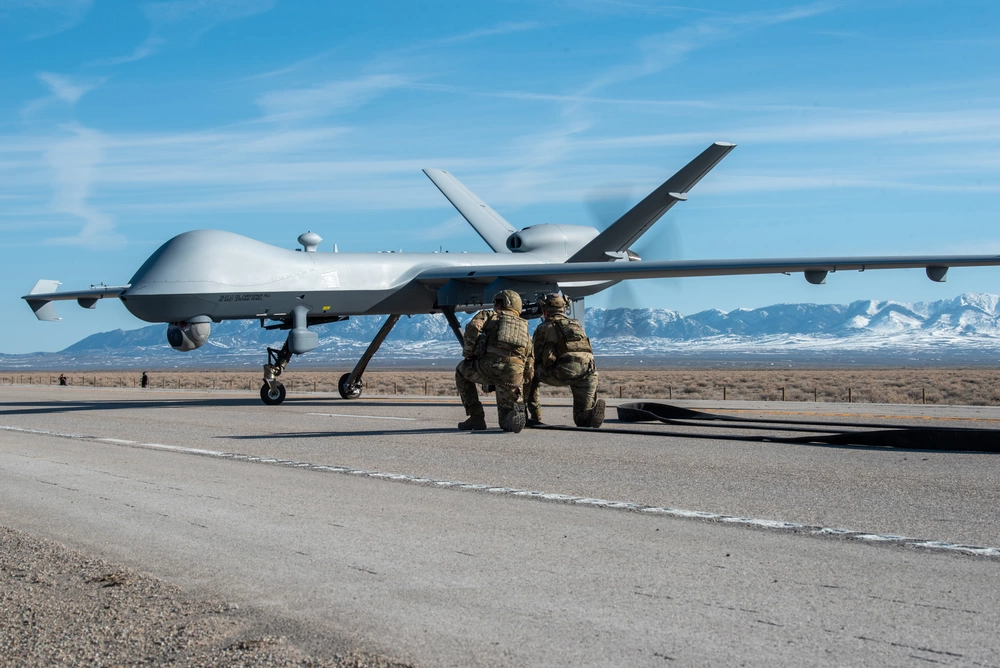
Unlike the MQ-9 Reaper, which is operated by a two-person crew that includes a rated RPA pilot and an enlisted sensor operator, the DIU wants these new drones to offer substantially more autonomy, allowing a single operator to control entire swarms.
The General Atomics MQ-9 Reaper has been a staple of American airpower since entering service in 2007. This is thanks to its remote-piloting capabilities; more than 24-hours of airborne endurance; advanced intelligence, surveillance, and reconnaissance suite; and the ability to carry and launch up to eight AGM-114 Hellfire missiles, including the highly secretive AGM-114 R9X missile.
However, these broadly capable drones were designed to meet the American military’s needs of 20 years ago when the U.S. was embroiled in two asymmetric conflicts against adversaries with no air defenses to worry about.
As a result, the notably non-stealth MQ-9 might make for very capable and persistent eyes in the sky, but with a low top speed and signal latency delaying any response to inbound threats, this pricey drone may be among the easiest targets to engage for even very dated air defense systems operated by countries like Iran, or even terrorist groups like the Houthis.
General Atomics shut down the MQ-9A production line in 2025 after the U.S. Air Force confirmed that it had no intentions of buying any more.
Yet, that decision has come back to haunt the Air Force, as the branch has spent the past few months scrambling to find a way to increase its remaining Reaper numbers, including by purchasing a reported 10 leftover aircraft from General Atomics from past orders that fell through. But beyond those 10 aircraft, options are very limited for Reaper replacements, with no MQ-9s listed on the Pentagon’s boneyard inventory of retired aircraft being maintained by the 309th Aerospace Maintenance and Regeneration Group at Davis Monthan Air Force Base.
The DIU is currently taking proposals for the MQ-9’s replacement with the goal of it reaching initial operating capability – which will include an initial batch of at least 20 aircraft – by fiscal year 2031.
Feature Image: A U.S. Air Force MQ-9 Reaper prepares to depart the Combat Readiness Training Center during Sentry South 26-2 in Gulfport, Mississippi, February 20, 2026. (U.S. Army National Guard photo by Sgt. James Vaughan)
Read more from Sandboxx News
- Could America have taken over the world after WWII?
- Trump says U.S. will give Ukraine permission to manufacture Patriot missiles
- Ukrainian drones flew all the way to Siberia to strike Russia’s largest oil refinery
- Military still faces delays in its hypersonic weapon programs, according to government watchdog
- Federal’s Peak Alloy high-pressure ammo will be a game-changer for the Army