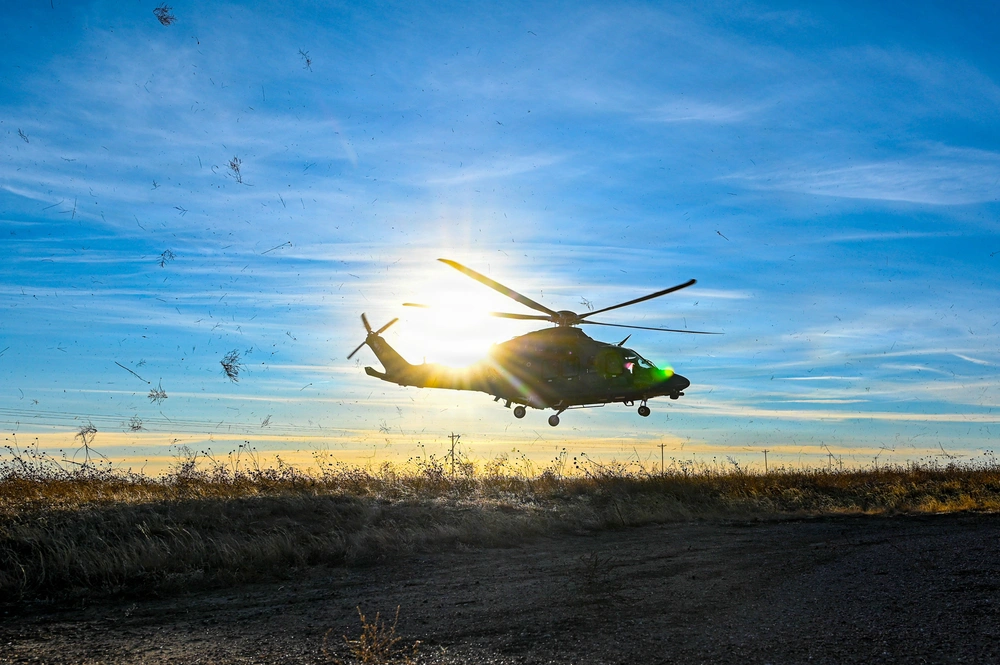
The U.S. Air Force used for the first time MH-139 Grey Wolf helicopters to support the transportation of nuclear warheads.
One of the least known missions in the entire Air Force’s operations – the transport of nuclear warheads and Intercontinental Ballistic Missiles (ICBMs) – just got safer with the addition of the MH-139 Grey Wolf helicopter in security convoy duties.
With thousands of nuclear warheads in service, ensuring their safety is a difficult but often overlooked task.
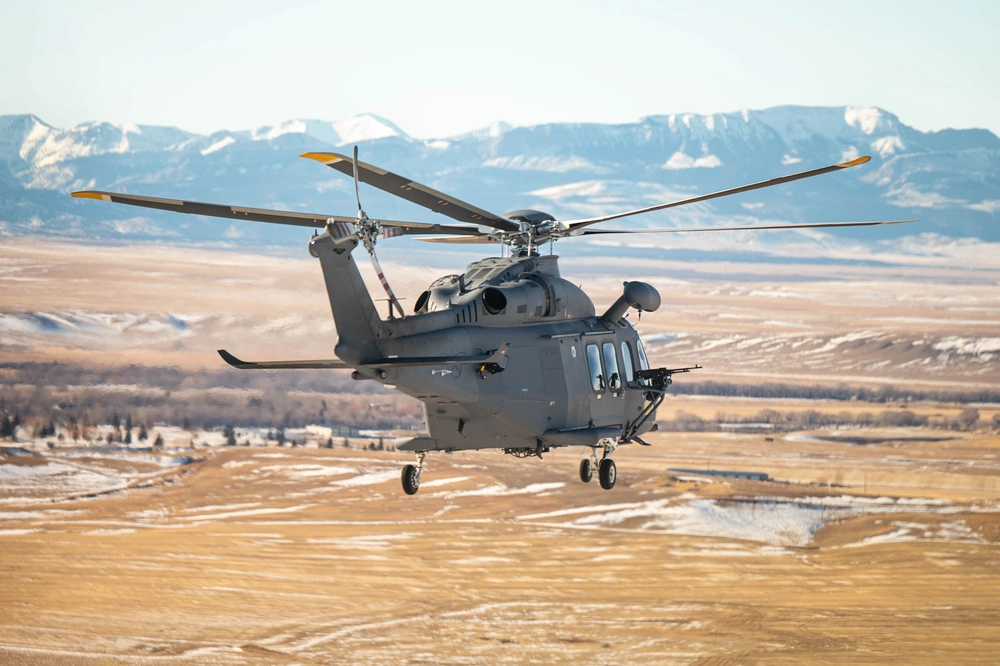
Earlier in January, two MH-139 Grey Wolf helicopters assigned to the 40th Helicopter Squadron conducted their first operational Minuteman III ICBM nuclear munitions escort. The helicopters escorted a ground convoy column of missile maintenance and armored security vehicles to and from a launch facility located more than 100 miles east of Malmstrom Air Force Base. The MH-139’s robust stamina meant that the helicopter stayed with the convoy without the need to refuel during the six-hour mission.
The Air Force’s Global Strike Command has been modernizing its nuclear security operations, and the addition of the MH-139 Grey Wolf is intended to provide overhead intelligence, surveillance, and reconnaissance capabilities to the security convoy on the ground. Moreover, in a nightmare scenario, the helicopters can also provide close air support.
“Executing our first convoy mission with two MH-139s marks a significant step forward in strengthening our missile security operations,” Air Force Major General Stacy Huser, the commanding officer of the 20th Air Force, said in a service press release.
The MH-139 Grey Wolf carries advanced Forward Looking Infrared and its avionics systems that allow for increased situational awareness for the crew, which can translate into an improved ability to support the ground force.
“The MH-139 allows us to continue supporting our ICBM enterprise for decades to come with increased speed, range and lift,” the senior Air Force officer added.
“Our ICBM mission is the foundation of strategic deterrence, and it demands absolute reliability, security, and readiness,” Air Force Col. Daniel Voorhies, the commanding officer of the 341st Missile Wing, stated about the Grey Wolf’s maiden operational deployment. “The MH-139 strengthens nuclear surety by giving our Airmen a more capable platform to protect our forces as they carry out the nation’s most imperative mission, 24/7/365,” Voorhies added.
The U.S. military has the second-largest nuclear arsenal after Russia. The Air Force is responsible for the most nuclear warheads in the military as it has both air-launched nuclear missiles and bombs, as well as ICBMs.
Thus far, the Air Force has been relying on the UH-1N Huey for over 50 years for nuclear security.
“The transition from the UH-1N Huey to the MH-139A Grey Wolf is one of the first visible steps toward the next era of the Global Strike mission, eventually leading to the full mission integration with Sentinel,” Air Force Technical Sergeant Samuel Earney, 341st Missile Security Operations Squadron Tactical Response Force flight sergeant, stated.
“The transition from the battle-tested Huey to the high-tech Grey Wolf has been bittersweet, but given the increased capabilities of the new helicopter, it makes sense as to why the Air Force chose to make the move.”
Feature Image: Secretary of the Air Force Troy Meink departs in a 582nd Helicopter Group MH-139 Grey Wolf from Malmstrom Air Force Base, Montana, after touring a 90th Missile Wing intercontinental ballistic missile launch facility near Albin, Wyoming, Jan. 21, 2026. The visit highlighted how modernization efforts across the missile field support long-term readiness and strategic deterrence. (U.S. Air Force photo by Senior Airman Mattison Cole)
Read more from Sandboxx News
- SEALs and other Navy combat personnel face new annual fitness requirements
- Inside the office defending Marine Corps emblems and slogans from AI knockoffs, profiteers
- How Delta Force’s Frankenstein suffered a parachute mishap
- In 2025 Russia launched five times more drones against Ukraine than in previous year
- Navy launches reversed-engineered Shahed drone