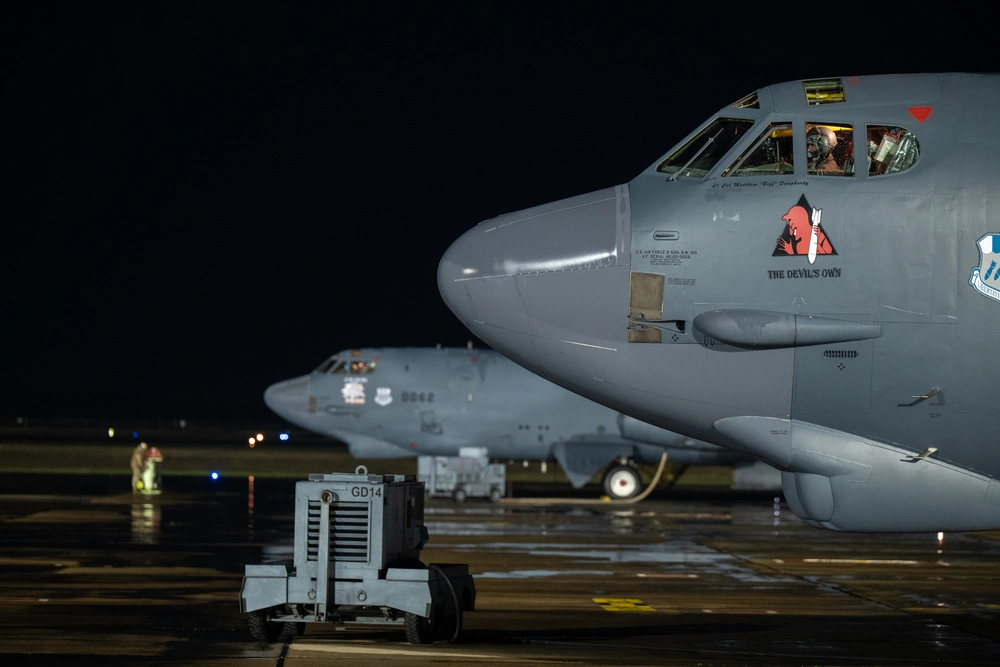
This year, the first of 76 aging B-52H Stratofortresses will begin a massive upgrade and overhaul that includes, among other improvements, significantly more efficient new engines, an all-new glass cockpit, a new onboard radar that’s more advanced than the radar arrays found in most Russian fighters.
This follows a still-classified Air Force study conducted in 2025 on future B-52 changes.
Once completed, these upgraded new B-52Js are expected to stay in service through the 2050s, and very likely, all the way to the bomber’s century mark in 2055.
Nevertheless, even the legendary B-52 Stratofortress has its limits, and the Air Force is simultaneously exploring plans to field a replacement for the bomber that’s been carrying American payloads since 1955.
The effort to replace the “BUFF,” as the massive aircraft is affectionately known, is still in its infancy, meaning the mighty B-52 won’t be going anywhere for years to come, according to Air and Space Forces Magazine that first reported on the news.
The service’s 2027 budget request includes $1 million earmarked for what it calls a “Heavy Bomber Analysis of Alternatives.” This will be a study into “key performance parameters and attributes” needed of a heavy bomber in the 2050s and beyond, and how those parameters and attributes translate into program requirements.
Several parameters could be important in deciding the direction the B-52’s replacement will take.
First is range, which is essential for a heavy payload bomber in American service. Tellingly, all of the Air Force’s bombers boast globe-spanning reach in order to ensure operations anywhere in the world.
Second is payload. One of the B-52’s biggest claims to fame is its ability to carry and launch large weapons and other vehicles from its underwing pylons. This also makes it an essential element of America’s aerospace testing apparatus and a viable launch platform for oversized weapons like air-launched ballistic missiles and hypersonics.
Finally, we have speed. America’s incredible B-1B Lancer supersonic heavy payload bombers are expected to retire by the end of the 2030s. Once that happens, the U.S. will lose the ability to deliver heavy bomber payloads at speeds as high as Mach 1.2, and while not every mission requires speed, some certainly do.
On the other hand, low observability isn’t as important. While we often think of stealth as essential for modern warfare, the B-52’s primary role in America’s mixed bomber fleet is deploying stand-off weapons – usually cruise missiles – that offer enough range to limit the bomber’s exposure to enemy air defenses.
If the Air Force wants the potential replacement of the B-52 to be cost effective, then stealthiness might not be an option, as radar absorbent coatings can dramatically increase production and maintenance costs.
Feature Image: Two U.S. Air Force B-52H Stratofortresses assigned to the 2nd Bomb Wing, Barksdale Air Force Base, Louisiana, are parked on a flightline at Morón Air Base, Spain, Nov. 16, 2025, as part of Bomber Task Force Europe 26-1. (U.S. Air Force photo by Staff Sgt. Zachary Willis)
Read more from Sandboxx News
- Canadian military is getting a new rifle – and Colt was again chosen to produce it
- Air Force’s Rapid Dragon, which turns cargo aircraft into missile launchers, is finally going live
- Recon Marines will need to swim more and hide from drones in training shakeup
- Operation Olympic Games: When history’s first cyberweapon targeted Iran’s nuclear program
- Thank you, Maverick: Senate wants to see the legendary F-14 Tomcat fly again