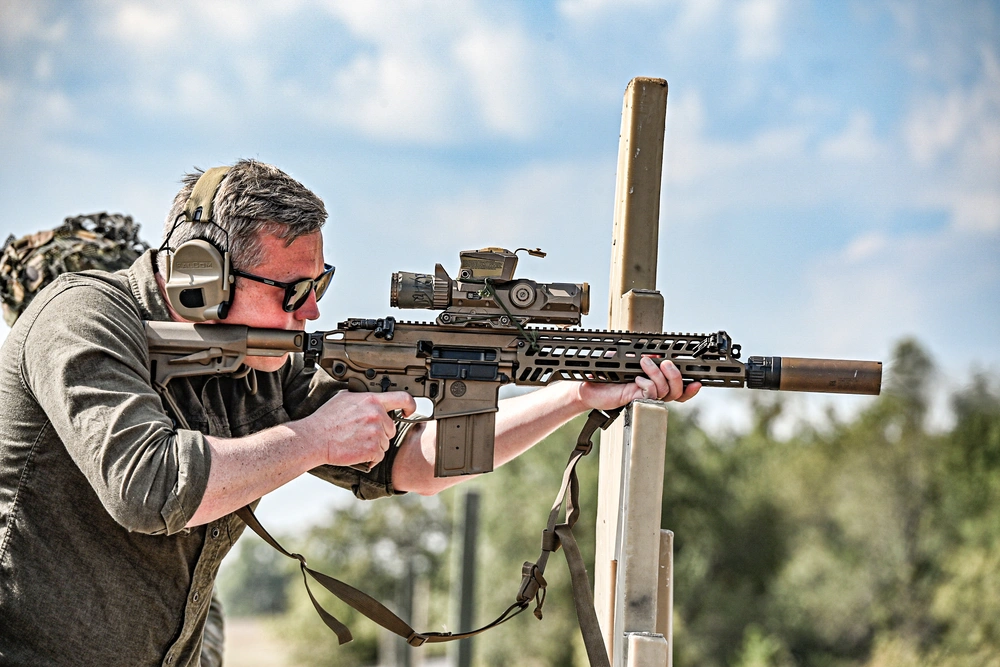
I started this article trying to pick five revolutions in firearms technology that changed warfare. It ballooned to 10, and I finally trimmed it to eight. It turns out there have been a lot of revolutions in firearms technology. I even combined a few to keep the list short, while still covering the firearms mechanisms that changed warfare.
Let’s dig into the world of firearms and how they’ve evolved to what we have today.
1. The invention of gunpowder
It all started with the invention of gunpowder in the 9th century in China. The earliest recorded formula comes out of the Song dynasty of the 11th century, however. Mongol conquests spread the knowledge of gunpowder far and wide.
The gun appeared in the 13th century and would develop into hand cannons and large artillery pieces that put an end to the armored knight. The invention of gunpowder and early firearms meant the average infantry wouldn’t be tanked by noblemen in suits of armor.
2. Matchlock, wheelock, and flintlock mechanisms
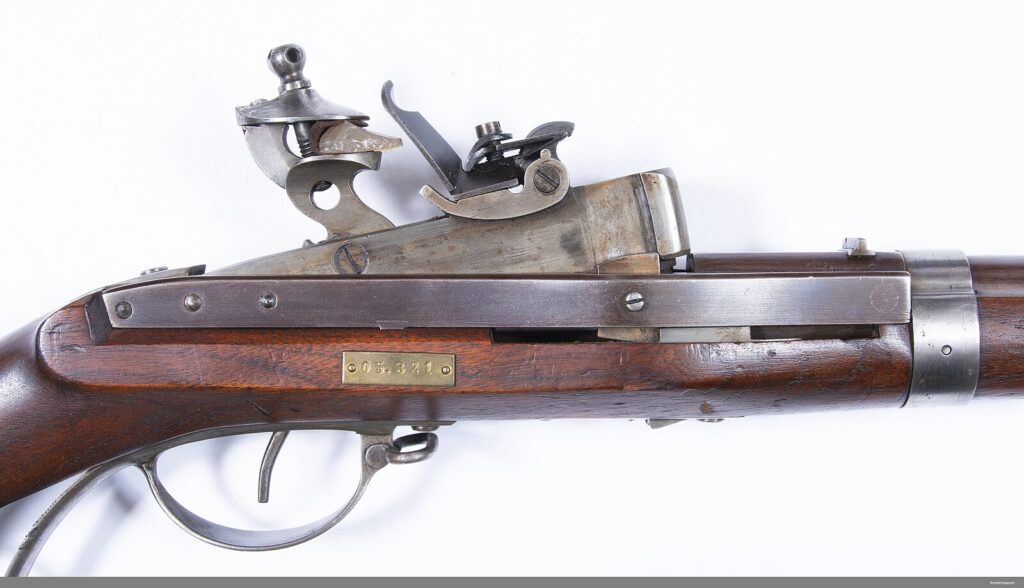
Matchlock mechanisms were the first practical and standardized means for infantry to fire their long guns. These muskets came to be in the 15th century and used a simple burning cord to ignite gunpowder and propel a projectile.
The more complex wheelock systems, which shot sparks from a rotating wheel, gave pistol-armed cavalry an easy way to fire their weapons from horseback. This allowed them to maintain their mobility while increasing their firepower.
Then, in the 17th century, the flintlock mechanism provided a simpler, cheaper, and more reliable ignition system for rifles and pistols. The flintlock uses a hammer loaded with a spark-emitting flint to ignite gunpowder and fire the cartridge. Flintlock mechanisms were the standard for 200 years.
3. The percussion cap and rifling
Percussion caps replaced the flintlock and introduced a near-weatherproof and instantaneous means of ignition.
Meanwhile, the rifling of barrels and the introduction of the Minié ball created much more accurate firearms with an increased effective range. This quickly made massed formations of troops vulnerable to longer-range, more precise fires.
Related: The technologies that will unlock the next generation of firearms
4. Breech loading firearms and self-contained cartridges
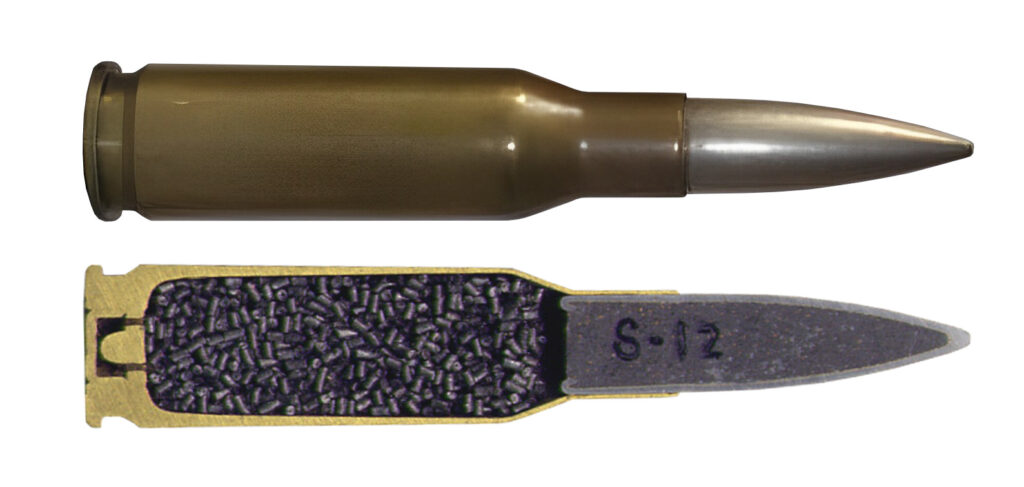
Breech-loading guns allowed the user to load the gun through the rear, which was dramatically faster than loading it through the muzzle.
Self-contained cartridges – which contained the primer, bullet, and powder in a single container – ushered in an era of repeating rifles and pistols, which dramatically changed mounted combat and skirmishes.
When the two technologies combined, they led to a drastic increase in effective fire.
5. Smokeless powder
Smokeless powder was first invented in the late 1800s and eliminated the massive clouds of smoke emitted by black powder weapons. This smoke would obscure the battlefield and quickly remove the accuracy advantage of rifled bores.
Smokeless powder was hotter; it increased velocities and would eventually shrink projectile size from around .45 to .50 caliber cartridges to smaller, fast .30 caliber cartridges.
6. The machine gun
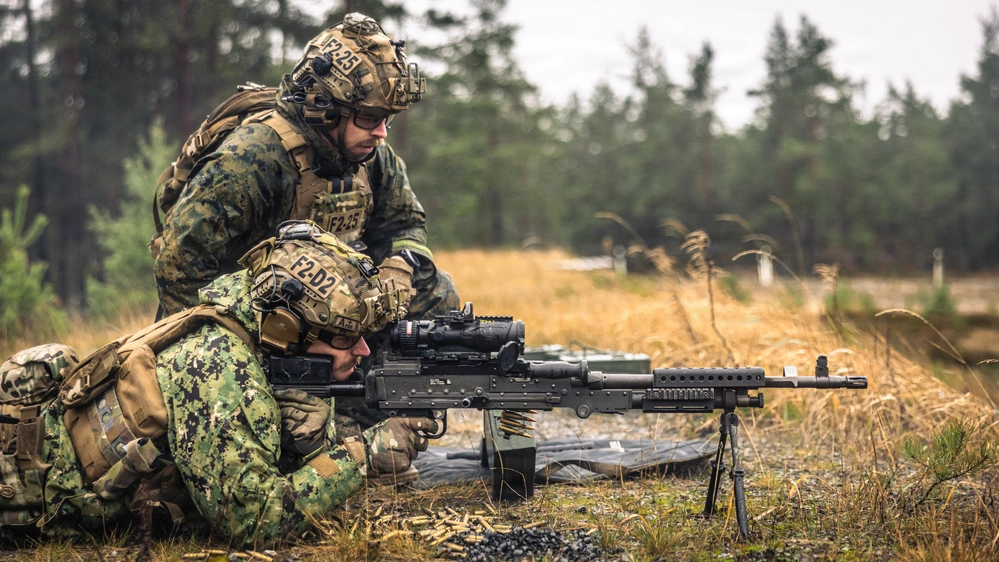
Weapons like the Gatling gun changed the volume of warfare, allowing one to three soldiers to have the same effect as a platoon on a battlefield. Machine guns evolved from the manually operated Gatling gun to the truly full-automatic Maxim gun.
The Maxim gun would serve around the world and eventually inspire improved designs that would rake the battlefields of World War I with hellish fire. During WWI and after, development of lighter, smaller weapons like the Chauchat and the BAR established a new standard for portable automatic fire that we see to this day.
Related: The General Purpose Machine Gun: The do-it-all gun
7. Semi-automatic and select-fire weapons
The United States entered World War II with the M1 Garand, a semi-automatic battle rifle that instantly changed warfare. While other countries, namely the Soviet Union, also issued semi-automatic rifles, the United States was the first to do so en masse. This would become the standard for several decades.
World War II also introduced the first assault rifle with the German STG 44. While the STG 44 was introduced too late to turn the tide for Nazi Germany, it became a standard that countries like Russia would adopt.
To this day, the assault rifle reigns supreme as the arm of modern military forces. These lighter, smaller rifles fired an intermediate cartridge and allowed for both semi-auto and full-auto firing modes.
8. Precision-guided small arms
The initial shift towards precision-guided weapons came with artillery and missiles, but a current trend in small arms is the integration of precision-guided designs – includes DARPA’s guided .50 caliber rounds.
The technology has even made it to the infantry: Weapons like the new M7 integrate a fire-control system as the optic that can provide computer-powered adjustments to extend the user’s range and accuracy.
Small arms revolutions typically make a soldier shoot faster and farther, and ultimately make them deadlier. We can track the evolution of small arms based on those parameters, and that’s likely the path they’ll continue to take.
Feature Image: Secretary of the Army, Hon. Dan Driscoll, fires an M7 rifle while visiting Fort Campbell, Ky., September 9, 2025. Secretary Driscoll met with Soldiers and leaders of the 101st Airborne Division (Air Assault) to observe how Transformation in Contact 2.0 is taking shape through real-world integration of the Next Generation Squad Weapon, evolving air assault tactics, and deployment-ready readiness across multiple theaters. (U.S. Army photo by Sgt. David Resnick)
Read more from Sandboxx News
- Curious adventures at Amsterdam airport with the Delta Force
- Air Force wants to transform the MQ-9 Reaper into a drone mothership for its special operators
- Being taken into secondary airport security interrogation while in a spec ops unit
- Can Anduril’s EagleEye become the new face of warfare?
- SOCOM selects small American company for its CAR rifle