Russian naval activity on the waters of the United Kingdom was 25% higher in the first seven months of 2026 compared to the same period last year, according to a Royal Navy report.
The war in Ukraine and the subsequent international isolation have forced Russia to extreme measures, including a reliance on a shadow fleet of merchant vessels to transport oil, liquefied natural gas, and grains.
According to the U.K. Ministry of Defence, Moscow’s shadow fleet comprises of more than 700 vessels and is responsible for carrying 75% of Russia’s sanctioned oil. London has sanctioned more than 500 of these vessels, contributing to a fall in Moscow’s oil and gas revenues by 24% in 2025.
In July alone, Royal Navy warships and aircraft spent 21 days on operations against the Russian shadow fleet. Four warships, AW159 Wildcat helicopters from 815 Naval Air Squadron, and AW101 Merlin submarine hunting aircraft from 820 Naval Air Squadron participated in the operations.
The HMS Tyne, a River-class offshore patrol vessel, was one of the Royal Navy vessels most recently engaged in operations against the Russian fleet.
On July 20, the Russian frigate Neustrashimy carried out gunnery firings just outside of British and French territorial waters. The Neustrashimy fired around 20 shots from her 100mm and 30mm cannons. The British patrol ship came as close as five nautical miles (about 5.8 miles) from the Russian warship while observing its movements.
Although such gunnery training is common for warships underway as a way to hone their capabilities and keep crews in high readiness, holding such training a few miles from another country’s territorial waters is a direct challenge.
“Through sustained presence and close cooperation with allies, HMS Tyne was ideally suited to this task, providing reassurance and monitoring while enabling other Fleet units to continue their operational commitments,” Lieutenant Commander Sam Fields, the commanding officer of HMS Tyne, said in a Royal Navy press release.
The U.K. has been one of the main architects behind Europe’s and NATO’s support for Ukraine.
Former Prime Minister Boris Johnson was instrumental in rallying European and American support in the critical first days of the Russian invasion. Subsequent British administrations have continued to provide key support to the Ukrainian armed forces, often without waiting for American participation or approval.
Seizing the Smyrtos
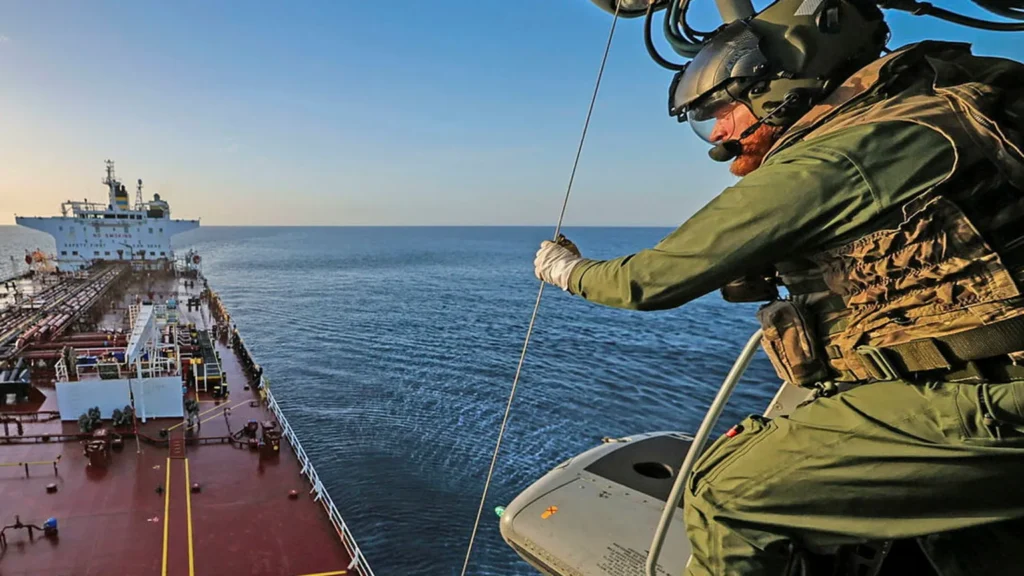
Earlier in the summer, the situation escalated significantly when the British military boarded and captured the Smyrtos, a Russian shadow fleet tanker, sailing through the English Channel.
Royal Marine Commandos from 42 Commando conducted a visit, board, search, and seizure (VBSS) operation to capture the Russian vessel.
The British government said the Royal Marine Commandos and law enforcement officers boarded Smyrtos “in full accordance with international law.”
“The UK is disrupting and deterring shadow fleet vessels and their harmful maritime activity which is fuelling Russia’s war with Ukraine,” a British government spokesperson said.
In response to the seizure of the Smyrtos, the Russian frigate Admiral Grigorovich fired warning shots against a British-flagged private yacht in the English Channel.
Ukraine has also been going after Russia’s shadow fleet.
The Ukrainian military and security services target Russian shadow fleet vessels wherever they can find them, including in the Mediterranean Sea and the Black Sea.
Ukraine has conducted repeated strikes with anti-ship missiles and kamikaze drones (aerial, surface, and underwater). Indeed, in a campaign that began only a few weeks ago, Ukraine struck over 100 Russian vessels in the Sea of Azov.
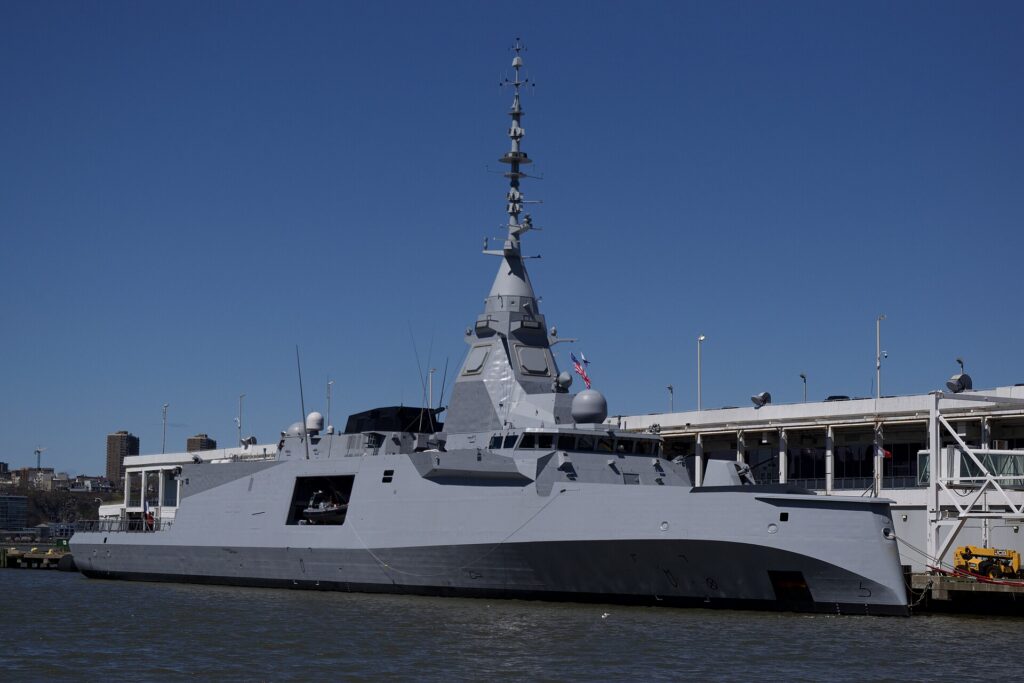
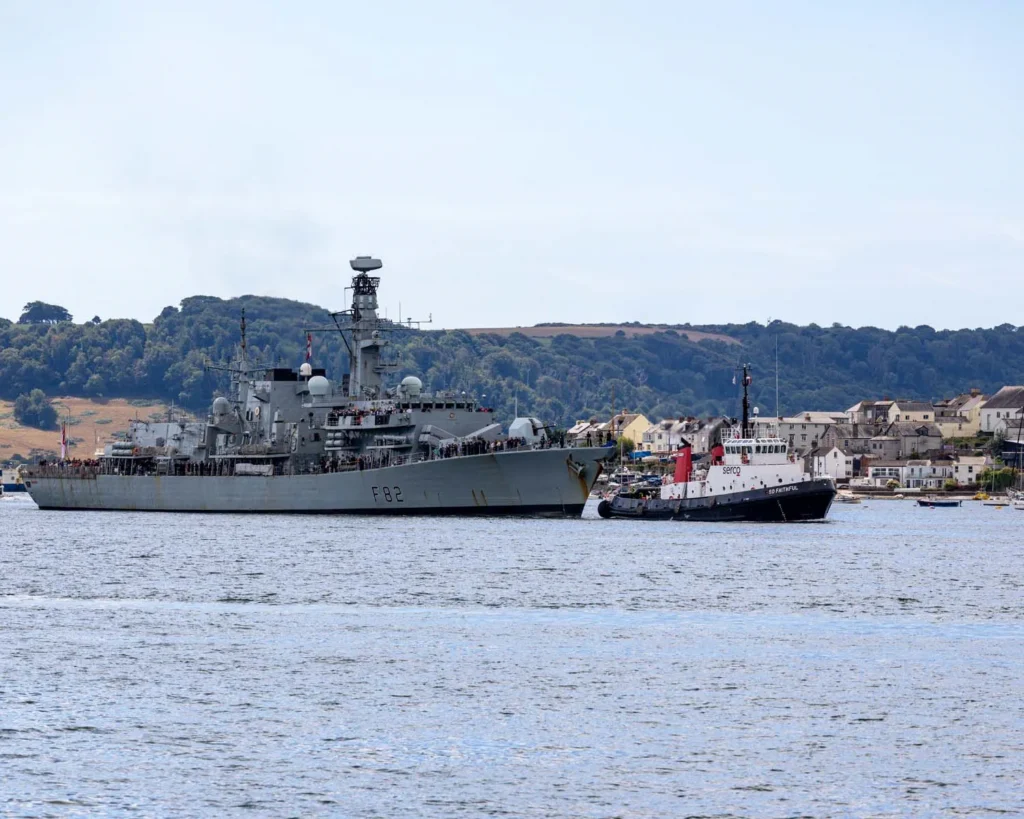
Feature Image: The HMS Somerset frigate returning to HM Naval Base Devonport following a four-month deployment monitoring Russian surface and sub-surface activity in the North Atlantic. (Royal Navy)
Read more from Sandboxx News
- Royal Navy pairs drones with manned helicopter for the first time
- Delta Force’s quest for armor-protected mobility platforms
- Navy reclassifies upcoming Virginia-class submarines pointing to the vessels’ future role
- Navy’s C-2 Greyhound, a Cold War warrior, was retired after 60 years of service
- Air Force reveals the B-2 can carry a lot more ordnance than previously stated