Research and Development (R&D) is not necessarily something that Delta Force is famous for, at least not to the point that it overshadows what most people know the Unit for…
But R&D has always been one of the more prolific Delta contributions to the big military as a whole: everything from Night Vision Goggles (NVG) mounted to Kevlar helmets, to forward-mounted handgrips and gun lights onto assault rifles are directly attributable to the Delta Force.
Delta was also the first unit in the Army to shake out the new satellite-centric Global Positioning System (GPS) for accurate long-range navigation operations.
I came to Delta Force from training combat divers in Key West, Florida. There, I had gained experience with the then-navigation system of choice: the radio frequency-triangulating “Loran.” Although we used the Loran system, we found it to be often mysteriously selective of whom it intended to work for, thus pegging it as not 100% reliable.
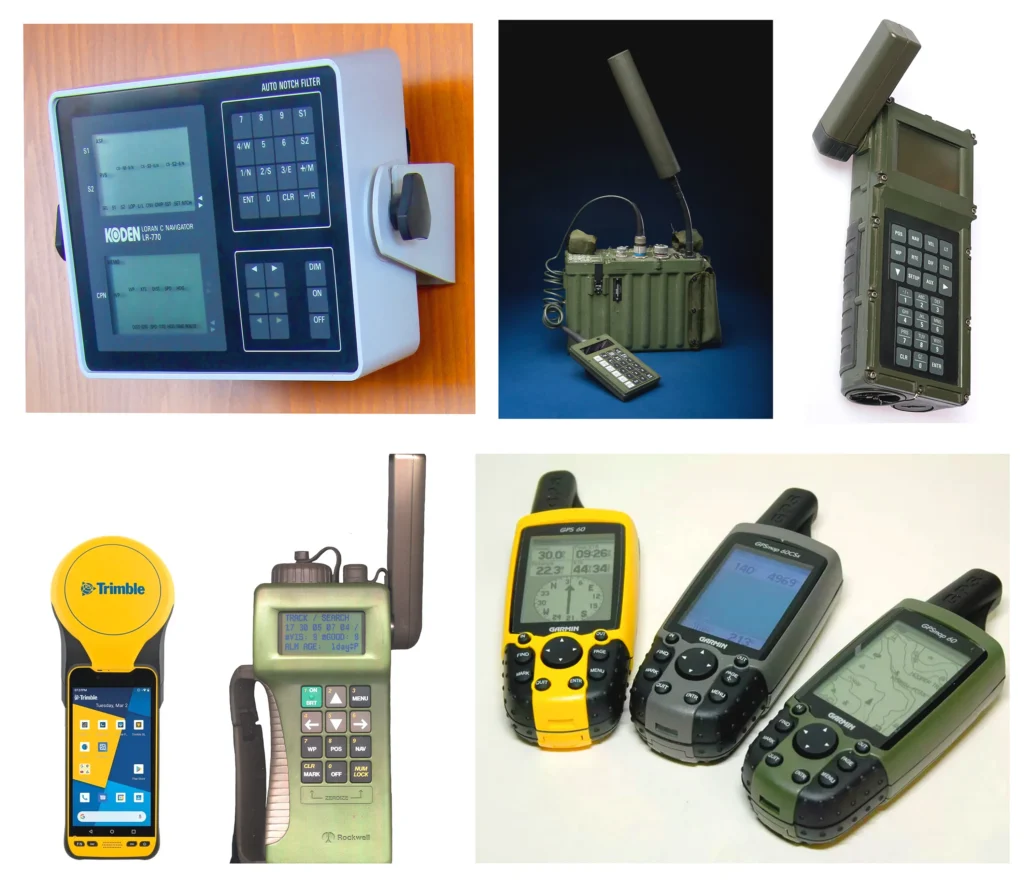
In the Delta Force, my first experience with GPS was a Unit-designated Collins Defense Communications AN/PSN8. While man-portable, it was only moderately reliable and not considered the panacea to Delta’s navigation woes.
After the modestly capricious PSN8 came the slightly less mercurial Magellan GPS device; then the equally fickle Trimble; and the Precision Lightweight GPS Receiver (PLGR), commonly called the “Plugger” (AN/PSN-11), which was an honestly very good system with a small Figure of Merit (error probability). Finally, the Mac-Daddy of all things GPS: the GARMIN! That’s right, when the music stopped playing, the GARMIN was seated squarely on the throne of the Delta Force GPS hierarchy.
There were two schools of acceptance, when new tech appeared in the Delta central building: first were those who welcomed the new tech and learned how it functioned to successfully perform the missions; and then there were those brothers – including myself – who wanted to know it inside and out, including how to build one out of rocks and stick in the wilderness.
We embraced it with every quantum particle of our being, for everybody was intimately familiar with the raw frustration of being a lost operator!
Key to the concept of GPS are two phenomena that were predicted by renowned physics genius Albert Einstein in his two famous theories that rattled the physics realm to the bone: the theories of Specific and General Relativity, published in 1905 and 1915 respectively.
These two theories are proven millions of times a day by you, me, and anyone using a smart phone satellite navigation system.
Satellites navigation uses… well, satellites, and key to the accuracy of positional coordinates is the exact and minute synchronization between satellite clocks, with relevant clocks on Earth. We are not talking minutes or seconds, but microseconds – millionths of seconds. An error of just a few microseconds between the two clocks can translate to many thousands of meters of error in your navigational track!
Related: Delta Force’s quest for armor-protected mobility platforms
In the case of the effect of gravity on a clock that is 20,000 kilometers above Earth, Einstein’s General Relativity Theory affirms that the weaker influence of Earth’s gravity at that distance will cause the satellite clocks to tick faster (“easier”) and “speed ahead” of Earth clocks by 45 microseconds per day.
Conversely, the Theory of Special Relativity effects the operation of clocks in an opposite fashion; that is, the fast-moving speed of GPS satellites – some 11,000 kilometers per hour – will cause onboard clocks to tick slower than Earth clocks due to the effects of Time Dilation.
The speed difference, in our example, is seven microseconds faster than Earth clocks per day. The net correction figure is then 45 microseconds minus seven microseconds for a total of 38 microseconds of times speed that must ultimately be subtracted from Earth clocks to compensate for the effects of Special and General Relativity. (These effects were also demonstrated in the Hafele-Keating experiment of 1971.)
In the Delta world, where 10 feet of error could result in a mission failure, Einstein’s work is therefore greatly revered. So, the next time you are late for work, don’t try to blame it on GPS satellite clock error – that dog just ain’t gonna hunt!
And yet it happens.
By Almighty God and with Honor,
geo ends
(Today’s “geo” signature links to The Tomita Planets by famous Japanese musician Isao Tomita, who rendered classical orchestral scores as electronic music. This track was originally a composition by Gustav Holst entitled The Planets. Other renowned works by Tomita are Pictures at an Exhibition originally by Russian composer Modest Mussorgsky.)
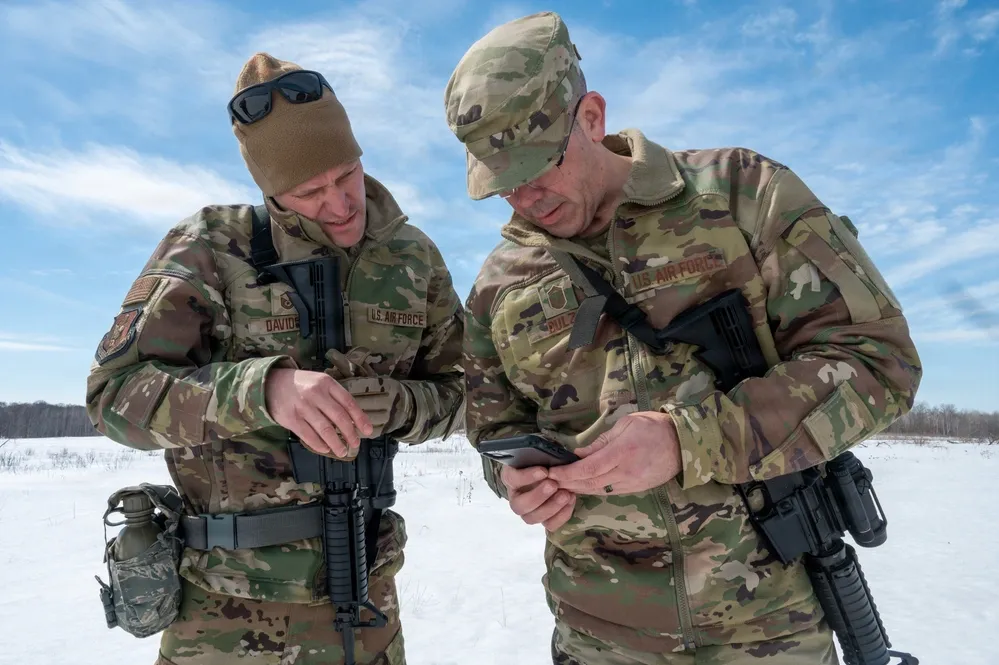
Feature Image: Master Sgt. Jonathan Davidson, a 934th Civil Engineering Squadron firefighter, and U.S. Senior Master Sgt. Patrick Dulzo, the 934 CES First Sgt., right, check their position via GPS during a land navigation course at Camp Ripley, Minnesota, on April 2, 2023. (U.S. Air Force photo by Staff Sgt. Matthew Reisdorf)
Read more from Sandboxx News
- How troops survive long deployments at sea
- Navy’s historic, new hypersonic missile is one step closer to service
- Why does the Navy need new fighters?
- Did British authorities just foil an Iranian plot against US forces in England?
- The Long Range Desert Group and the birth of special operations around the world