One question that I constantly asked my self or my peers during my military service was “why?” Why am I doing this? Why are we going there? Why are we training? I’m a person who likes to understand the why because it helps me stay focused and ultimately understand what I’m doing.
In my experience within the Marine Corps infantry, I learned quickly that “why?” was not something you asked. Someone told you that you had to perform a task, and you did it, end of story.
There is, without a doubt, a lot of value in the instant willingness to follow orders. When your squad leader tells you to provide suppressing fire on a target, you don’t have time to ask why. However, before any firefight starts, I need to know why I’m heading to that fight. Why we do something matters.
Troops aren’t typically provided with a reason because they’re expected to obey without question, but it’s my belief that knowing the why can be invaluable to them.
The commander’s intent is supposed to be the reason behind everything you do. The problem is that the intent is often vague – and it has to be because reducing the mission of a company or battalion to a paragraph isn’t all that easy. There is more to the “why” than, for example, saying, “we’re establishing security in our Area of Operations through security patrols.”
The value of explanation
Nevertheless, if troops know the reason why they’re doing something, they are a lot less likely to feel negative about it. I never knew why we went all the way to Fort Pickett, Virginia, for a month to train when we could stay in North Carolina and do the same thing. Well, as I got older, I realized it was because we would be doing more than training our infantry tactics in Virginia.
The logistics and leadership of our battalion needed to be tested and ironed out. Moving an infantry battalion and all of our equipment to Virginia is in itself a part of the training for our battalion and company leadership. No one ever explained the bigger picture to us 19-year-olds, so we griped about it.
If we knew why, we could break the cycle of cynicism among us and acquire a bigger picture of the entire exercise. And then we’d likely be more motivated and invested. We’d transition from being a cog in the machine to a stakeholder who is now part of a more crucial mission. This can be applied to anything. When the bigger picture and the why is revealed, you aren’t just doing something because you’re told to, you’re doing something because it helps the mission.
Additionally, telling your troops the reason behind an order or a mission reduces their cognitive load, since they stop contemplating possible explanations, and they can then use that knowledge to solve real-time problems.
Further, you want troops to be motivated and in good spirits. For example, it’s tough to stay motivated when you’re tasked with filling a thousand sandbags to build a wall. But if you explain that your tactical experience and training say that this wall is the one that will likely be attacked based on the position, then they’ll be more motivated to fill those bags and build that wall. They are doing something that matters, and at the end of the day, that’s likely why they joined the military.
Related: Air Force to build realistic training ranges to enhance its Basic Military Training
The leadership tax
Every time a leader says, “because I said so” they pay the leadership tax. That tax is a piece of their team buy-in and compounds over time. As a leader, you’re expected to be listened to, but you should also make sure what you’re saying matters to the men.
Your job isn’t to just pass orders, but to translate strategic goals into tactical relevance. Troops should be encouraged to have what I call “tactical curiosity.”
At the same time, asking for the why shouldn’t be a whine and a complaint; it should be relevant and respectful. If you’re tasked with holding a road, setting up a checkpoint, or filling sandbags, questions like, “Sergeant, how does this fit into the bigger picture for the op?” should be encouraged.
The men should have a drive to know why they are doing something. That drive will help them make the right decision when you aren’t there to babysit. They can understand the mission at its core and react accordingly.
A military that thinks is a military that wins. Don’t just give orders to your troops, give them the specific reason they are doing something and encourage them to ask.
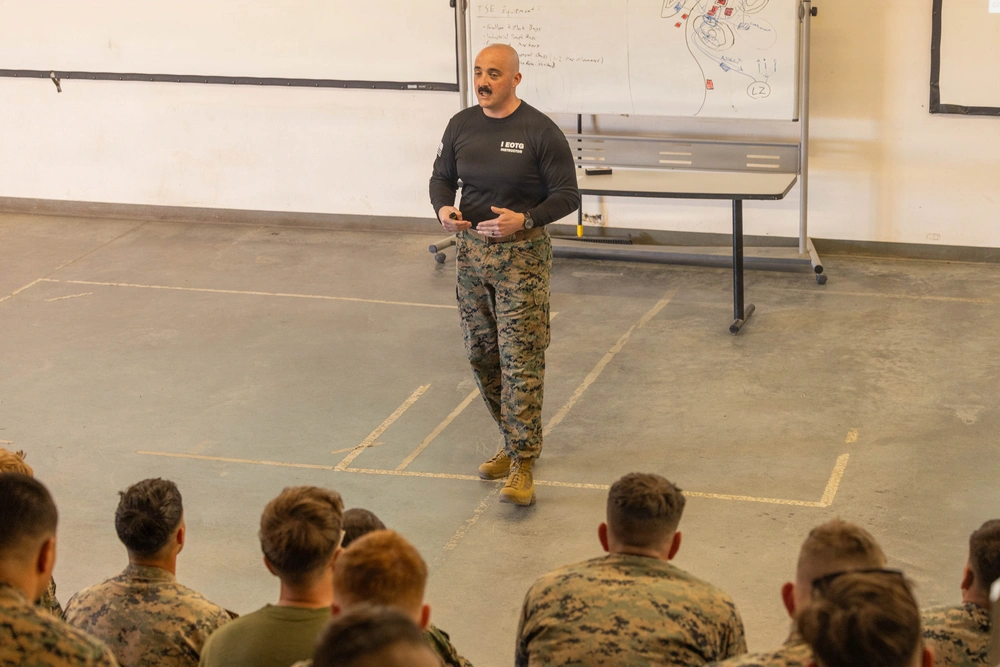
Feature Image: U.S. Marine Corps Gunnery Sgt. Jacob Pesola, a chief instructor with Expeditionary Operations Training Group, I Marine Expeditionary Force, leads a class on search procedures during Raid Leaders Course 26-1 at Marine Corps Base Camp Pendleton, California, March 17, 2026. Raid Leaders Course provides relevant, realistic training in close-quarters battle and breaching to prepare Marines and Sailors for deployment with the 13th Marine Expeditionary Unit. Pesola is a native of California. (U.S. Marine Corps photo by Sgt. Martha Linares)
Read more from Sandboxx News
- Anduril’s AI-piloted Fury drone goes into serial production, but who will buy it?
- The Iranian general whose intel might have stopped the US from going to war in 2007
- New weapons and technologies making their debut in the war against Iran
- The Navy is on a mission to recover one of its worst warplanes from the ocean floor
- The Air Force made Lockheed’s Skunk Works design a stealth pole