From Meals, Ready-to-Eat to eat to tactical vehicles and weapons, the U.S. military has near-unrivaled expertise at keeping essential supplies stockpiled and ready to use at the point of need. But with all its technological and scientific prowess, one essential supply still presents a major challenge: delicate, rapidly expiring bags of blood for transfusions. And as the military continues to posture itself for a future major fight in the distant Pacific, it’s embracing a throwback method to ensure it has the blood it needs at the ready.
Since 2017, the services have been rolling out a training course called Project Valkyrie, which educates field medics on how to collect and transfuse fresh whole blood on the battlefield. This will allow them to turn the troops in their unit into a renewable supply of donated blood, rather than depending on blood bags with a five-day shelf life and exacting storage conditions.
The concept revival began with the Army’s 75th Ranger Regiment, which introduced a protocol called Ranger O-Low Titer. The protocol essentially streamlines the process of blood-typing donors to make sure it’s a match for the wounded soldier who needs it. Soldiers with the blood Type O – universal donors – are pre-identified, as are those with low levels of Anti-A and Anti-B antibodies, which have the highest chance of causing a transfusion reaction. With these steps taken, blood can be drawn from a donor and transfused to a patient within minutes, with a high degree of confidence that the donation won’t harm the patient.
In 2019, two Ranger combat medics, Staff Sgt. Charles Bowen and Sgt. Ty Able, used this method to save the life of Rangers in danger of bleeding out in Afghanistan as a unit took sustained enemy machine gun fire.
“With all the available whole blood units already administered to the casualties, Bowen and Able determined the critically wounded man would die from blood loss if they didn’t take action. They would need to exercise the Ranger O-Low Titre protocol,” a 2020 release stated. “Bowen, Able, and an Advanced-Ranger First Responder did this protocol three times, under direct enemy fire to save the lives of two critically wounded casualties.”
The donation and transfusion process took about 10 minutes, according to the release.
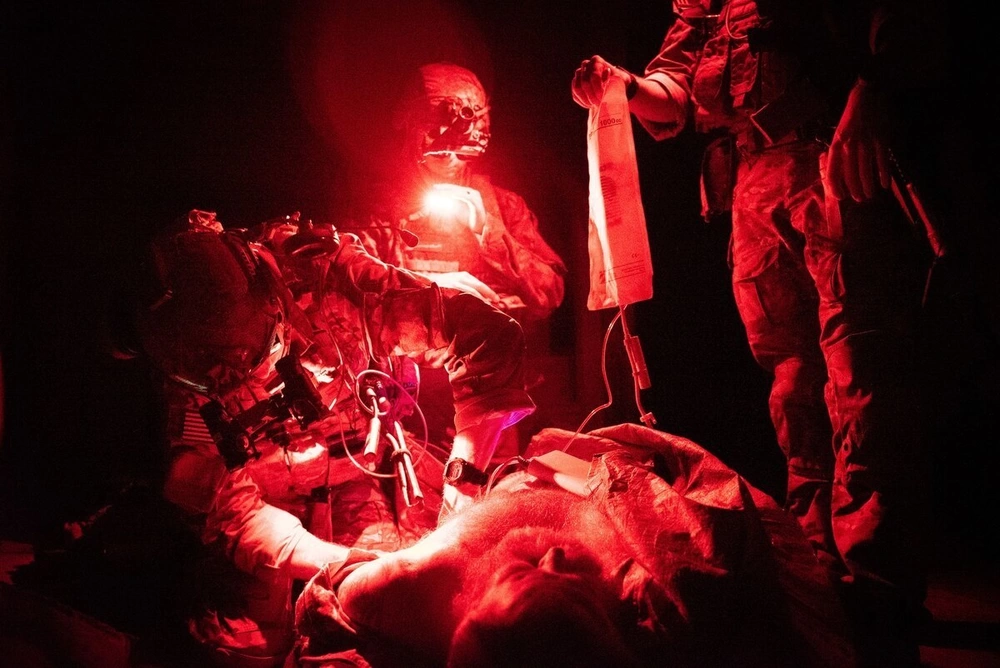
As Dr. Phil Spinella, a former Army lieutenant colonel, noted, the practice of transfusing whole blood dates back to the 1800s and was even attempted during the Civil War, but fell out of regular military practice during World War I.
But in 2004, while deployed to Baghdad with the 1st Cavalry Division, Spinella said he and the doctors and medics he worked with grew frustrated at their limited ability to transfuse the military and civilian casualties they saw.
“We’re pronouncing too many kids, too many 18, 19, 20-year-olds dead every day. And we can’t tolerate this for an entire year,” Spinella, now a professor of Surgery and Critical Care Medicine at the University of Pittsburgh, told Sandboxx News. “So we decided to start using whole blood. And we started the program, didn’t ask for permission, just just did it.”
By the end of the deployment, he said, his team had used a “walking blood bank” setup over 800 times.
The concept became more widespread across the military when Navy Lt. Cmdr. Russell Wier, battalion surgeon for 2nd Battalion, 5th Marines, saw what the Army Rangers were doing and decided to develop it into what’s now Project Valkyrie.
The Navy, Army, Marines and Air Force now all have versions of the program and in recent months have been pushing the capability out further into the Pacific. In late 2025, Marines conducted the first joint U.S. – Philippine Marines blood transfusion training on the island of Palawan. Conducted as part of the joint training exercise Balikatan, the training emphasized the necessity of being able to triage and treat wounded troops with what’s available in light of the “tyranny of distance” separating small units from resupply stations to the rear.
Particularly with severe blood loss, for which the best hope of survival and recovery is rapid transfusion, quick response is vital.
Related: US SpecOps were the vanguard of a revolution in battlefield medicine
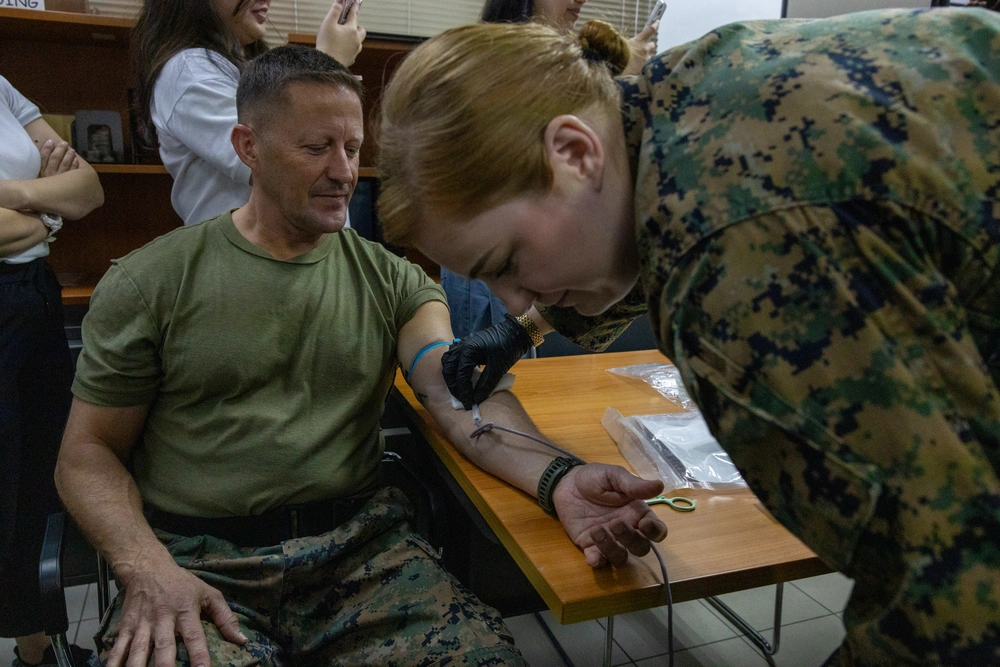
“Battlefield injuries and lifesaving medical procedures don’t discriminate between national borders,” Navy Lt. Cmdr. Sanders Oh, a surgeon assigned to Marine Rotational Force Southeast Asia, and a Valkyrie instructor, said in a statement. “Sharing medical knowledge and training together improves our collective readiness. It improves understanding of each other’s systems, equipment and standards of care.”
As the military continues to push forward training on “Walking Blood Banks” to deployed units and partners, there are indicators that civilian medical institutions are paying attention.
Spinella has collaborated with other researchers on developing a “Walking Blood Bank Preparedness Plan” that acknowledges widespread shortages of donated blood and sets up contingency protocols on how to start collecting and administering fresh whole blood in the case of a mass casualty event.
Spinella is one of the leaders, along with three Norwegian researchers and special forces personnel, of the THOR Network, which champions whole blood transfusion, among other methods to improve outcomes for patients with life-threatening bleeding.
What Spinella’s battlefield experience taught him, he said, is that soldiers were eager and excited to be called upon as donors, knowing that they could help make a difference for wounded comrades.
“There was a lot of satisfaction, and it was in a way therapeutic,” he said. “To know that you could make a little bit of a difference. You couldn’t save everybody – but knowing that we were able to change the system and make it better.”
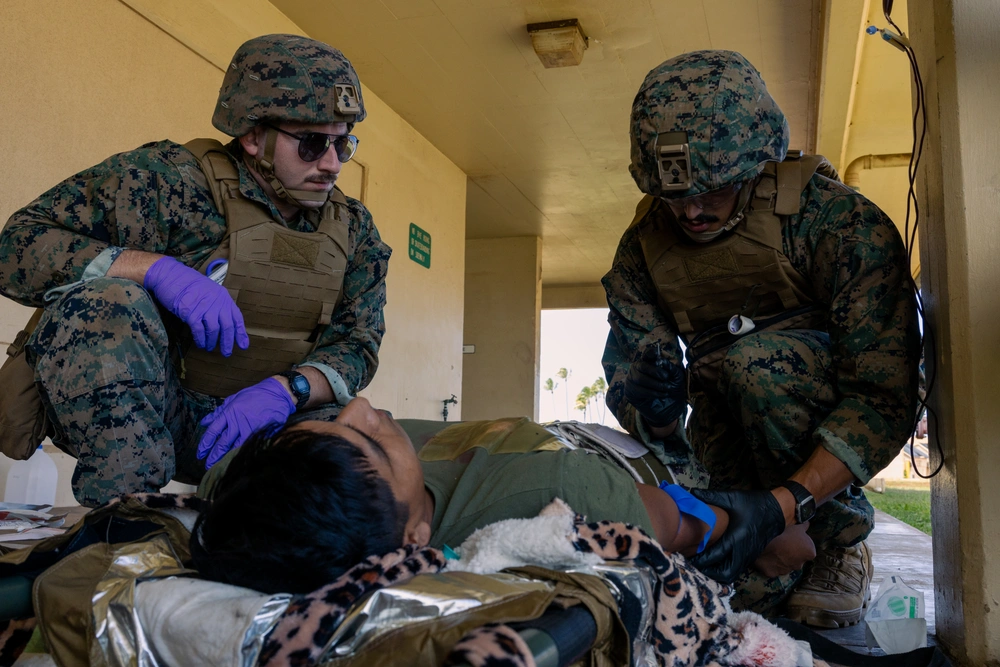
Feature Image: U.S. Navy Hospital Corpsman 2nd Class Joseph Hinson, left, a native of Ocala, Florida, with Bravo Surgical Company, 3d Medical Battalion, and Hospital Corpsman 3rd Class Jordan Esquiviasa, right, a native of Marina, California, with 3d Littoral Logistics Battalion, 3d Marine Littoral Regiment, 3d Marine Division, conduct a blood transfusion on U.S. Marine Corps Cpl. Joel Blasbeltran, a native of Beaverton, Oregon, and an administrative specialist with Headquarters Company, Headquarters Battalion, Marine Corps Base Hawaii, during a Valkyrie Emergency Fresh Whole Blood Transfusion Training program at MCBH, March 27, 2025. (U.S. Marine Corps photo by Lance Cpl. Carlos Daniel Chavez-Flores)
Read more from Sandboxx News
- America’s attempts at creating internally suppressed ammunition during Vietnam
- 22nd Marine Expeditionary Unit will be first Marine formation to get attack drones
- Military tests high-tech ways to ensure troops on the frontlines are fed
- The military’s drone-defense confusion is leaving its bases vulnerable, Pentagon watchdog finds
- Lockheed Martin delivered record number of F-35s in 2025