Editor’s Note: This article by Jake Epstein was originally published by Business Insider.
The British Army is training future drone operators to fly manually without flight aids or GPS to make them better pilots, a commander involved in the efforts told Business Insider.
Lt. Col. Matt Keogh said at a U.K. defense industry exhibition last week that Britain has acquired more than 10,000 drones in the last year through the Project Rapstone rapid procurement initiative.
Most of these drones are for training purposes, not conflict. Because drone warfare technology and tactics change so quickly, as the Ukraine war has demonstrated, Rapstone doesn’t buy large numbers of the newest products, which may become obsolete in a matter of weeks or months. Instead, the initiative invests in pilots.
That means purchasing “totally manually flown” first-person-view, or FPV, drones and “reducing the complexity of the smaller ISR platforms that don’t have those safeguards,” Keogh said, referring to intelligence, surveillance, and reconnaissance drones.
Keogh said soldiers train to fly drones the way someone might learn to drive a manual car before switching to an automatic, or navigate with a map and compass before relying on GPS.
“We are closing those training gaps at the points of need,” he explained. “As long as those foundations are built into our pilots, in the hardest way to fly – i.e., manually – it’s far easier to close that training gap.”
Britain launched the Project Rapstone initiative in September 2024 to rapidly deliver new technology, such as FPV and ISR drones, to soldiers so they can train and prepare for operations.
Thousands of British Army soldiers have been trained to operate drones as part of the Rapstone initiative, though most have learned to fly ISR drones, which Western forces have long used to watch over the battlefield, rather than the FPV attack quadcopters that have seen widespread use in Ukraine.
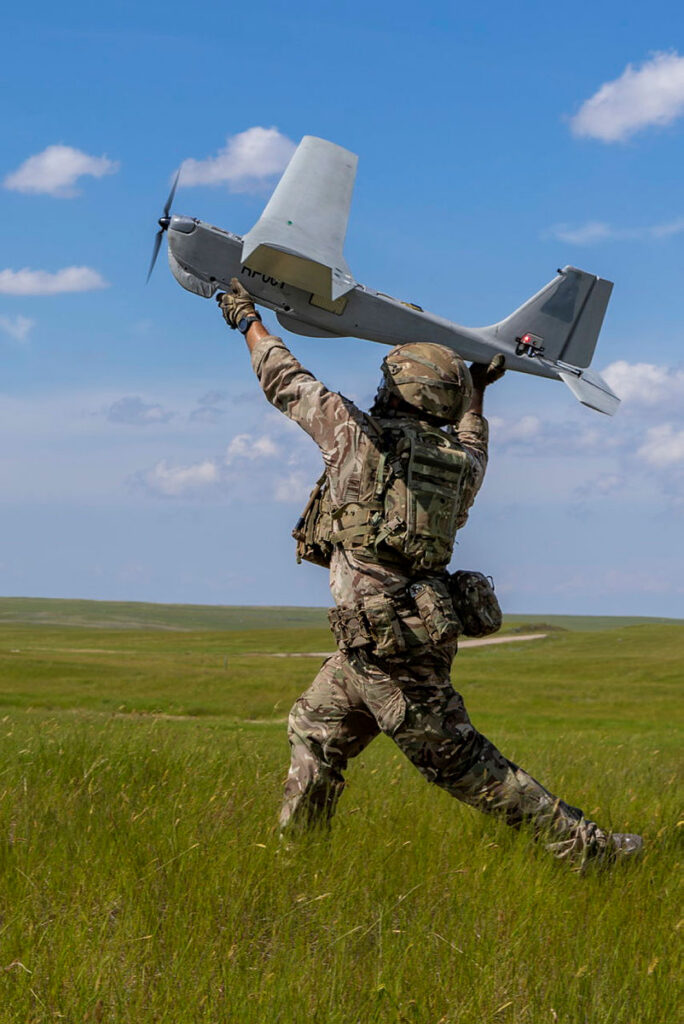
Britain was training pilots to fly surveillance-type drones “way before Ukraine,” Keogh said.
He said that learning to fly FPV drones is a more difficult skill to develop. Britain has invested in simulators and gear for pilots, including tens of thousands of dollars’ worth of drones, a controller, goggles, and batteries for every soldier in the training pipeline.
The “input standard” to become an FPV pilot is experience operating ISR drones, Keogh said. They then require 30 hours of simulator training before enrolling in a two-week operator course. They can further sharpen their skills with an additional two-week commander course.
Keogh said there’s significant overlap between the simulator and flying an actual drone. “If you put a pilot on the simulator for 30 hours, they will very quickly just pick up straight away. They’ll be really confident flying in real life.”
Related: British Army unveils its latest Challenger 3 tank prototype
However, one of the biggest challenges for FPV pilots is navigation, especially if they’re working in a GPS-denied environment.
In Ukraine, the battlefield is heavily saturated with electronic warfare that disrupts drone signals. NATO forces, closely watching the conflict, are training their soldiers to fight under similar conditions where GPS jamming and spoofing are common.
Britain teaches FPV pilots to operate in GPS-denied environments by flying long distances across training grounds, beyond the line of sight, Keogh said, explaining that pilots and commanders then have to map read from a video feed.
Other training initiatives in the U.K. and across NATO are teaching soldiers to fight in environments where GPS is degraded or unavailable. While Western forces learn these skills as a precaution, officials have warned that the war in Ukraine offers a look at what such a conflict could be like for them.
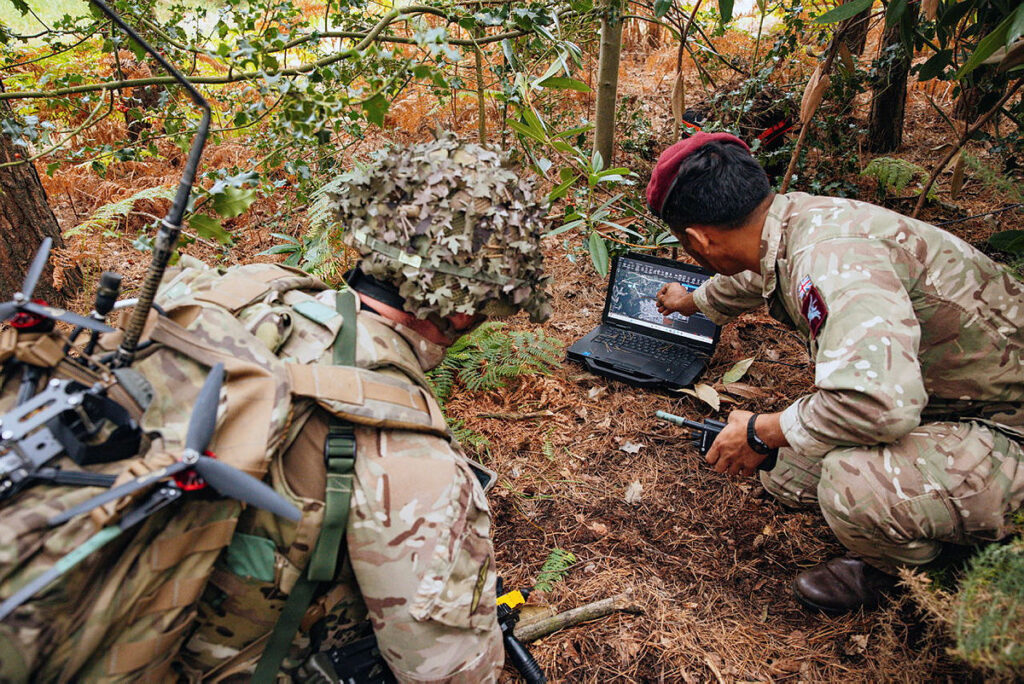
Feature Image: Commander from the Royal Tank Regiment (RTR) is shown an unmanned aircraft system feed (UAS) to support his mission whilst being briefed on a first person view (FPV) strike task as they competed in with other units during the British Army Drone Competition at the Royal Military Academy, Sandhurst, Surrey on the 15th of September 2026. (Photo by Cpl. Aaron J. Stone/British Army)
Read more from Business Insider
- Ukraine’s fast medical robots can outrun Russian attacks, but speed creates new risks, makers and medics say
- Russia is unlikely to break through in Ukraine, but risks to NATO are rising, Western intel warns
- Russia’s once-rare turbojet drones that fly twice as fast are now attacking Ukraine by the thousands
- Ukrainian commander says flying drones have disabled 300 tankers in Russia’s shadow fleet
- The US Navy is figuring out new ways to turn human battle plans into orders autonomous aircraft can follow