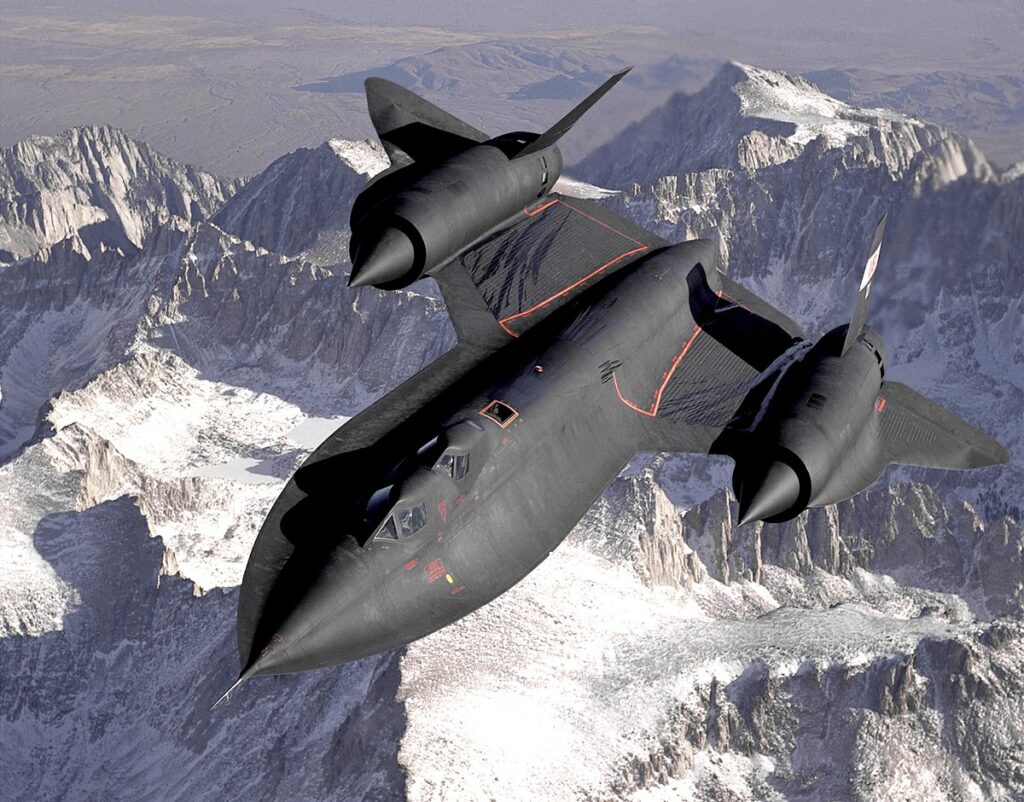
Lockheed Corporation’s famous SR-71 spy plane holds the record for being the fastest piloted jet in history with a speed of Mach 3.3. But in reality, the Blackbird isn’t the fastest piloted jet, and that wasn’t even its top speed. So, why does it hold the record?
The SR-71 Blackbird, known to pilots as the “Habu,” was an incredible piece of aviation engineering. This Mach-3 marvel started flying just seven years after the last P-51 Mustangs (by then, known as F-51s) were retired from American service.
And while it’s celebrated for its very fast speed, what really made it special was that it could sustain such a speed for hours on end – in stark contrast with other aircraft, which although able to reach similar speeds, couldn’t sustain them for more than a few minutes.
Over the years, several claims have been touted about the SR-71’s real top speed, and there does remain at least some debate about what the jet was actually capable of.
Habu pilot Col. Brian Thomas went on record to say that the aircraft’s manual listed its top speed as Mach 3.3. Yet, he added that its speed wasn’t limited by thrust output, but rather by compressor inlet temperature. He unequivocally said that it could fly faster, maybe as high as Mach 3.5, but he wasn’t aware of any pilot exceeding Mach 3.33.
Former SR-71 pilot Gen. Bob Behler, who spoke to Sandboxx News, also confirmed that at Mach 3.2, the jet still had plenty of throttle left.
Another Habu driver, Brian Shul, who became known for his stories about his SR-71 days, claimed that he did indeed exceed Mach 3.5, at one point, while evading missiles over Libya. But, as great as Shul’s stories are, other SR-71 pilots have called his claims into question, with pilots like Charles Daubs saying he’s skeptical that any pilot would push the aircraft that far beyond stated limits.
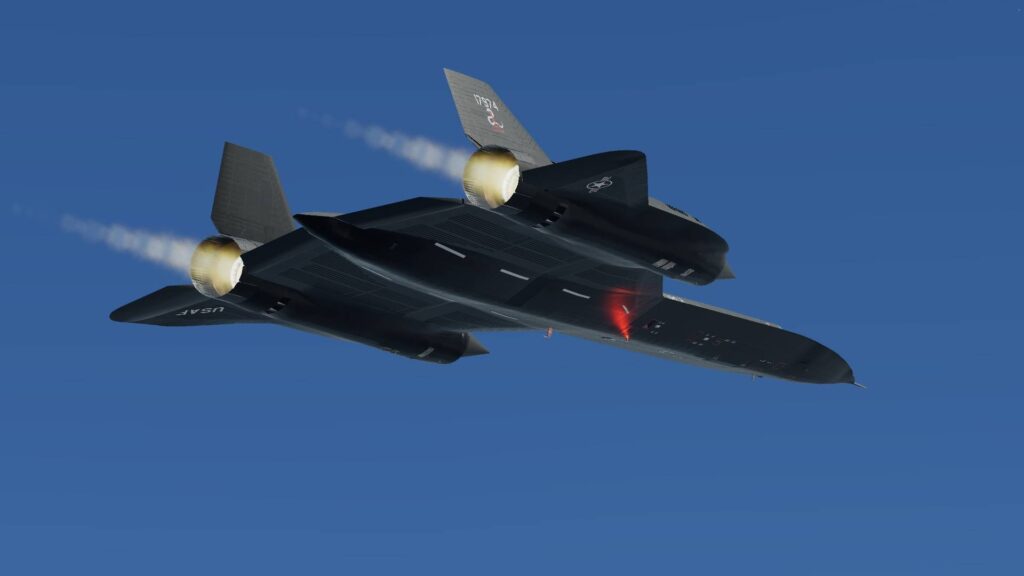
So, if we don’t even know how fast the SR-71 can fly, what’s the deal with its record?
When it comes to such records, it doesn’t actually matter how fast the Habu could fly in combat; it only matters how fast it flew during pre-established runs over a set course under constant monitoring from the FAI, which is an acronym for the French-named International Aeronautics Federation, the organization that bestows the records.
The SR-71’s record-setting run was conducted in 1976 over a 25-kilometer (or about 15.5 mile) straight line course above Edwards Air Force Base in California, with FAI officials in attendance using a variety of pieces of equipment to precisely track its position and speed.
The aircraft had to fly the course once, then turn around and fly it again in the opposite direction. The speeds recorded in the two passes were then averaged together to get 2,193.64 miles per hour at 80,600 feet, or right around Mach 3.3.
So, while a pilot might be willing to push the jet beyond what the manual allows for when they’ve got an SA-5 interceptor closing in, they aren’t going to take the same kinds of risks zooming past FAI officials over California.
But even in that case, there would still be another aircraft that actually deserves the crown for the fastest piloted jet: the SR-71’s own precursor, the A-12.
Related: Why Russia’s Mach 3.2 MiG-25 couldn’t catch the Blackbird
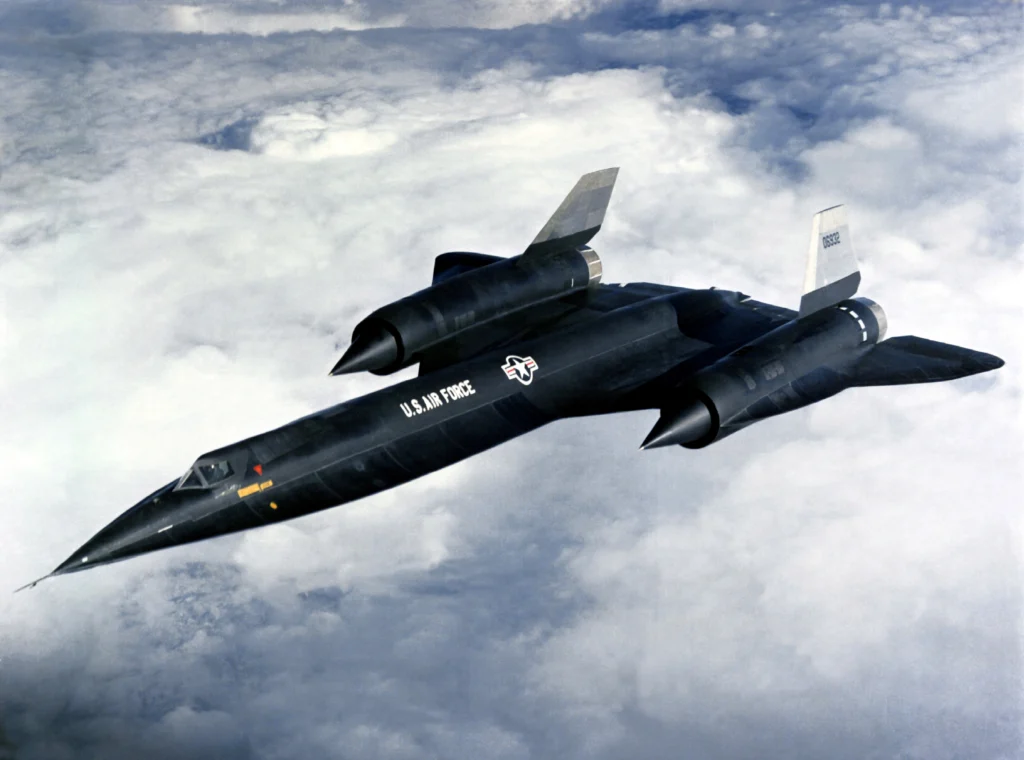
Despite looking very similar and being powered by the same groundbreaking J58 engines, the single-seat A-12 was about six feet shorter, had simpler avionics, carried less equipment and a lot less fuel than the SR-71. All these factors gave it a maximum take-off weight that was about 55,000 pounds lighter than the Blackbird’s.
And while that made the SR-71 a better spy plane, it made the A-12 a faster jet.
According to the CIA, the A-12’s top speed was Mach 3.29; according to Lockheed – the aircraft’s manufacturer – it was 3.35; and unconfirmed claims even place it at Mach 3.5 and beyond.
So, why does the SR-71 have the top speed record that wasn’t its top speed or even a record it should have?
Well, it’s because the Air Force was willing to spend a day jumping through the international hoops required to make its record official, and the CIA had no intention of doing the same.
Feature Image: The SR-71 Blackbird. (Lockheed Martin)
Read more from Sandboxx News
- A history of American Squad Automatic Weapons
- What happens when you get towed behind your aircraft on your first parachute jump?
- The military is using the southern border as a ‘sandbox’ to test out counter-drone tech amid cartel flights
- Hermeus reveals flying prototype in its pursuit of a reusable hypersonic jet
- How a kamikaze drone that is just ‘good enough’ is changing warfare