1 x
$8.42
-
+


Share This Article
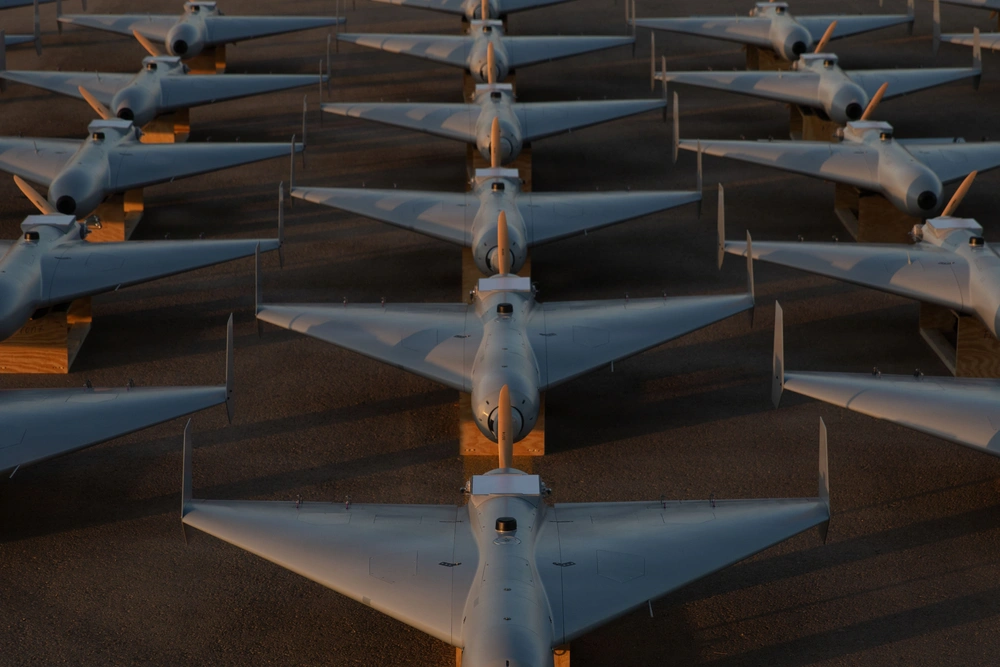
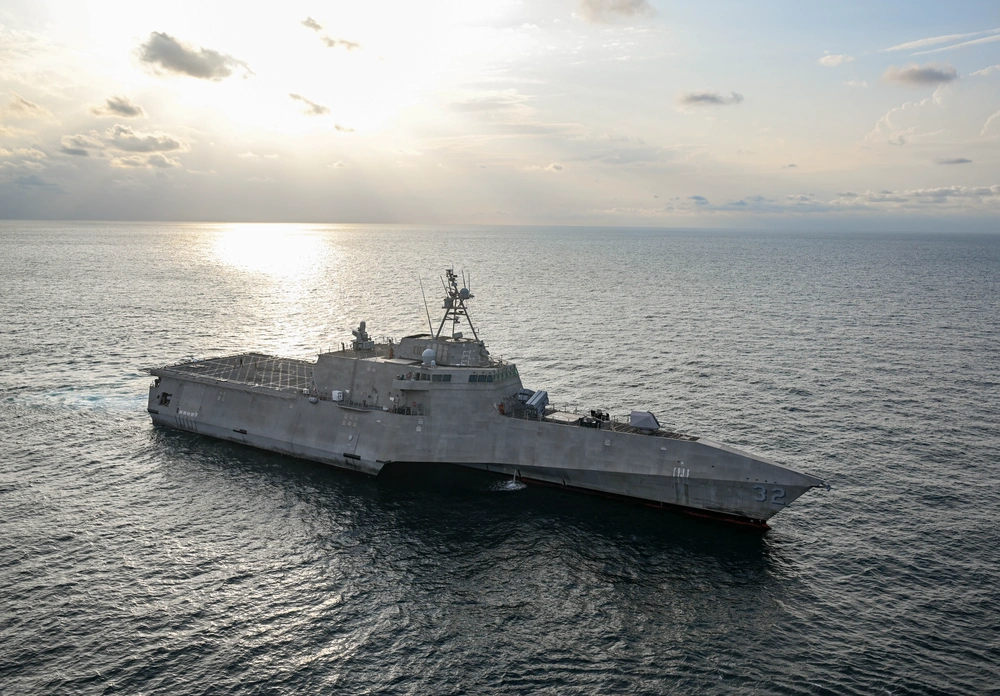
Some few years ago, the U.S. military got its hands on an Iranian Shahed-136 unmanned aerial vehicle (UAV). Shahed-136s are cheap to produce suicide drones and effective as a one-way weapons that would essentially act as a munition against a target such as an American naval vessel. Now, the U.S. military has announced in a press release that the maritime component of U.S. Central Command – the U.S. Navy’s 5th Fleet – has launched its own “reverse-engineered” version of the Iranian Shahed drone from a U.S. Navy vessel at sea.
That U.S. drone, called the Low-cost Uncrewed Combat Attack System (LUCAS) was launched from the USS Santa Barbara in its first such deployment from a naval vessel. The launch was made by Task Force 59, a unit dedicated to so-called “autonomous operations” (drone warfare). Task Force Scorpion Strike, which is run by U.S. Special Operations Command and belongs to U.S. Central Command, also controls a squadron of LUCAS drones, according to Defense News. Task Force-59 is likely the 5th fleet naval component of the larger Task Force Scorpion Strike.
The U.S. military is moving at speed into the realm of drone warfare (autonomous operations). Progress on drone warfare is frequent within the branches and will likely continue to be as the military continues to transform itself into an ultra-modern force.
According to Forbes, the development of the American LUCAS drone was not as simple a story as stealing the tech from Iran and then reverse engineering it. Rather, the Iranians had actually co-opted some American technology in their own development of the Shahed-136 some years ago. So really, this is a full circle sort of moment, where the U.S. military stole back some of its own tech – along with Iranian additions – and moved the development even further forward.
The LUCAS will be able to act as an “attritable” (i.e., expendable) attack asset that can be launched against fixed enemy targets in swarms, thus enabling it to overwhelm enemy defenses. Because it is low cost – at about $35,000 per unit – firing and forgetting the drones is more attractive than launching, for example, a Tomahawk missile, which costs approximately $2M per unit. With those drastic differences in cost, it is understandable why the LUCAS appears to be such an attractive option.
Since the war in Ukraine was kicked off by Russia’s invasion almost four years ago, militaries around the world have witnessed a dramatic evolution in the nature of warfare itself, including in the use of drones. The U.S. military, for its part, appears to be dedicated and motivated to stay ahead of the pack in adapting to this new world.
Feature Image: U.S. CENTRAL COMMAND AREA OF RESPONSIBILITY (Nov. 23, 2025) Low-cost Unmanned Combat Attack System (LUCAS) drones are positioned on the tarmac at a base in the U.S. Central Command (CENTCOM) operating area, Nov. 23. The LUCAS platforms are part of a one-way attack drone squadron CENTCOM recently deployed to the Middle East to strengthen regional security and deterrence. (U.S. Central Command Public Affairs)


Frumentarius is a former Navy SEAL, former CIA officer, and currently a battalion chief in a career fire department in the Midwest.