Last week, NATO Secretary General Mark Rutte presented his 2025 Annual Report on the state of the alliance revealing that NATO’s members have increased defense spending by 20% since 2024.
“The figures in the report speak for themselves,” Rutte said. “We have made significant progress on defence investment, and NATO is stronger today than it has ever been.”
Tellingly, last year was the first time that all of NATO’s 32 member-states reached or exceeded the alliance’s 2% of GDP spending target. All members, with the exception of Estonia, Albania, and Belgium also met the equipment expenditure target.
Promulgated in 2014, the target calls for NATO members to spend at least 2% of their GDP on defense; further, 20% of that amount should be spent on equipment. These figures aren’t hard set rules but recommendations, instead.
In 2025, NATO’s biggest spenders, in percentage terms, were Poland and Lithuania, with 4.3% and 4% of GDP respectively, followed by the rest of the Baltic states, Denmark, Norway, and the United States.
In 2024, the biggest spender, in percentage terms, was again Poland with 4% followed by the Baltics, the U.S. and Greece.
Traditionally, the alliance’s biggest spenders since 2014, in percentage terms, have been the United States and Greece. Poland has significantly increased its defense spending since 2022, when it made one of the largest arms purchases in its history buying $14.5 billion worth of equipment from South Korea. Since then, it has made several big purchases placing it on the top of NATO’s spenders list.
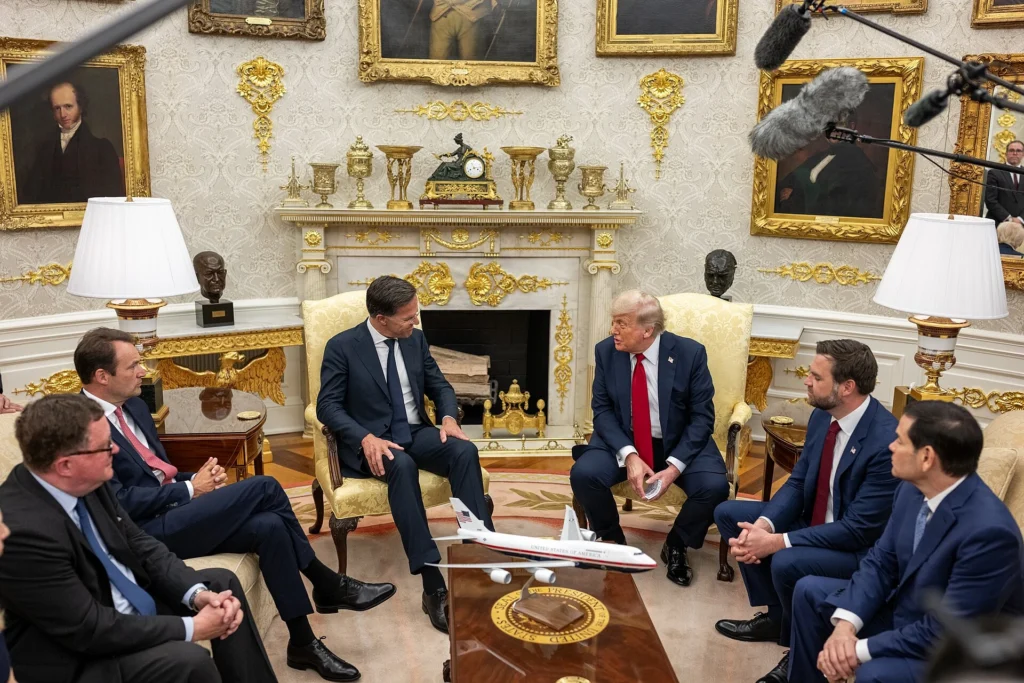
“For too long, European Allies and Canada were over-reliant on U.S. military might. We did not take enough responsibility for our own security. But there has been a real shift in mindset… And as a European, I am proud of what we are doing – the tremendous progress being made,” NATO’s secretary general said.
The increased spending across NATO reflects both a tenser geopolitical environment but also political pressure from the United States.
Russia’s large-scale invasion of Ukraine in 2022 kickstarted a slew of expenditure among NATO’s eastern members aimed at both detering Russian aggression by upgrading and expanding their arsenals, and at replenishing stockpiles of weapons given to Ukraine.
At the same time, the U.S., under President Trump’s first and second administration, has been repeatedly pressing NATO’s members – particularly the alliance’s biggest countries, which were spending below the 2% – to increase their defense spending and rely less on the American military.
In January of last year, Trump said that NATO members could all afford to spend NATO’s goal but should spend even more. “They could all afford it, but they should be at 5%, not 2%,” he said.
However, the 5% figure may not be politically realistic. Tellingly, in 2025, the U.S itself spend 3.19% of its GDP on defense in 2025, amounting to nearly $980 billion. To reach a potential 5% goal it would have to spend an additional $551 billion on defense.
Besides calls for even more spending, the alliance’s woes do not end there.
Related: NATO to increase its Arctic presence in response to Russian activity
Recently, the American president said he’s considering a “pay to play” model for NATO, whereby only countries which meet defense expenditure goals would have a saying in the alliance’s affairs. Any changes to NATO’s charter, however, would need to be approved by all members-states to come into effect.
Further, in an interview with The Telegraph, on April 1, Trump bemoaned the lack of assistance provided by NATO members during Operation Epic Fury against Iran.
When asked if he would reconsider America’s membership, as a result, he replied, “Oh, yes. I would say [it’s] beyond reconsideration.”
“I was never swayed by NATO. I always knew they were a paper tiger, and Putin knows that too, by the way,” he added.
“We’ve been there automatically, including Ukraine. Ukraine wasn’t our problem. It was a test, and we were there for them, and we would always have been there for them. They weren’t there for us,” he said.
Nevertheless, NATO’s common defense clause, the famous Article 5, only applies when a NATO member is attacked. It has only been invoked after the U.S. was attacked on September 11, and NATO’s other members joined the fight against the Taliban in Afghanistan.
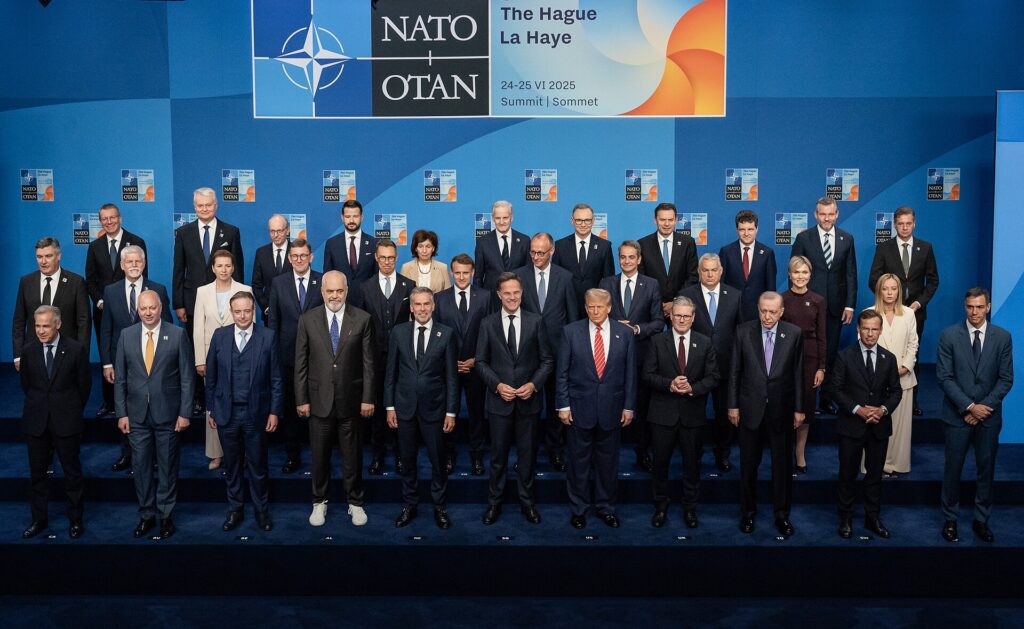
Feature Image: World leaders and members of NATO pose for the traditional family photo during the opening of the NATO Summit 2025 in The Hague. (Ministry of Foreign Affairs of the Netherlands)
Read more from Sandboxx News
- US air superiority against Iran won’t protect shipping through the Strait of Hormuz
- What actually happens when fighter pilots take off their masks?
- The real dangers of military AI systems aren’t the ones depicted in sci-fi
- Drones haven’t won the fight in Ukraine – and that matters as the West learns new ways of war
- The soldier who fought for three different armies