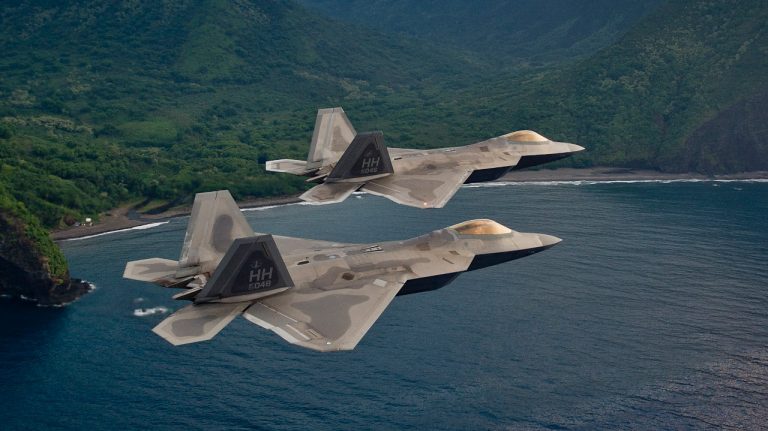
Today, it’s hard to appreciate how revolutionary the F-22 Raptor was when it first started flying in the mid-1990s.
From our vantage point in 2026, stealth is a proven capability that has objectively resulted in higher mission success rates and fewer combat losses among both tactical and strategic aircraft. But during the Raptor’s development, the limits of what stealth could really do were very much still being hashed out.
As Mike “Dozer” Shower, who first flew F-15s before transitioning to the Raptor, once put it, the stealth jets – the F-117 Nighthawk and B-2 Spirit– that were already in service when the Raptor joined the Air Force’s ranks, exercised, what he called, “defensive stealth,” meaning they employed low observability to avoid engagement altogether.
The F-22, on the other hand, represented the first-ever attempt at fielding an “offensive stealth” platform – meaning a jet that uses low observability to pursue a fight, rather than to run from one.
And there was pushback against the idea that a stealth fighter (rather than a stealth attack aircraft or bomber) would even work.
In 1997, the same year the first F-22 started flying, the U.S. Naval Institute published a piece by retired E-2C Hawkeye squadron commander Jeff Huber, who described the F-22 program as a “house of cards.”
Huber even went to say that “Stealth aircraft may have radar and infrared detection avoidance characteristics, but they can’t evade the human eye in broad daylight any better than any other aircraft,” before going on to say a stealth fighter can’t do much existing tactical aircraft can’t do.
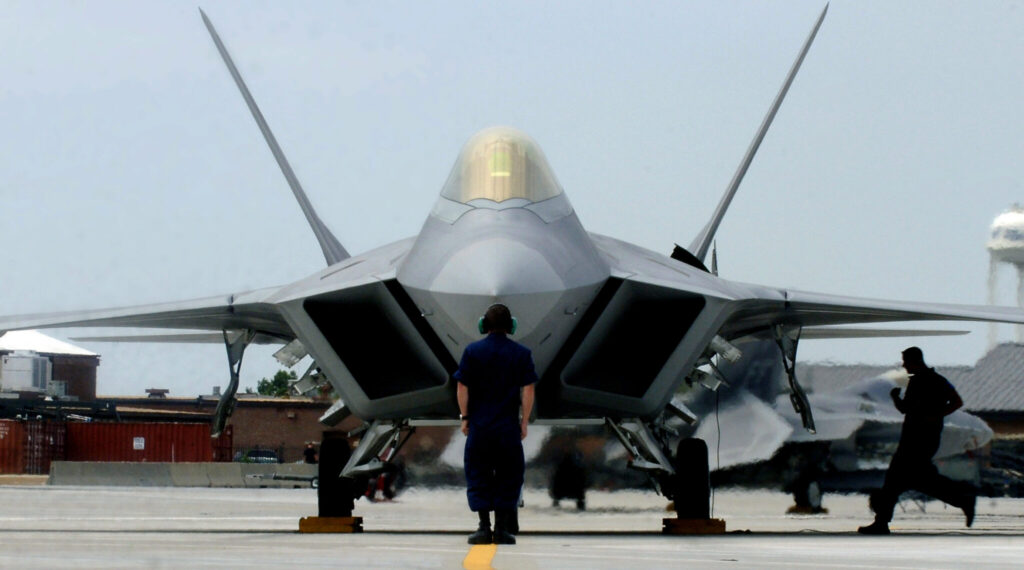
The Project on Government Oversight, following suit in 2000, publishing a scathing review of the Raptor’s intended capability set penned by Fighter Mafia alumni and retired Air Force Colonel Everest Riccioni. The colonel argued that “The few F–22s possessing quasi-F-15 performance will degrade the air superiority capability of the Air Combat Command.”
So, with no shortage of heavyweight critics, there was a massive amount of pressure on a small group of handpicked pilots and maintainers from the 27th Fighter Squadron when they arrived at Exercise Northern Edge in Alaska with a dozen brand-new Raptors in February 2006.
This massive joint-force exercise was the F-22’s first chance to prove itself against a combined adversary force of F-15s, F-16s, and F/A-18s, supported by the powerful radar arrays aboard E-2C Hawkeyes and E-3 Airborne Warning and Control aircraft.
And when the dust settled, the Raptor-led Blue Force had scored 241 air-to-air kills over the combined fighters of the Red Force. Remarkably, the Raptors’ side only lost only two aircraft: two F-15Cs that flew alongside the F-22s in the fight.
Strictly speaking, in terms of F-22 engagements alone, at the conclusion of Northern Edge, the Raptors had a notional air combat record of 108 wins and zero losses. In fact, the F-22s were wiping adversary jets off the board so quickly that the Air Force started allowing Red Force fighters to depart the battlespace to “regenerate” and come back in, just to keep the exercise going.
Related: The F-22 Raptor almost had a stealth bomber sibling
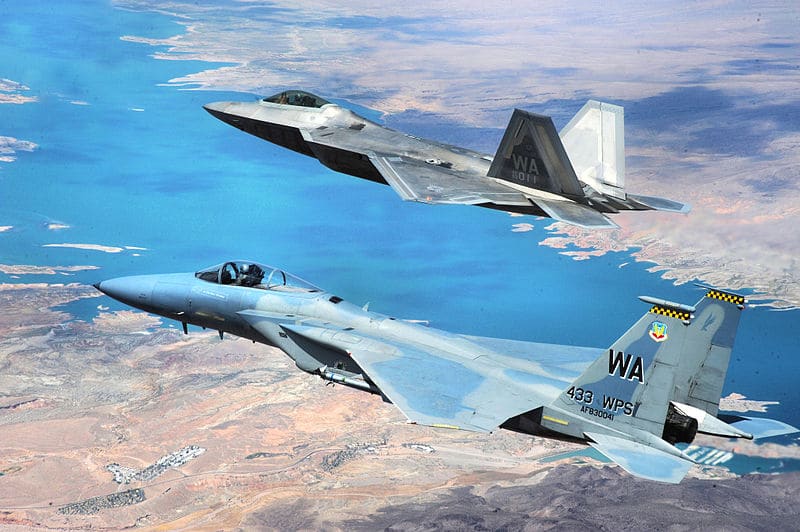
Just a few months later, the F-22 made its debut at Red Flag, the Air Force’s premier large-scale air combat exercise. This time, Raptors weren’t just squaring off against the best the American military had to offer, but against cadres of British and Australian jets as well. And the results were the same.
RAAF Squadron Leader Stephen Chappel flew against the Raptors in an American F-15C as an exchange aggressor pilot. And when the exercise was over, he remarked: “I can’t see the [expletive deleted] thing! It won’t let me put a weapons system on it, even when I can see it visually through the canopy. [Flying against the F-22] annoys the hell out of me.”
Chappel later went on to describe the engagements as a humbling experience.
Today, to equal the playing field and test different elements of air combat, F-22s are known to fly within-visual-range dogfight exercises while still carrying drop tanks under-wing which hinder their performance.
Sandboxx News asked F-22 pilots about this handicap, but was told that they had no comment.
Maybe the best evidence, then, of the Raptor’s peerless performance in the sky is how far and wide tales of any victory over a Raptor in any exercise spread.
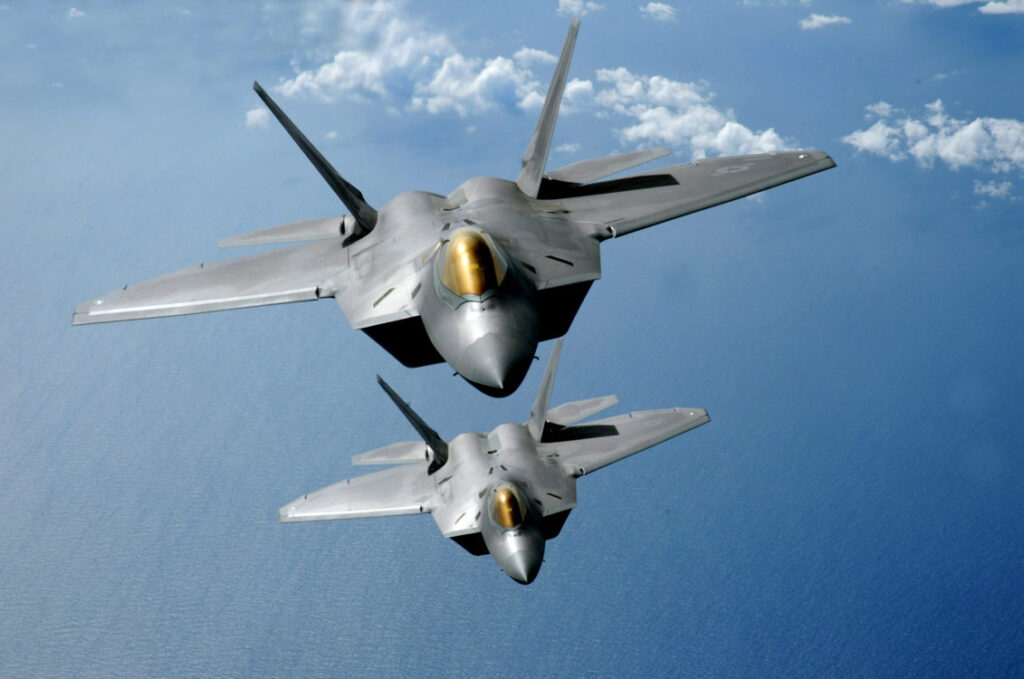
Feature Image: A pair of F-22s fly in formation. (U.S. Air Force)
Read more from Sandboxx News
- Accounts of daily life with the Delta Force through 18 months of global training
- It took more than stealth to make the F-117 Nighthawk a combat legend
- Why are officers more successful than enlisted men at becoming Navy SEALs?
- This is why the iconic M16 rifle has served for so long
- America’s secret stealth aircraft you’ve never heard of