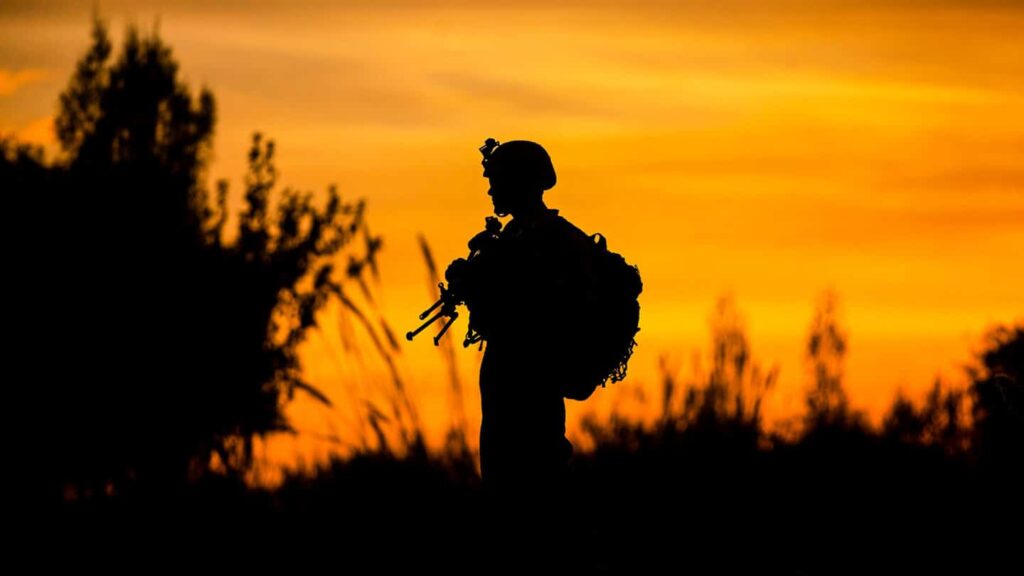
“Where were you on September 11, 2001?” has become my generation’s, “Who killed Kennedy?” I remember where I was. I was at home, on a school day, playing a little hooky with my older brother. I was 11 years old and was cruising through daytime TV. Just local channels playing infomercials, old TV shows, and suddenly everything shifted to the news. In short order, my life’s path seemed to radically change in a way I didn’t understand.
A plane had hit one of the Twin Towers. People were confused, was this some tragic accident? How did it happen? Why did it happen? Eleven-year-old me watched the second tower get hit live on Fox. I sat on the edge of the couch, watching, eyes wide. I was confused. There couldn’t have been two accidental plane crashes.
I didn’t know what had happened, but it didn’t take long to figure it out.
I didn’t think the United States could get attacked like this. We lived in a safe country. In my mind the U.S. had a shield around it. How did two planes get turned into weapons? I’d been safe my entire life; these things didn’t happen here.
Two planes quickly became four: Half an hour later the Pentagon was hit. Another half hour later a fourth plane crashed in a field in Pennsylvania. Aircraft were grounded as the world stood still.
In the coming weeks I’d hear the name Osama Bin Laden over and over. However, the first time I heard the name, or the words al-Qaeda, came from one of my dad’s employee, who rightly called who was the mastermind behind the attack a mere two hours after the first plane hit.
The CIA didn’t confirm it to the president until later that night, so maybe the president should have listened to Mr. Mike.
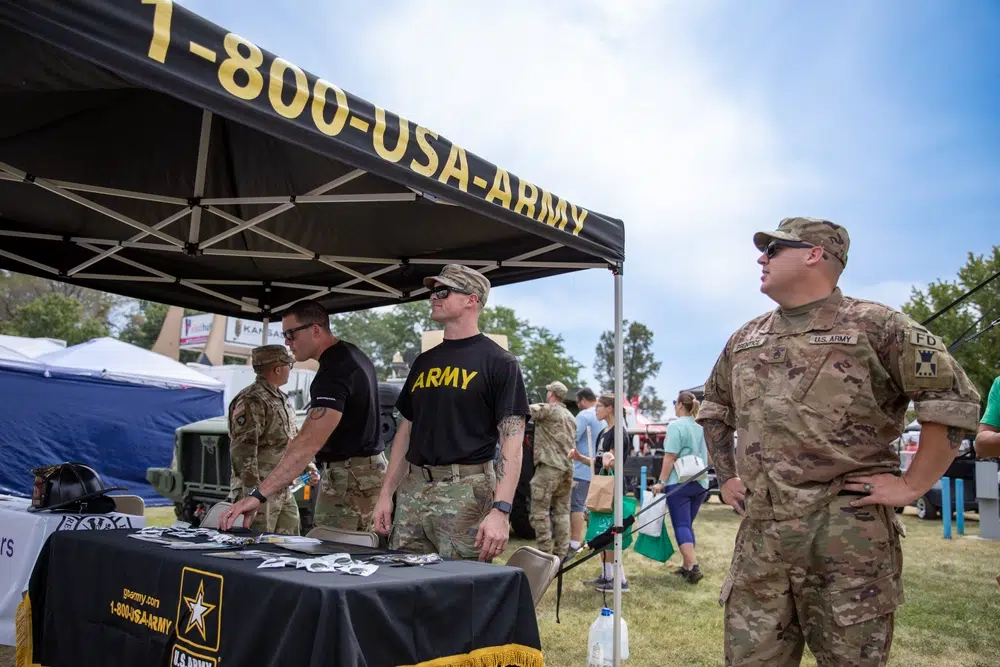
I remember hearing that military recruiting offices were full, stormed by people of all ages. At 11 years old I felt the call of duty, but there was nothing I could do. I told myself if I were 18 I’d be there, signing up today! This wasn’t bluster, it was the first attempt I ever made to assuage a feeling of guilt and shame I carried.
I was a History Channel kid. (At the time History Channel wasn’t “reality” shows. It might as well have been the WWII channel.) I watched countless documentaries and specials. I grew up watching old men describe their service and I always felt that sense of guilt and shame. It wasn’t logical, but I felt bad I had never sacrificed the way these men had. Now there was a war coming and it hit me hard.
I told myself I was going to join when I was 18 and it lessened those illogical feelings. I was plenty scared of war, but in my mind, I had seven years before I could join, surely the war would be over by then?
Boy, was I wrong. In the coming years the war only intensified.
When I turned 18, I joined the Marine Corps. I signed an infantry contract. My shame and guilt wouldn’t be satiated by taking a support job. I did not prepare nearly as well as I should have in the seven years I told myself I was going to join. When I took my practice ASVAB I weighed 335 pounds.
I had to lose 100 pounds to ship to boot camp. It took me about a year to do so and, admittedly, I didn’t lose the weight in a healthy manner.
Losing weight that fast left me fairly weak, but I didn’t want to wait, so I charged into boot camp in terrible shape, but I made weight.
The feelings I was experiencing, made it easy to eat a can of tuna a day and drop weight. I told myself I’d join the military for temporary relief, but now I had to live up to a promise I had never told anyone about
I made it through boot camp, through the School of Infantry, and in 2009 went to Helmand Province, Afghanistan.
Related: We swore a blood oath: Former CIA officer reflects on al-Zawahiri killing
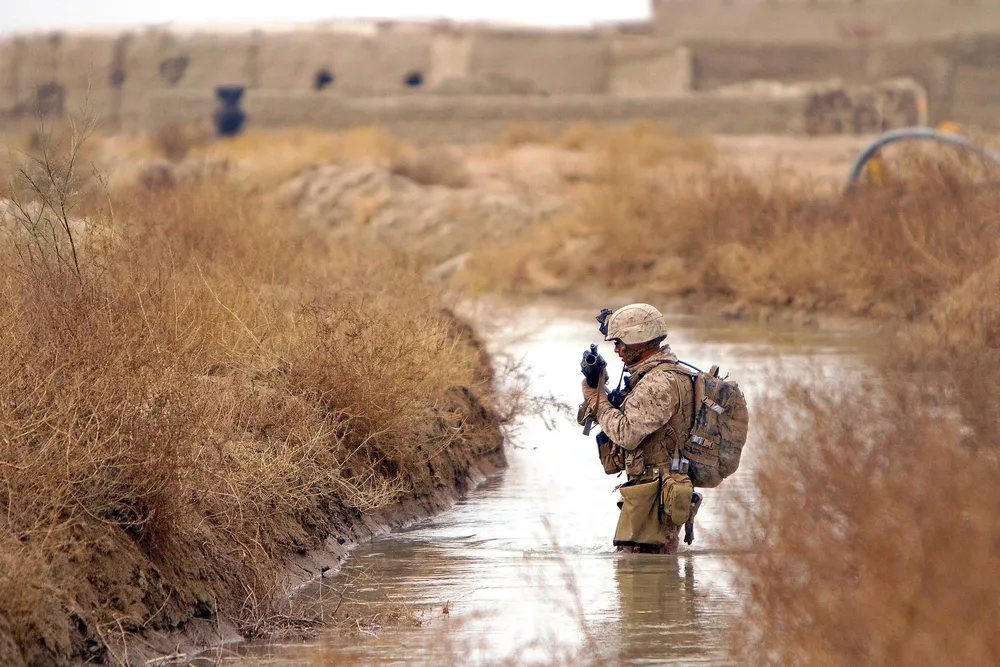
The eighth anniversary of 9/11 occurred right before we deployed and that seemed to harden our resolve. It put a seemingly endless mission right in front of our faces as we went to do our part. For the next seven months, we attempted to tame our little corner of Afghanistan. And we did well.
When we landed in our AO helicopters, we were still getting shot at. The Taliban controlled the terrain. We pursued and punished them, and by the time we left they didn’t dare show their face in our little section of Helmand.
“Pursue and punish” was a term our company commander used and, by God, our aggressive operations tempo ensured it was more than just words. We seemingly lived outside the wire. Sometimes it felt like we only came back to grab food and water before heading back out.
For about a month we’d conduct a daily patrol to a local village, colloquially called “Opiumville,” and every day we fought our way in. Every day we knew the fight was a kilometer from us and we went to it. We pursued the enemy with an aggression only dumb 19-year-olds could muster.
The worst fight we were ever in was for a couple pallets of Gatorade.
(If you think Marines will fight for their country you should see what they’re willing to do for Gatorade after drinking hot bottled water for months. The Taliban tried, but couldn’t stop us from getting that delicious sugary fuel into our patrol base.)
I got to see and do amazing things with amazing people. I saw and experienced true leadership under some excellent officers and NCOs.
Related: The Great Gatorade Battle of Helmand Province
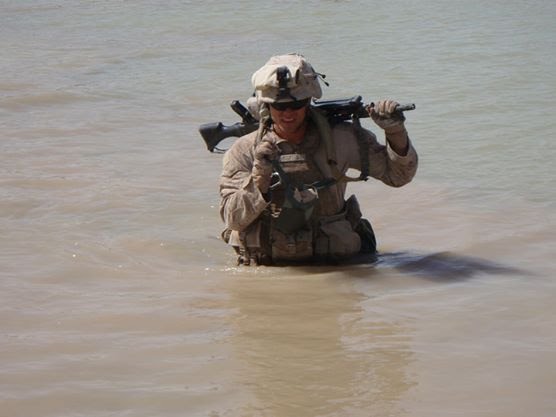
I won’t lie. I wasn’t a good Marine. I wasn’t stellar. Average would be generous. But, somehow, I found myself on a squad of all-stars, handpicked by our company commander to form an experimental, company-level, reconnaissance-and-direct-action squad. I never understood why I got the gig, but there I was, a boy amongst killers.
At 19, I found my purpose – something that can often elude people for most of their lives – and, for a brief seven months, my purpose was important.
That purpose wasn’t to avenge the victims of 9/11; it wasn’t even to hunt down the Taliban; and it sure as hell wasn’t to extinguish some illogical feelings of guilt and shame. Instead, my purpose was to provide suppression fire so my squad could move. (After all, the greater mission and your personal bullsh*t disappears when the world is compressed to the few hundred meters between you and the enemy.)
I learned my purpose one day when my brothers were stuck in knee-deep mud in an open field and under fire. That day was one of the two times I ever felt brave.
The fire we were receiving was hellacious. It was our second firefight, but the first might as well have not counted compared to this one.
My fireteam – comprised of four – had covered in an irrigation ditch bordered by a treeline. The fire from the enemy was kicking up puffs of dirt in front of the position. Sticks and leaves decimated by fire fell on us.
Beside me, our JTAC screamed an expletive and ducked. Our Doc went to his aid. We later found he had been grazed: a round had punched a neat hole into his uniform between his arm and armpit – a story I wouldn’t believe if I hadn’t seen it myself.
Related: How will I do when that time comes? Men in combat
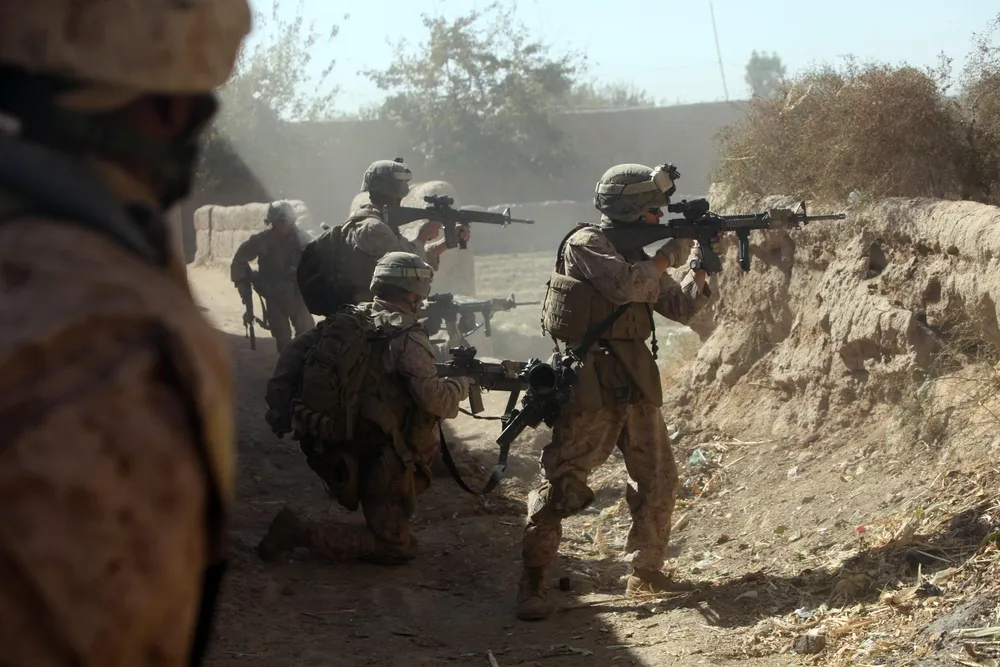
That took two men out of the fight for seconds that felt like hours. It was up to me and our team leader to provide the cover fire for our brothers in the mud.
I was so scared I tried to hide behind my machine gun. I can’t describe how overwhelmed I felt. I couldn’t think straight, so I stopped trying to. Instead, I let it rip.
I hunkered down on that machine gun and poured fire into the enemy position. If I’m being honest, the fire was barely aimed, but if you throw enough lead something sticks eventually.
After the fight, I was given “attaboys” and for the first time I felt like a real Marine. I got respect and that reinforced my purpose. Each member of our squad had a mission-critical task and it took me a little longer to figure out mine.
Seven months and a few days later – thanks to a USO show delaying our departure – and our part of the war was over. I have pride in the fact our company had no KIAs. Sadly, we were the only company in the battalion not to have a KIA.
For many, the war in Afghanistan started on a September morning years prior. My war started with a silly promise I made when I was 11.
I took a lot of things from Afghanistan, but what I took wasn’t nearly as important as what it took from me: I went to war with an illogical guilt and shame of a sacrifice I hadn’t made, but I came home without it.
Feature Image: U.S. Marine Pfc. Garrett Reed, a 22-year-old mortarman with Weapons Company, 3rd Battalion, 3rd Marine Regiment and native of Plano, Texas, watches over a bridge during a security patrol in Afghanistan. (DoD photo)
Read more from Sandboxx News
- Army engineers’ work saved ‘thousands of lives’ on 9/11
- Delta Force’s approach to medical training
- Lockheed Martin and L3Harris team up to speed up critical missile production
- Marine Corps sends F-35Bs to Japan to expose unit to the rigors of the Indo-Pacific
- Why were Navy SEALs clearing mines for four months in the Strait of Hormuz?