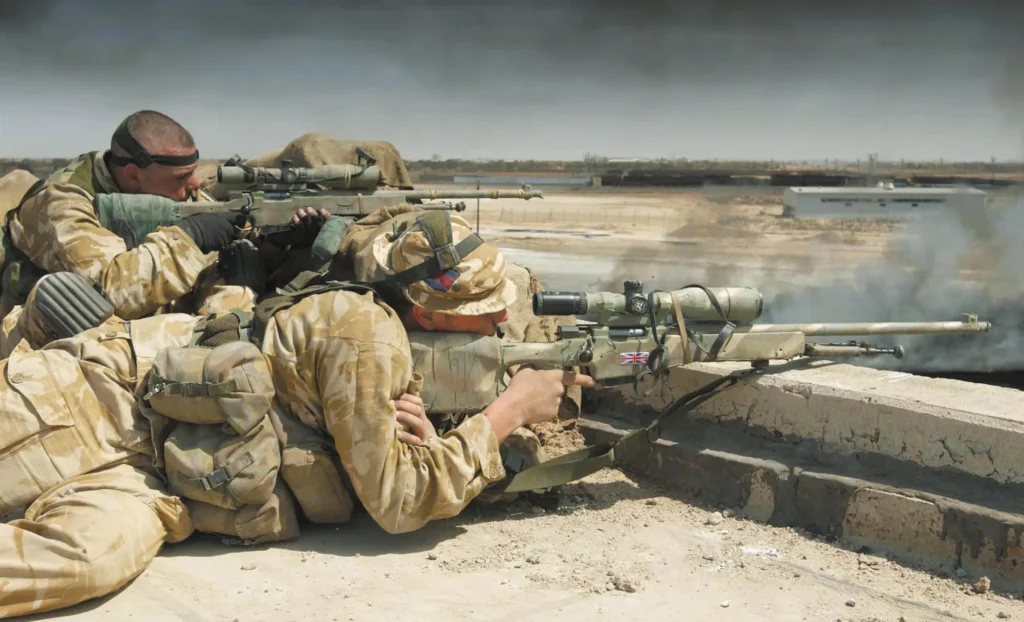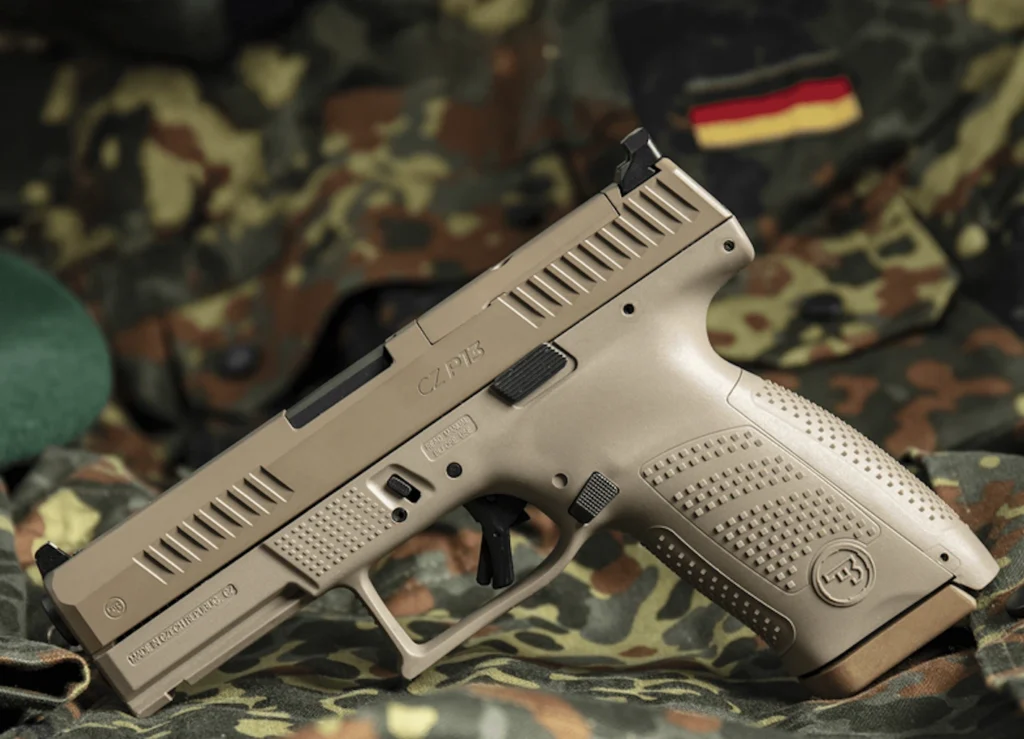
When the German military announced it was looking to replace its classic Heckler & Koch P8 pistol, also known as the HK USP, I assumed its new handgun would again be made by HK. After all, Heckler & Koch has dominated the German military and police market for years, and, as a German company, it seems to have the home-field advantage.
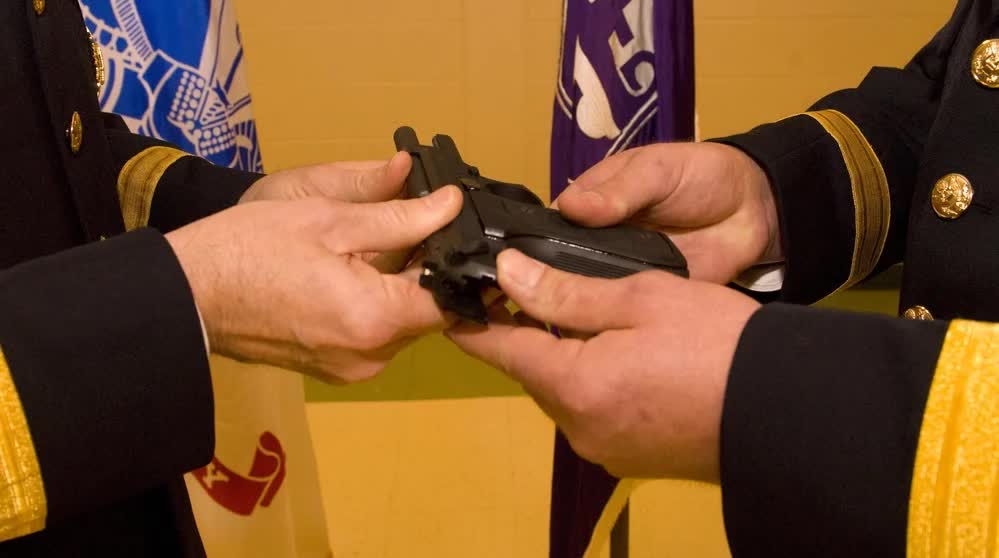
However, the P13, which ended up being chosen, doesn’t come from HK or from a German company at all. Instead, it comes from the Czech Republic and is built by the CZ company as the CZ P10 C OR. The P10 is the overall model number; C stands for “compact,” and OR for “optics-ready.”
When it comes to firearms, compact typically means a four-inch barrel with a 15- to 17-round capacity, and it’s only slightly smaller than full size. The new P13 represents an interesting update to the German military’s service pistols.
The P13 isn’t particularly innovative but still is a modern semi-automatic handgun. It is striker-fired and has a polymer-frame. It utilizes double-stack magazines and chambers the 9mm round.
For the German military, choosing the P13 is a significant move. Germany’s previous pistol, the P8, utilizes a double-action / single-action trigger. The P8’s first trigger pull is long and heavy, whereas subsequent trigger pulls are much lighter and shorter.
In contrast, the P13’s striker-fired trigger offers one consistent trigger pull that is fairly short and light. This can make training troops easier since they won’t need to master more than one trigger type. So, switching from a hammer-fired system to striker-fired one can often be seen as an upgrade.
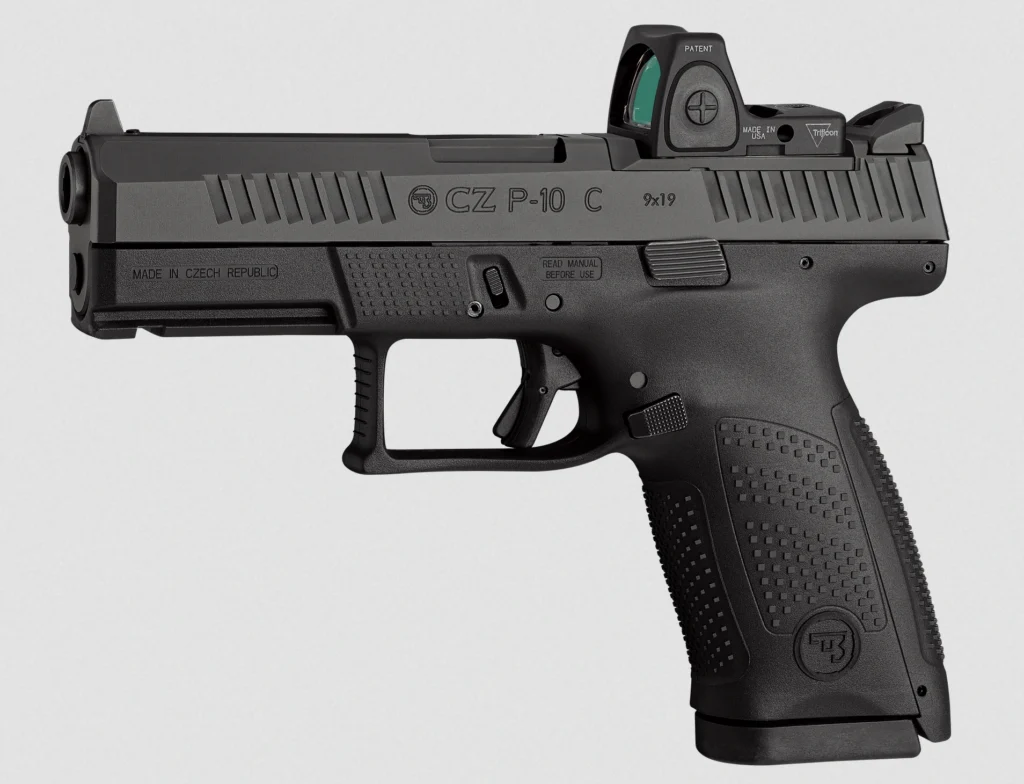
The P13 is also optics-ready. In contrast to civilian and law enforcement users, the move to red dots on handguns has been slow for military forces.
A red dot on a handgun is much easier to learn and master than iron sights as it appears over the target allowing you to focus on it. On the other hand, with iron sights, a soldier has to align the rear with the front sight while dealing with the target. This process is slower and cumbersome, especially in low light. A red dot on a handgun allows a soldier to shoot faster, farther, and more accurately.
The P13 will feature an accessory rail for lights and laser-aiming devices.
As a CZ P10 C owner, I can testify that the gun handles extremely well: it’s reliable, accurate, ergonomic, and well-suited for duty use.
The German military didn’t hold a formal contest that included range tests. Instead, it released the contract and chose the option that met its standard and requirements and which was available at the lowest cost. Other competitors included Glock and AREX Delta.
With that said, the P10C has met the NATO standard. Therefore, a long, drawn-out pistol contest costing millions simply would be necessary – something that the U.S. Army should learn from. I have no doubt that the P10 series will serve the German military well.
Read more from Sandboxx News
- US embraces ‘Shanzhai’ with copycat Iranian drone
- American submarine sinks Iranian frigate and achieves Navy’s first torpedo kill since WWII
- F-35 gets its first ever air-to-air kill against a manned aircraft
- A Delta Force parachute saga
- France to send Charles de Gaulle aircraft carrier to the Mediterranean in response to ‘unstable situation’