China is converting retired fighters into kamikaze drones, but does that actually make sense?
According to recent analysis from the Mitchell Institute for Aerospace Studies, China has converted around 500 of its dated Shenyang J-6 fighter aircraft into semi-autonomous combat drones and deployed some 200 of these to six different air bases positioned near the Taiwan Strait.
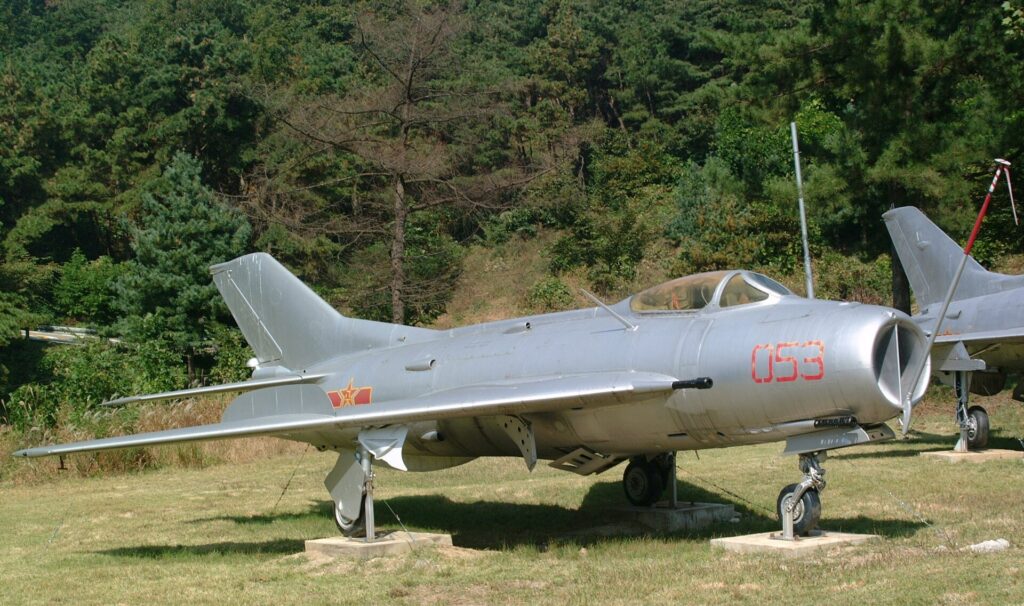
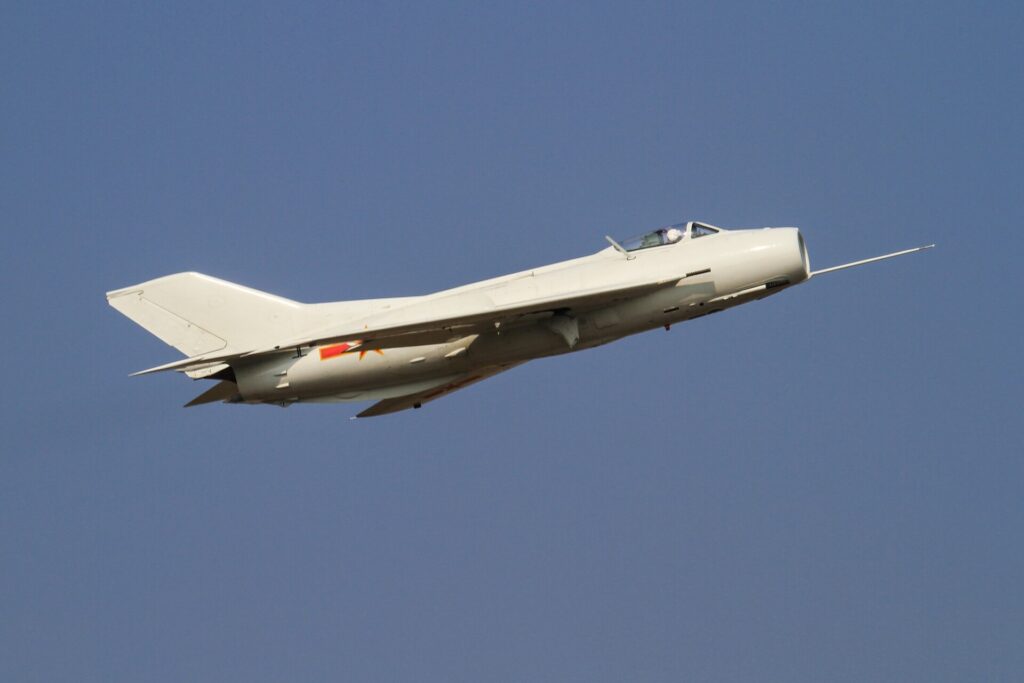
The J-6 fighters aren’t exactly spring chickens… With a design that is based directly on the second-generation Soviet MiG-19 that first entered service in 1955, China’s J-6 reached duty in the early 1960s and continued to serve in the fighter role for nearly 60 years. The last of these airframes didn’t leave active service until as recently as 2010. China’s 2nd-generation fighters served for long enough to share the sky with 3rd-gen, 4th-gen, and even 5th-gen jets before finally calling it quits.
For a brief three years, China’s J-6s lounged in well-earned retirement, but in 2013, the country kicked off a new initiative aimed at getting these old jets back into the fight — not in the same fighter role they once filled, but now, as supersonic kamikaze drones that could be used to flood Taiwan’s airspace and overwhelm local air defenses in the earliest stages of an invasion.
In effect, China took 500 of its oldest fighters and turned them into very large cruise missiles, which is a novel way to reuse airframes that you already have lying around.
However, this approach might not make the most financial sense.
The costs associated with using the J-6 fleet as kamikaze drones extend well beyond the price of conversion. As Yefim Gordon and Dmitry Komissarov wrote in their book Chinese Aircraft, the J-6 was built to serve as a practically disposable jet, with the goal of only reaching around 100 flight hours, or 100 single-hour sorties, before needing a complete overhaul.
These aircraft will certainly see far fewer flight hours in their new drone roles, but that doesn’t change the fact that, in order to function as drones, these aircraft need to continue functioning as aircraft. And keeping 500 half-century-old fighter jets in good working order isn’t cheap.
China doesn’t disclose maintenance costs for its platforms, so we can’t say for sure how much it might cost to keep the jets in good working condition. Nevertheless, the costs are likely higher than maintaining 500 much smaller and still-in-production cruise missiles instead.
The important question isn’t whether a platform can offer value on the battlefield, but rather, whether that particular platform represents the best use of funds for that purpose.
Most platforms, regardless of age, can be useful in a fight with appropriate and effective planning, but not all platforms make financial sense. China could spend millions of dollars a year keeping 500 old fighter jets in good enough flying condition to reach Taiwan, or it could allocate those same millions toward further increasing its stockpiles of arguably more effective cruise missiles, ballistic missiles, and cheaper modern drones.
China’s approach is creative and novel, but the longer these jets remain active in that role, the more China has to spend in keeping them flightworthy and the less financial sense the whole concept ultimately makes.
Yet, there is certainly value in this enterprise and that is the experience China has gained in converting these aircraft into drones. This experience will certainly go on to inform other programs down the line – and that could potentially pay off in spades.
Feature Image: A Shenyang J-6 Chinese aircraft. The pilot of this specific aircraft landed in Korea on 24 October 1986. (Photo by Jerry Gunner/Wikimedia Commons)
Read more from Sandboxx News
- The Army adopts the XM8 carbine to go along its new M7 rifle
- What is a kill chain and why it matters for modern militaries
- More A-10 Warthogs are heading to the Middle East
- Airborne adventures with a Green Beret Combat Diver Team
- NATO members reach defense spending goals, but Trump calls America’s membership into question