According to reports, a shipment of F-35 parts leaving Australia was unexpectedly diverted to Hong Kong in May, where, it’s believed, Chinese officials recovered them for further analysis. Among the components China allegedly got its hands on are the cockpit canopy and a weapons bay door from an Australian F-35A.
And although Australian and Lockheed Martin officials have both gone on record to say that none of the parts that went missing were “sensitive” or classified, evidence is mounting to the contrary.
Last week, the F-35 Program Office acknowledged the loss, saying that the Pentagon is “actively working with U.S. authorities and industry partners to retrieve these components, investigate the incident, and place safeguards to avoid a future occurrence.”
How did F-35 parts reach China?
In late May 2026, parts were removed from a Royal Australian Air Force F-35A Lightning II to be shipped back to the U.S. for inspection and subsequent repair or disposal. Among those parts were the F-35’s cockpit canopy and at least one weapons bay door – both parts include highly classified radar-absorbent materials.
These parts were deemed unserviceable by local F-35 repair facilities and were shipped back to the U.S. via UPS. However, for as-yet unexplained reasons, the ship transporting these parts made a stop in South Korea, where it was subsequently diverted to Hong Kong. (Since 2020 Hong Kong has been subject to the same export controls and sanctions as any mainland Chinese city since 2020.)
According to Bloomberg, once in Hong Kong, the parts were taken into custody by Chinese authorities and have not been released since. Although this has not been confirmed by government officials from any of the involved countries, it is largely to be expected in such cases.
It appears as though some members of Congress were briefed on this situation as early as June, as efforts to recover the lost components continued until September 18, when Politico first broke this story to the public. Four days later, on September 22, Australian Defense Minister Richard Marles acknowledged that the parts did indeed end up in Hong Kong, but denied that any of the parts were “sensitive.”
“My understanding is that there is a sense of comfort, and we’re not talking about sensitive equipment here or sensitive parts. Ultimately, though, this is an issue which is going to be managed by the United States and by Lockheed in terms of what has occurred,” he told reporters. That same day, Chinese officials addressed the story for the first time, with its China’s foreign ministry saying only that it was unaware of any such incident.
The F-35 cockpit canopy

The cockpit canopy of the F-35 has to satisfy structural requirements to protect pilots from events like bird strikes, while withstanding the immense pressure and friction of supersonic flight and hard maneuvers.
It needs to be perfectly shaped to adhere to the aircraft’s aerodynamic requirements, while using advanced coatings to deflect radar waves. Simultaneously, it has to maintain its transparency through years’ worth of direct sunlight, exposure to moisture, thermal and pressure cycling, cleaning, and maintenance.
These canopies, which are produced by Alabama-based GKN Aerospace, are made of stretched acrylic that’s been treated with a classified conductive coating. According to patents – which have not been officially tied specifically to the F-35, – filed by the firm, the canopies are likely made up of a thin gold layer sandwiched between layers of aluminum-doped zinc oxide.
This coating is incredibly important, as it prevents radar waves from passing directly through the clear acrylic of the canopy and bouncing off the pilot and ejection seat, which, in such a stealthy platform, could be sufficient to compromise the jet’s low observability. This coating is why F-35 canopies look slightly tinted or discolored when light passes through them.
However, the canopies have been an ongoing problem for the F-35 program.
Corrosion, caused by moisture, has intruded between the layers of some canopies, and others have suffered delamination, with the coating itself peeling off the jet’s canopy in more than 173 aircraft over the span of just four years prior to 2019. In some cases, delamination occurred after as few as just 100 flight hours. Efforts to mitigate this issue are ongoing, with canopy delamination still listed as among the primary drivers of F-35 low mission readiness rates to this day.
China gaining access to the canopy, then, could certainly offer it insight into the efficacy of its coating and, depending on the production batch the canopy came from, potentially even the most recent efforts to mitigate the aforementioned issues. Little is publicly known about China’s own efforts to mitigate the radar reflectivity of crew and ejection seats in its stealth aircraft, meaning an opportunity to reverse engineer this material, problematic as it may be, could give China the opportunity to continue its own development efforts.
The F-35 weapons bay door
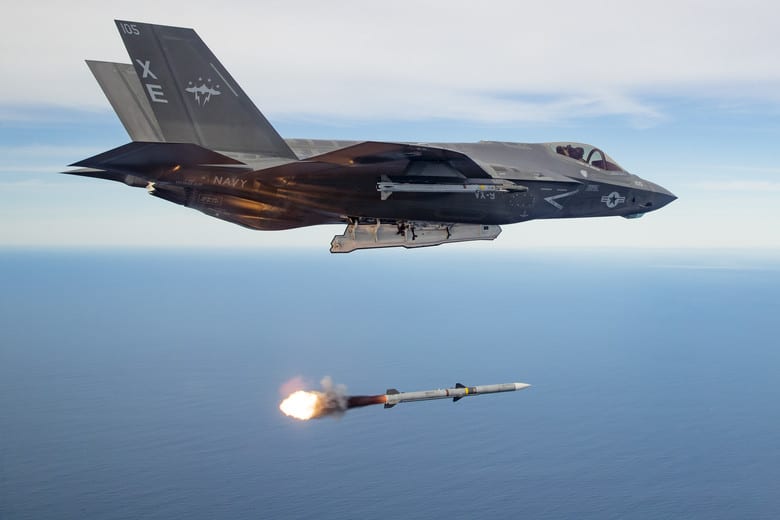
As a stealth fighter, the F-35 was designed to carry its primary ordnance internally, using two weapons bay doors that open briefly to launch or drop munitions. These doors are produced by Northrop Grumman, and as the firm itself explains, the aircraft’s center-fuselage edge alignment, coatings, and in-flight operating doors are “essential elements” of the F-35’s capabilities.
While China could certainly gain useful insight into how the F-35 mitigates the radar-reflecting seams and gaps created by opening panels on a stealth aircraft, as well as worthwhile information about the limits of America’s advanced stealth fighter production infrastructure, the most potent intelligence value China could derive from a recovered weapons bay door may well be the radar-absorbent material (RAM) that is both baked into the composite exterior panels and the coatings applied thereafter.
The RAM utilized by today’s American stealth aircraft is said to be rated to absorb upwards of 80% of inbound electromagnetic energy (or radar waves). Yet, because it’s polymer-based (meaning plastic), it is also highly susceptible to damage caused by heat and friction, which are common in high-speed flight.
The F-35 boasts some of the most advanced RAMs on the planet and represents a significant leap forward in terms of resilience and maintainability over earlier materials leveraged by platforms like the F-22 Raptor and B-2 Spirit.
RAMs have to be devised with specific frequency ranges in mind to ensure the frequencies it can absorb are the same as the ones an adversary might use for targeting.
So, by recovering a weapons bay door, China has the opportunity to not only dramatically advance its own efforts to field more advanced and resilient radar-absorbent coatings for its own stealth aircraft, it can also use that same material analysis to gain valuable insight into the specific electromagnetic frequencies American and allied F-35s are working to mitigate, as well as the limits of the material’s absorption in different environments, conditions, angles of observation, and against various EM frequencies.
Just how bad could this be?
At this point, we can’t assess the severity of the situation because there’s just not enough information available to do so. At best, China will be able better understand how the U.S. and its allies manage to mass-produce such capable stealth aircraft; at worst, F-35s may become a bit more detectable in certain circumstances.
Gaining insight into the material makeup of Western radar-absorbent materials and canopy coatings can certainly degrade the advantage provided by American and allied F-35s, but that is not the same as compromising the aircraft’s stealth entirely.
Modern stealth is not a single technology or capability but the result of an ever-growing combination of technologies and capabilities. China may have gained insight into some elements of that, but that’s a long way off from having the complete recipe.
Additionally, the F-35 is not a static item that’s built once and then operated for decades. The F-35 program was built around continuous improvement, from over-the-air software updates to fleet-wide technological overhauls at regular intervals, all meant to keep the aircraft at the forefront of combat aviation throughout its operational service life. So, gaining insight into the F-35s of today may not be as useful next year, or in 2035.
This incident is certainly no death knell for the most widely operated stealth aircraft in history. Instead, the greater risk presented by this incident is how China can potentially employ whatever knowledge it gains from studying the parts to improve its own stealth efforts.
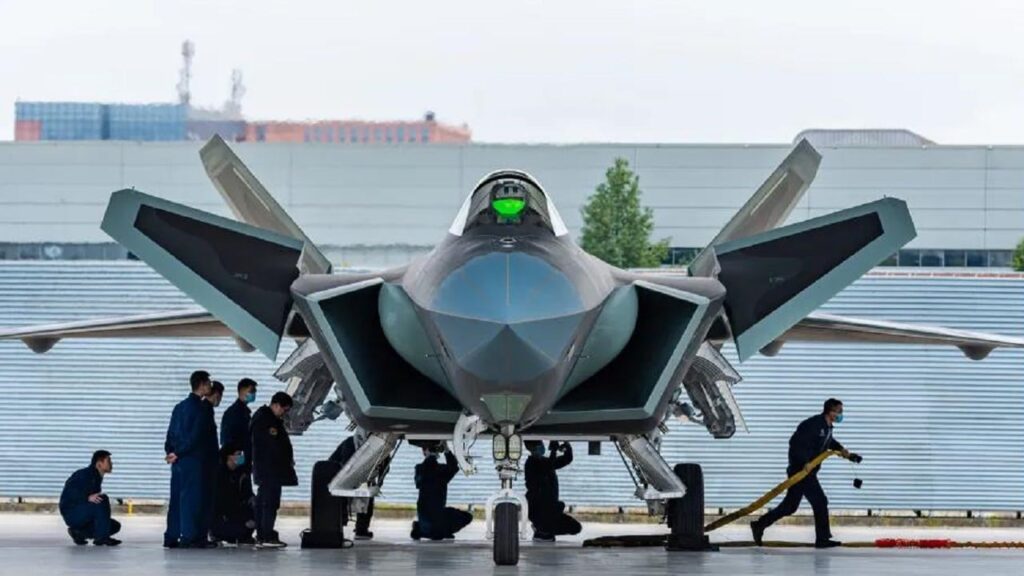
Related: New variants of Chinese stealth fighters break cover
Australia has been an F-35 partner since 2002
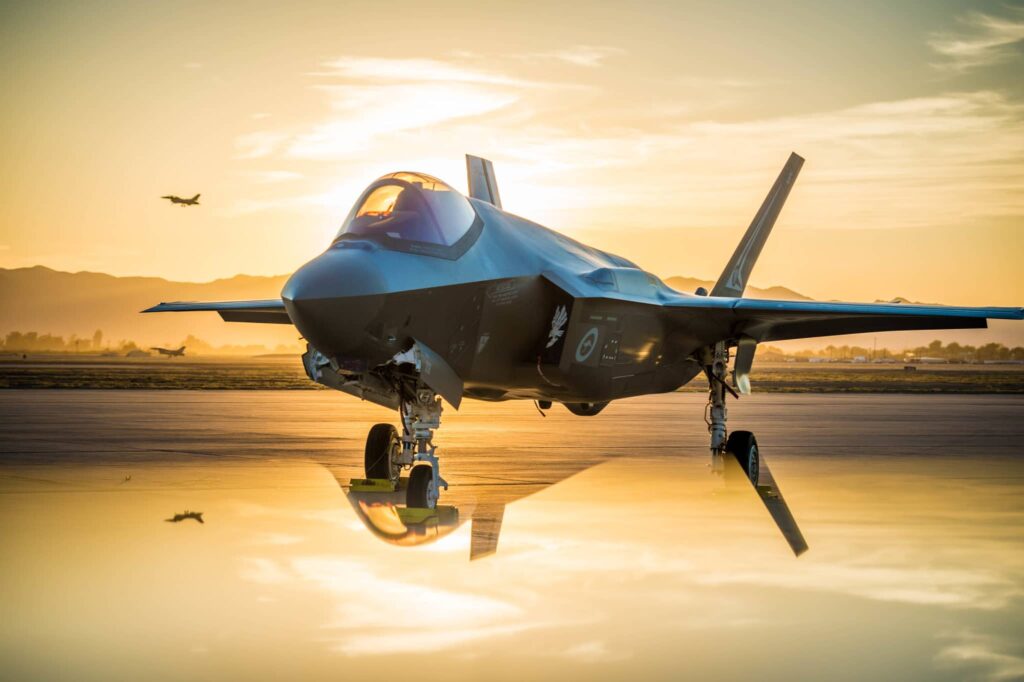
The Royal Australian Air Force operates 72 F-35As as of its final shipment of jets in 2023. These aircraft are broadly similar in form and function to those flown by the U.S. Air Force, and are designed to operate out of well-maintained 8,000-foot runways.
That number of aircraft makes Australia the second-largest operator of these stealth fighters in the world today, and as such, Australia also represents one of the main sustainment hubs for Australian and allied F-35s operating in the Pacific. A BAE Systems facility in Williamtown serves as the regional airframe depot, handling the maintenance, repairs, and upgrades for F-35s in the Southern half of the Asia-Pacific region, with Japan covering the northern half. In keeping with this role, BAE Systems also operates the Asia-Pacific Regional Warehouse for F-35 components under a Lockheed Martin contract.
Engine work on the F-35’s Pratt & Whitney F135 turbofan engine, the most powerful turbofan installed in any fighter in the world today, is handled at a separate facility in Queensland, operated by TAE Aerospace.
Australia has been a member of the F-35 program since 2002, and as such, also produces several components and materials for the fighter’s global production, including vertical tails, supporting construction on center fuselages, elements of the fighter’s corrosion management system, and missile countermeasures like flares.
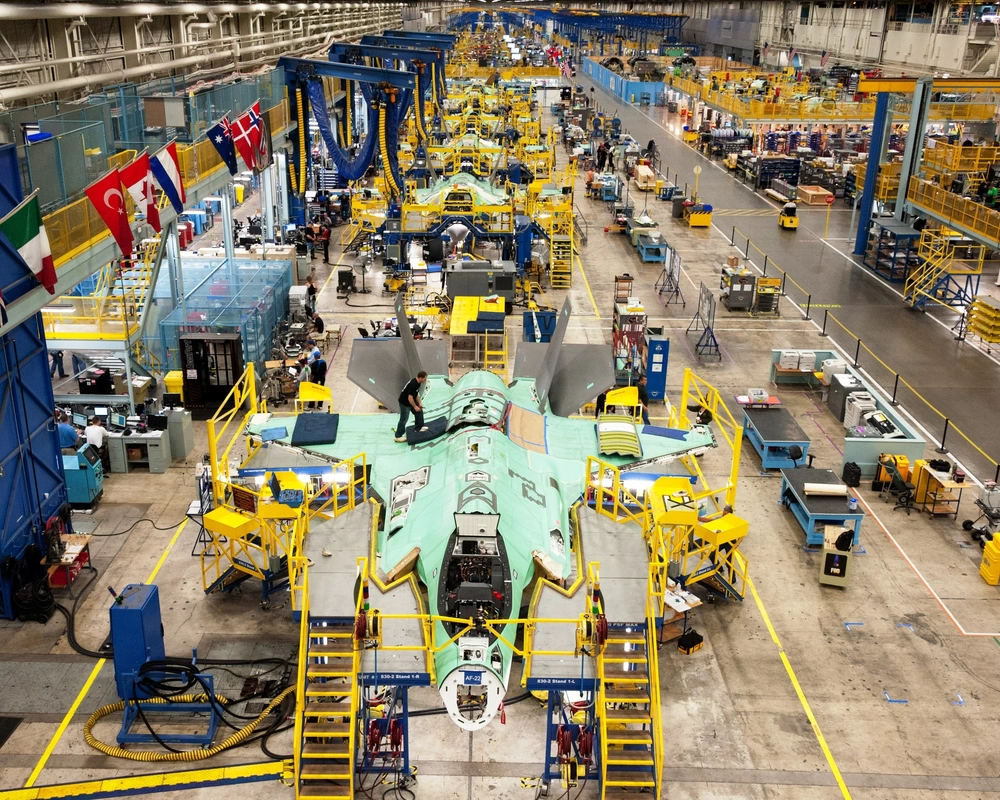
Feature Image: An F-35 assembly line at Lockheed Martin’s factory in Fort Worth, Texas, 2012. (Photo by Fred Clingerman/Marine Corps Air Station Yuma via Lockheed Martin)
Read more from Sandboxx News
- The British Army wants better drone pilots, so it makes them learn ‘the hardest way to fly’
- Army unveils its first new type of ammo can since WWII to prepare for tomorrow’s operations
- How an F-15E scored its only air-to-air kill… with a bomb
- Could Russia attack a NATO member in the near future?
- Air Force wants to extend the service life of B-1 Lancers and B-2 Spirit bombers