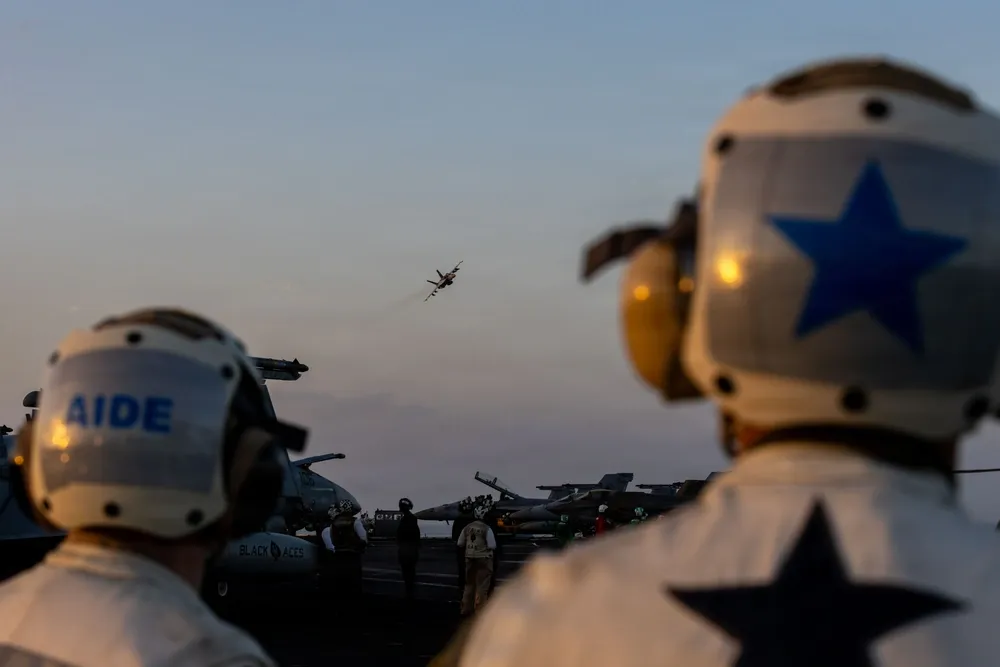
The 22nd Marine Expeditionary Unit has been busy. The North Carolina-based unit, which is currently certified as special operations capable and has been deployed to the Caribbean since August, has earned its share of combat awards and distinctions dating back to its establishment in 1982. It was the first to deploy with the MV-22 Osprey, and first to respond to the devastating 2010 earthquake in Haiti, among other distinctions.
This year, it will further burnish its resume, becoming the first unit equipped and trained with first-person view unmanned aerial systems, better known as attack drones.
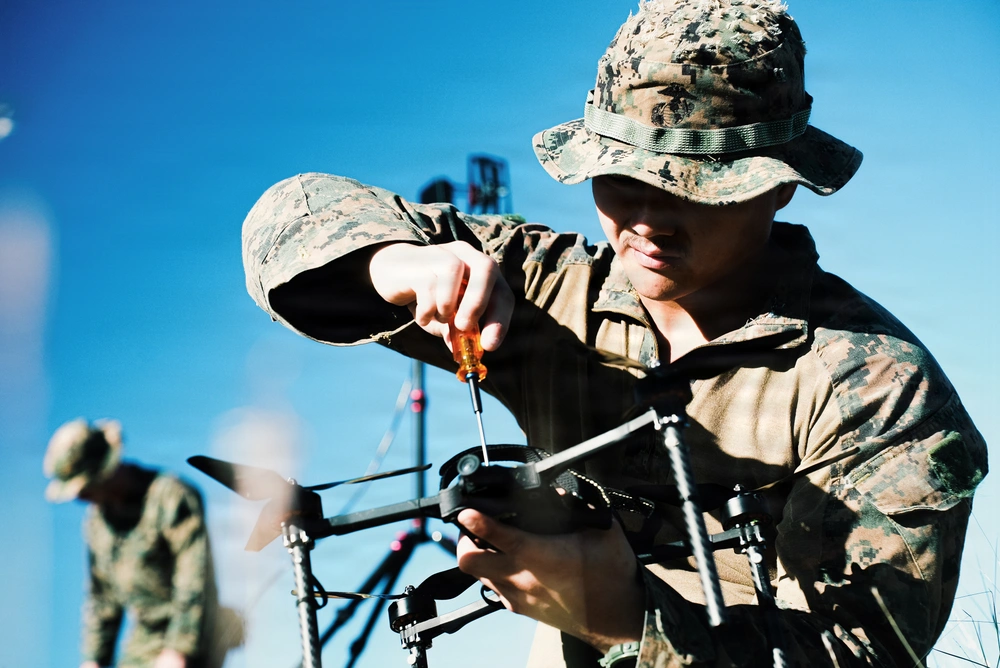
At the end of December, the Marine Corps announced its plan to build up the number of trained operators for “commercial off-the-shelf attack drones,” rolling out a suite of six pilot courses to certify Marines in drone operations.
“These courses include training for drone operators, payload specialists, and instructors, with specific prerequisites such as simulator experience on [Training and Education Command]-approved systems,” Marine officials said in an announcement. “The courses aim to ensure proper integration and supervision of new drone capabilities. TECOM has also established a process to grant certifications to Marines who have existing qualifications and experience through a ‘grandfathering’ exception to policy.”
The timeline is indeed rapid. At the time of the announcement, early efforts had resulted in the certification of 19 attack drone operators, five attack drone instructors, seven payload specialists, and two payload specialist instructors, officials said.
Early training also included Marines with the 22nd MEU, which had certified 14 attack drone operators and 11 payload specialists by mid-November, officials said. With hundreds of Marines now in the pipeline, the Marine Corps projects that all its infantry units, reconnaissance battalions, and littoral combat teams will be trained and equipped to fly FPV drones.
Lt. Gen. Benjamin Watson, commanding general at TECOM, made clear that the training could change as the Marine Corps collects more data about what works.
“We are fielding these courses as pilot programs to move quickly while maintaining our commitment to quality training and safety,” he said in a statement. “This allows us to validate all aspects of the training, from prerequisites and instructional methods to resourcing needs and certification standards, ensuring that we refine and perfect the curriculum before it becomes part of our long-term training framework.”
Meanwhile, a video released by the Marine Corps and featuring the 22nd MEU provides a window into what training looks like on the ground.
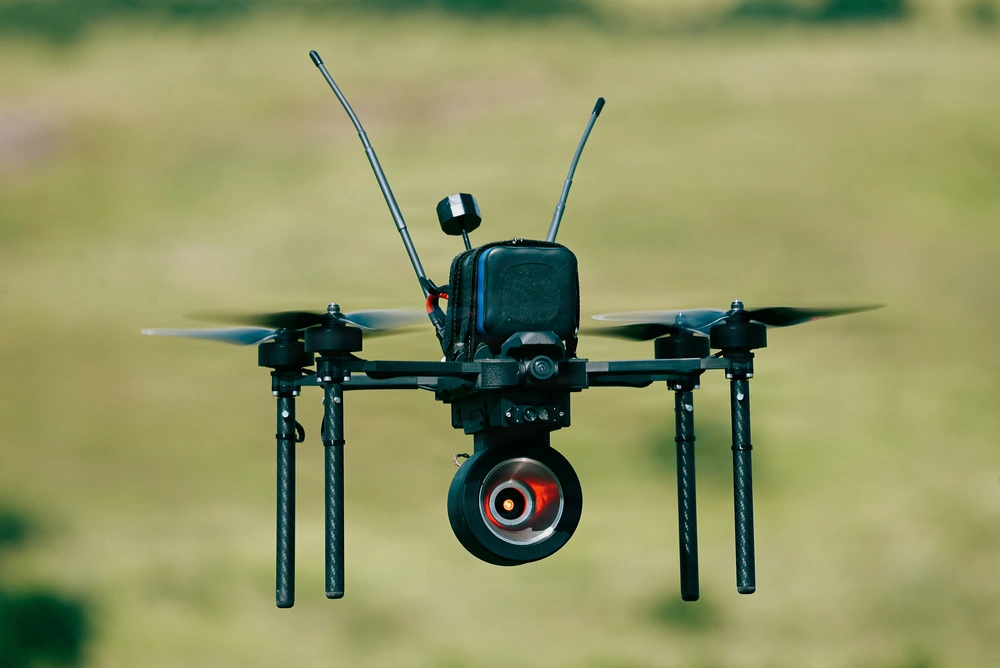
The video shows a night operation with Marines working together to launch a quadcopter drone. While other imagery released by the MEU in December identifies one drone flown by the MEU as a Skydio X2D, the Marine Corps in its announcement specifically cited another make and model of interest: the Neros Archer attack drone.
Neros touts its drones as “the world’s first NDAA-compliant fiber-optic FPV drone,” referencing the defense policy bill that determines what the military services can buy and how much it can spend. Neros announced in November that the Corps had made a “multi-million dollar purchase” of the Archer drones.
In the video, the operators are shown arming the system and pulling a pin, possibly activating the payload. A Marine identified as the team leader and chief scout for light armored reconnaissance surveillance and target acquisition describes the instruction the 22nd MEU is receiving on the attack drones.
“We’re learning how to fly them, how to build them, how to arm them, and how to strike targets,” he says in the video. “The 22nd MEU, after this course concludes, is going to be the only operational unit in the Marine Corps that will have an attack drone capability, which I think is pretty significant. Because this thing allows you to launch outside of line of sight – you don’t have to push scouts closer to targets. It’s going to preserve life and also just help us find and fix and destroy targets.”
Related: Navy launches reversed-engineered Shahed drone
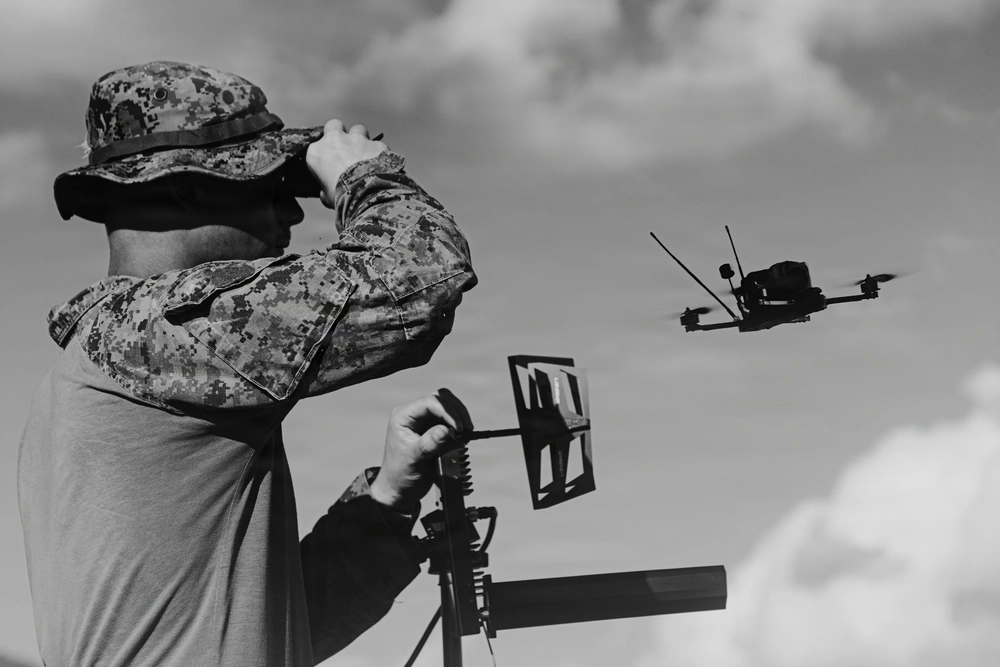
“We’ve constantly had different things thrown at us during this deployment,” the Marine says. “This gives us the opportunity to adapt to that environment. I do believe this is the future of warfare for the Marine Corps.”
And all this training is happening while the MEU remains deployed in and around the Caribbean.
In the video, Marines are shown using Fat Shark FPV drone goggles for a pilot’s view of the drone’s flight, and achieving explosive effects on target – during both daylight and nighttime missions.
According to a Marine Corps message to the force, training courses in the basic drone operator pilot program last 10 days or 80 training hours and include at least 20 hours of simulator experience, 10 of those in FPV goggles. Other courses require as much as 15 training days and 120 hours of instruction.
The Marine Corps’ investment in attack drone capabilities comes as Secretary of War Pete Hegseth calls on industry to build as many as 300,000 inexpensive and rapidly deployable drones for the future fight by 202. Developing this drone capability would enable the U.S. to “leapfrog” military competitors, Hegseth said.
Feature Image: A U.S. Marine Corps rifleman with Weapons Company, Battalion Landing Team 3/6, 22nd Marine Expeditionary Unit (Special Operations Capable), prepares a Neros Archer first-person view drone during attack drone training on Camp Santiago, Puerto Rico, Nov. 22, 2025. (Photo by Sgt. Maurion Moore/Marine Corps)
Read more from Sandboxx News
- Military tests high-tech ways to ensure troops on the frontlines are fed
- The military’s drone-defense confusion is leaving its bases vulnerable, Pentagon watchdog finds
- Lockheed Martin delivered record number of F-35s in 2025
- Air Force uses MH-139 Grey Wolf helicopters for the first time to protect nukes
- SEALs and other Navy combat personnel face new annual fitness requirements