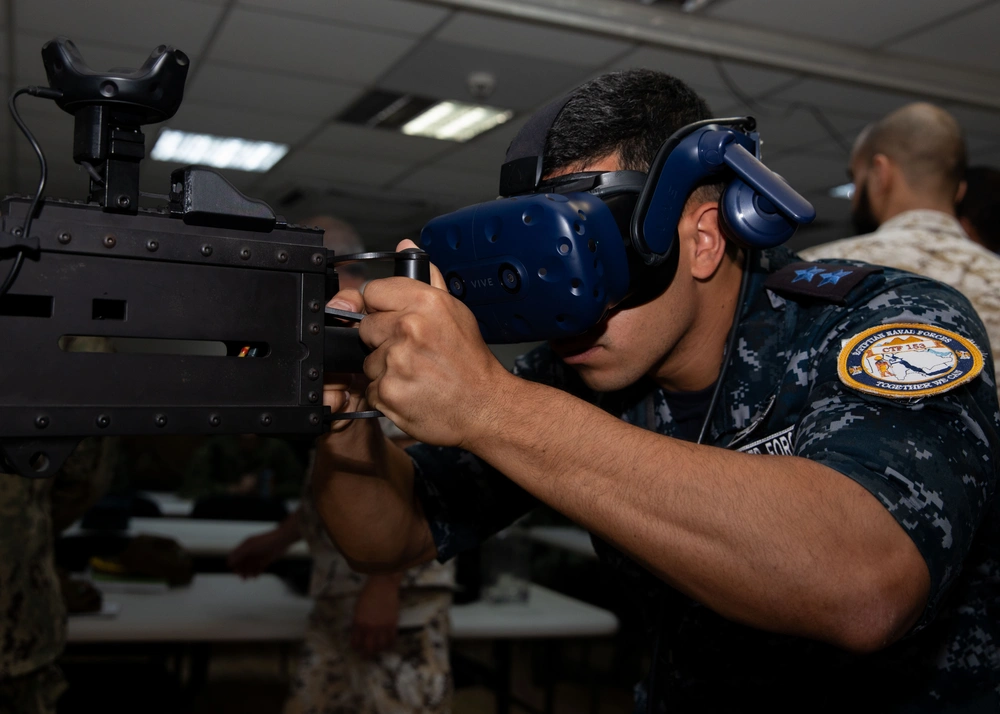
Training soldiers through virtual reality may be lot closer than you think.
Virtual reality has grown substantially as an industry and technology. It’s currently mostly used for playing video games, but it has a real future in the realm of military training and, in some cases, it’s already being implemented. Nevertheless, there is a lot of possibility for its use to be extended, especially into basic combat skills training.
My experience with virtual reality
Like most people, my experience with virtual reality began through video games, the a program called “GAIM” caught my attention. GAIM, made by Aimpoint, is a virtual reality system primarily designed for shooters to train for hunting and sport shooting.
GAIM offered a handgun peripheral that attached to my Oculus controller. The virtual reality looked real and simulated the real firearms I shoot all the time. I practiced GAIM’s “Steel Challenge” and its the various stages virtually.
These stages are scored by time, and the shorter the time, the better. Tellingly, after practicing the Steel Challenge stages virtually, I trimmed seconds off my real-life times. Seconds don’t seem like much, but in action shooting sports, winners and losers are often decided by tenths of a second.
This convinced me that there is some utility to virtual reality training for the average soldier.
The military’s current use of virtual reality
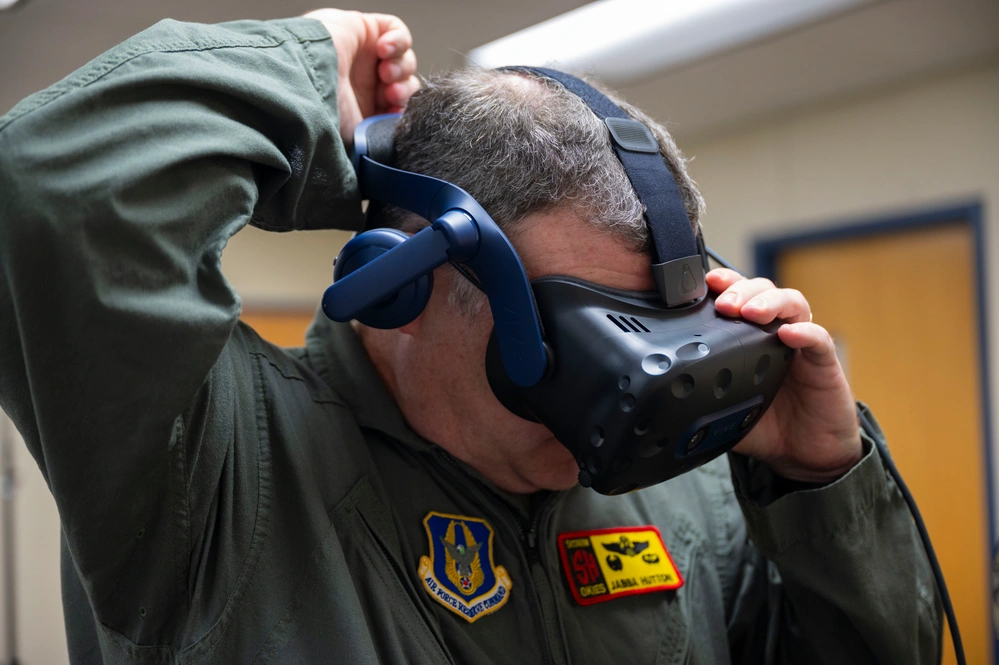
Servicemembers tasked with operating various vehicles are already using simulators, which could qualify as virtual reality.
Tankers have dedicated simulators that shove soldiers into a simulated tank within a virtual battlefield and learn how to function in a virtual tank as a team before they climb inside a real tank.
Pilots have famously used flight simulators for decades now. Flying a jet is very expensive, so using simulators allows pilots to train without risking an airframe or their lives.
The Navy uses a wide variety of simulators including navigation and bridge simulators, engineering simulators, and drone simulators.
The military has used mixed or virtual reality expansively in the past, so any future adoption wouldn’t be unexpected entirely.
Its usefulness to infantry
By “infantry” I am including everyone in the military who might be on the ground fighting. In fact, virtual reality might be even better suited at teaching infantry tactics to non-infantry forces.
The subjects VR can handle include basic weapons handling: how to load and unload; align sights; or use optics. Use a headset displaying a range in combination with a firearm-based controller and you’ll capture a fair amount of basic firearms training. Even tasks like loading machine guns – which takes several steps to do correctly – can be trained.
These tools can also be used for situations and weapons that are difficult to use at a real range. For example, Javelins have long used simulators due to the price of the rockets. Troops could train in virtual reality with a LAW, a Carl Gustav launcher, and more without needing a live fire range, which are always in high demand.
Additionally, troops could practice formations, Close Quarters Combat (CQC), and room clearing in a completely safe environment. You don’t need to worry about blanks or simunitions, which simplifies logistics and improves safety for inexperienced troops. The only limitation is training space, and that’s about it.
Purpose-built solutions
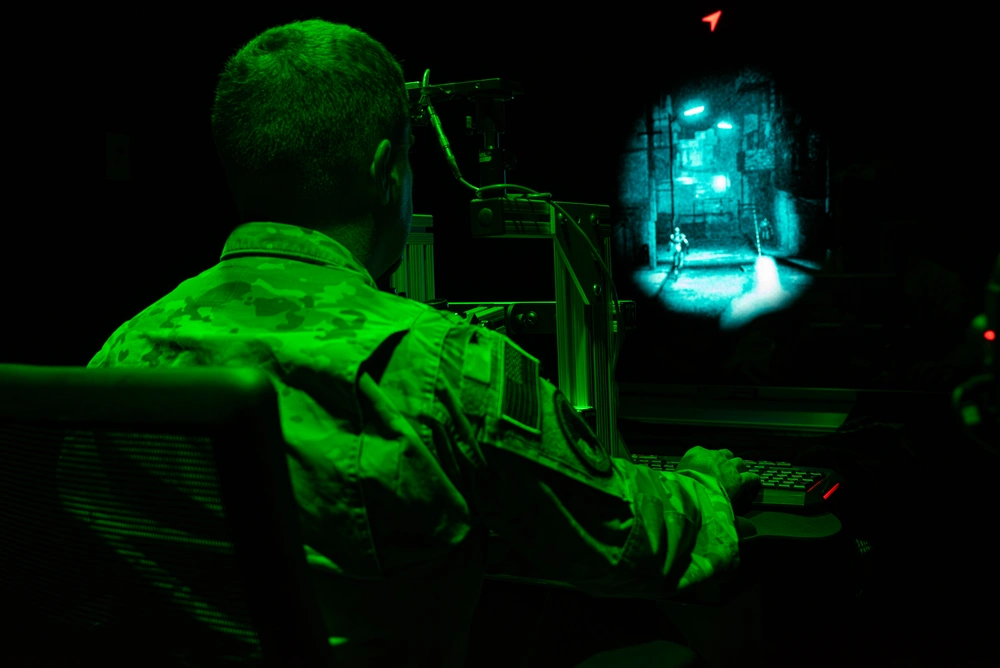
There are many virtual reality solutions that are purpose-built for training military forces.
Companies like Operator XR offer complete systems with headsets, software, and conversion kits to turn M4s into air-powered simulators. The software allows commanders to design simulations and place enemies, civilians, and more in a sandbox-style world for troops to train around.
While the initial cost of such systems is high, it’s cheaper than building a new Military Operations in Urban Terrain (MOUT) town. The military has spent a lot of money on various real-to-life encounters, and a system like this just seems much simpler.
Further, virtual reality applications will have massive benefits for troops in locations devoid of training facilities. I was on a ship for nearly a year, and our training opportunities were extremely limited. Having a system like this could have expanded our training and prowess until we got off the boat.
Training in virtual environments will never replace a live fire range. However, it offers simpler logistics and allows for a fair amount of training to be accomplished. Implementing new tools and technology for leaders to utilize can make our troops more skilled, capable, and ultimately more lethal.
Feature Image: An Egyptian naval officer with Combined Maritime Forces’ Combined Task Force 154, trains on a ship defense virtual reality simulator provided by U.S. Navy Maritime Expeditionary Group 2, Detachment Bahrain in Manama, Bahrain. (U.S. Army photo by Sgt. Hans Williams)
Read more from Sandboxx News
- China has its eyes set on the Moon, but does the new space race matter?
- Heroism of The Hulk: A SEAL in Vietnam demonstrated the true meaning of valor
- Delta man’s showdown against a bully at Wendy’s
- The A-12 Avenger II would’ve been America’s first real ‘stealth fighter’
- Could Turkey be accepted back into the F-35 program?