An uptick in joint U.S. military operations is currently underway in east Africa. America’s most recent offensive there appears to have kicked off with a visit to the region from the head of U.S. Africa Command in the waning days of 2025 and has ramped up throughout January and February of 2026. The joint operations focus on counter-terrorism and degrading the capabilities of specific extremist groups in the region. However, the offensive also sends out a message that the U.S. remains engaged in east Africa – a message no doubt meant for China and Russia, amongst others.
Back in early December 2025, U.S. AFRICOM commander, General Dagvin Anderson, visited Ethiopia and Somalia, emphasizing to leaders in the two countries that the United States “supports maximum pressure on ISIS, al-Shabaab, and other violent terrorist organizations.”
Anderson’s visit was soon followed by a series of airstrikes against ISIS-Somalia and al-Shabaab targets. Notably, those strikes were also publicized by AFRICOM in multiple press releases.
On February 3, U.S. forces conducted an airstrike against ISIS-Somalia in the Golis Mountains. Then, on February 9 and February 10, U.S. forces conducted airstrikes against al-Shabaab in southern Somalia and the Kismayo area. All three airstrikes were carried out jointly with the Somali Armed Forces, according to AFRICOM’s press releases.
These operations follow more joint airstrikes in January 2026 and in the past year against ISIS-Somalia targets in the region. These strikes aimed at undermining the group’s ability to be a financial and propaganda hub for larger ISIS operations against the U.S. homeland and across the region.
ISIS-Somalia emerged as an offshoot of al-Shabaab in 2015. It is based in the Puntland region in northeastern Somalia. It provides planning and funding for global attacks and recruits fighters.
The airstrikes and their publication are a key way for the U.S. to maintain a robust presence in a contested area without committing large numbers of troops or other resources. While the Russian Wagner Group continues to operate in northern Africa, and China continues to invest in countries on the continent, the U.S. is wise to safeguard its national interests in the region and prevent outsized influence being exercised by those two rival powers.
The north of Africa – the Maghreb clear over to the Horn of Africa – has become a proverbial battleground amongst competing powers in recent decades. The United States, China, Russia, European states, and even Gulf countries all vie for influence and commercial advantage in a region that links Europe to energy-rich areas farther south, and sits atop significant global trade routes that cross land and sea. Much as the Romans some 2,000 years ago recognized the strategic significance of northern Africa, today’s great powers also know that they cannot afford to ignore this significant geopolitical hub.
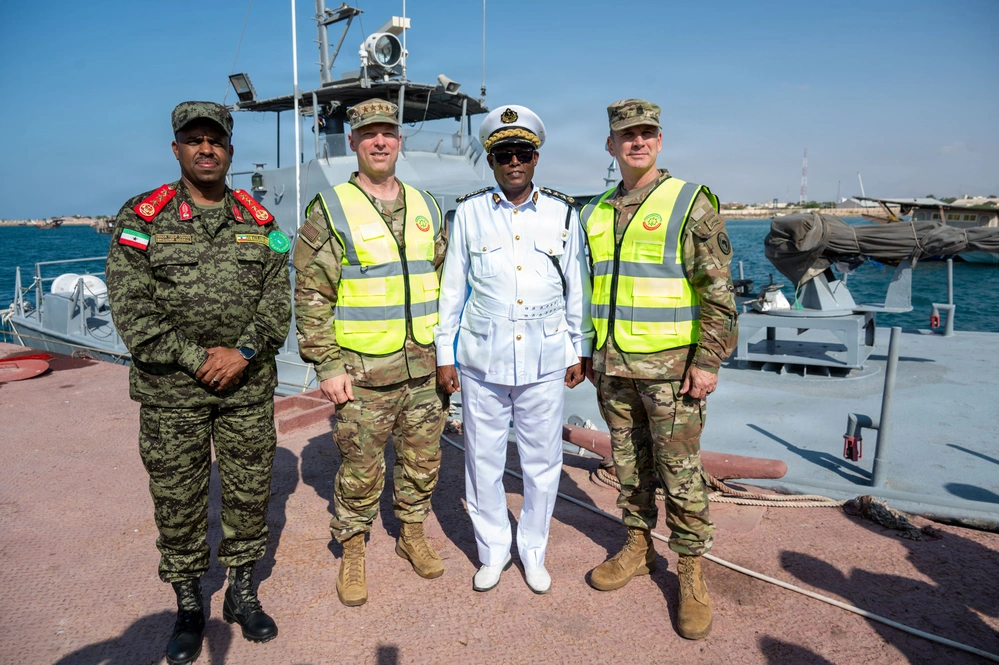
Feature Image: U.S. Air Force Gen. Dagvin Anderson, commander, U.S. Africa Command (AFRICOM), and AFRICOM senior leaders tour the Port of Berbera to assess the security environment and review the port’s operational capacity in Berbera, Somaliland, Nov. 26, 2025. The visit was part of an East Africa trip which featured stops in Addis Ababa, Ethiopia, Hargeisa, Somaliland and Bosaso in Somalia’s member state of Puntland. (U.S. Army photo by Sgt. 1st Class Kenneth Tucceri)
Read more from Sandboxx News
- Breaking down the SERE school myths: How accurate are they?
- Ukrainian F-16 shoots down Russian drone with its onboard cannon – and why this is an incredible feat
- Defending the big ship: How America protects its aircraft carriers
- NATO to increase its Arctic presence in response to Russian activity
- What really happened when F-22 Raptors squared off against the Eurofighter Typhoon?