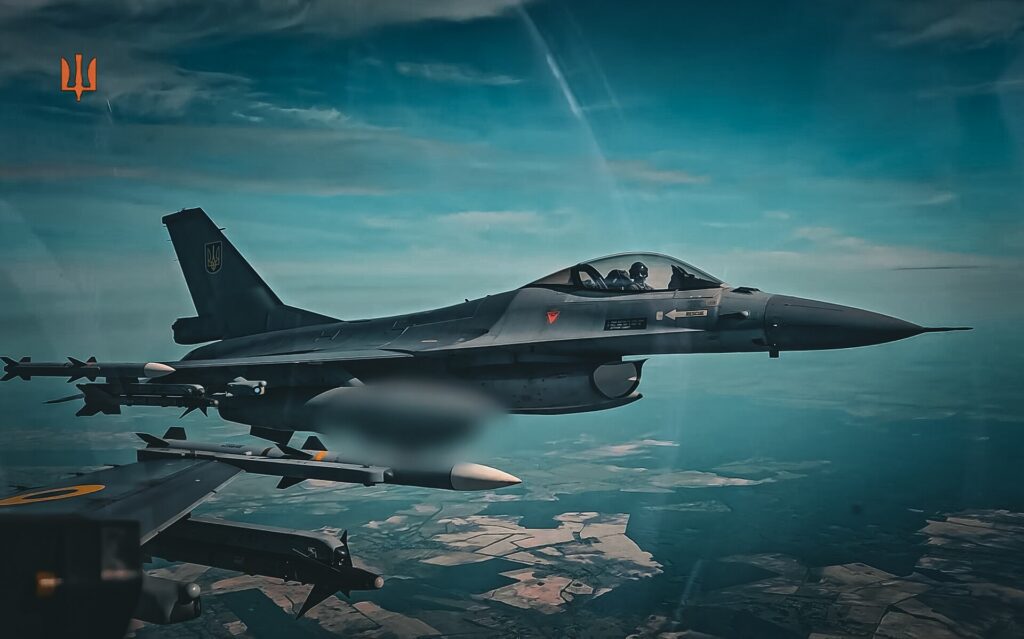
Incredible footage has recently surfaced of a Ukrainian F-16 downing a Russian kamikaze drone using its onboard 20mm cannon. Such a feat is a lot more difficult and dangerous than many realize.
The drone in the footage appears to be a Russian-produced Geran-2, which is a copy of the Iranian Shahed-136. These kamikaze drones are slow and inexpensive. They can cover up to 1,600 miles, according to reports, and deliver a roughly 110-pound, high-explosive warhead, which amounts to well over five times the explosive capacity of a Hellfire missile.
These drones aren’t difficult targets, since their single MD550 piston engine can get them up to a maximum speed of only about 115 miles per hour, and they can’t fly higher than around 13,000 feet. These two factors make them susceptible to being intercepted by just about every kind of air defense system on the planet, ranging from shoulder-fired MANPADs to high-end surface-to-air missiles. However, because these drones are so cheap (with some costing as little as just $50,000) Ukraine can’t afford to launch million dollar missiles at all of them.
Ukraine does have much less expensive interceptors that can be used on these drones, for example weapons like the AGR-20, also known as the advanced precision kill weapon system II. These mini-missiles can be launched from ground systems or from fighters, like the F-16. They cost around $20,000 per munition, so they make economic sense, however, they aren’t always available.
In this case, the Ukrainian F-16 used its M61 Vulcan 6-barrel, Gatling-style, rotary cannon to blow the drone out of the air – and this comes with a lot of risk.
First and foremost, targeting a slow-moving drone from your F-16 isn’t easy. Ukraine’s F-16s carry relatively dated AN/APG-68 pulse Doppler radar arrays that may struggle to identify a low-flying kamikaze drone against the ground clutter until its relatively close. Further, once the radar has eyes on the drone, the pilot has very little time to line up and take his shot.
Whereas the Geran-2 will struggle to get up to 115 miles, the F-16 in the video usually cruises comfortably at more than five times that speed, right around 577 miles per hour. In fact, depending on your source and the position of the flaps, the F-16’s stall speed is between 100 and 130 knots, or between 115 and 150 miles per hour. In other words, if the F-16 were to slow down enough to match the drone’s airspeed, it would stall.
So, the F-16 in the video was probably approaching the drone at 200 miles per hour or faster. Therefore, if the pilot managed to get his eyes on that relatively small drone from two miles out, he had just 36 seconds to make the shot before his fighter would fly right past the drone.
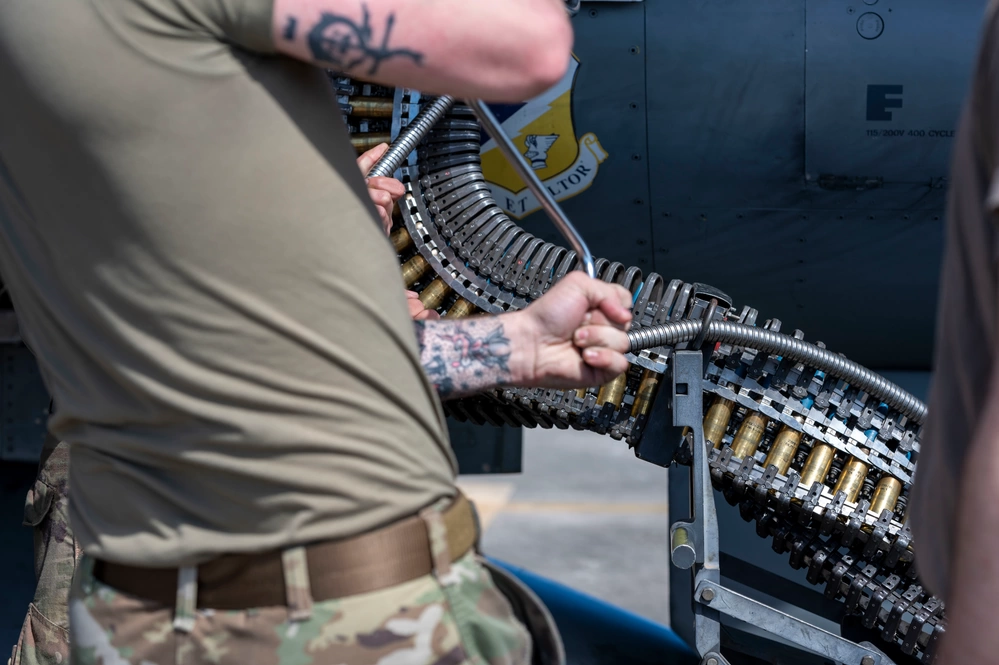
The M61 Vulcan is a very powerful weapon that fires 6,000 massive high-explosive rounds per minute, or 100 rounds per second. It can effectively reach targets up to around 9,842 feet, or just about 1.8 miles. So possibly, the Geran-2 would have been in range of the F-16’s cannon six seconds into that 36-second window, leaving the pilot with just 30 seconds to line up the nose of the fighter and successfully engage the drone – but remember, the fighter is still closing with that drone as it fires.
Second, the fragmentation shrapnel released after the drone gets destroyed would pose significant danger to the F-16. A standard Shahed 136 – on which the Geran-2 is based – can throw sizeable pieces of shrapnel hundreds of feet from the blast, and if you fly your F-16 right through that mess, there is a major risk that its intake will inject the drone debris and promptly doom the aircraft.
So, taking down these drones with the F-16’s onboard cannon might seem like shooting fish in a barrel, but in reality, we’re talking about a very white-knuckled 30 seconds of action for the pilot, and if luck isn’t on your side, a potentially very bad day for both him and his aircraft.
Feature Image: A pair of Ukrainian F-16s, January 2026. (Ukrainian Air Force)
Read more from Sandboxx News
- Defending the big ship: How America protects its aircraft carriers
- NATO to increase its Arctic presence in response to Russian activity
- What really happened when F-22 Raptors squared off against the Eurofighter Typhoon?
- VBSS: A Navy SEAL explains how to board enemy ships
- SOCOM wants to use AI to better distinguish high value targets and intelligence during operations